
Apple's annual September event has always been the centrepiece of the technology calendar, but this year feels different. Under new CEO John Ternus, who took the reins from Tim Cook on 1 September, the company is set to unveil not just an incremental phone update but something it has spent over a decade pursuing: its first foldable iPhone. The Surprise and Shine presentation, streaming live from Apple Park on 9 September, promises the most significant hardware launch in the iPhone's history.

iPhone Duo: Two Screens, One Device
The headline act is the iPhone Duo, Apple's first folding smartphone. After years of watching Samsung, Google and Motorola iterate on foldable designs, Apple has finally entered the category with a device that borrows more from the iPad than from its rivals. The Duo features a 5.3-inch external OLED display for standard smartphone use and a 7.8-inch internal screen that unfolds into a near-iPad-mini experience. The 4:3 aspect ratio when opened is deliberately tablet-like, designed for multitasking, reading and creative work rather than simply stretching a phone interface across a wider panel.
Bloomberg's Mark Gurman confirmed the iPhone Duo name in an eleventh-hour report, putting to rest months of speculation about whether the device would be called the iPhone Fold or iPhone Ultra. Pricing starts at $2,000 for 256GB of storage, with the top-tier 2TB configuration reaching $3,000. Apple has reportedly absorbed some of the cost of rising memory prices to keep the entry point competitive, though the Duo remains the most expensive iPhone ever produced.

Thin, Light, Crease-Free
Engineering a foldable that feels premium rather than fragile has been Apple's primary challenge. The iPhone Duo measures roughly 4.5mm when unfolded, making it Apple's thinnest device ever, and around 9mm when closed. The chassis combines titanium for stress-bearing sections with aluminium elsewhere for heat dissipation. Apple developed a liquid metal hinge system designed for durability, and the internal display reportedly features a nearly invisible crease, achieved through a proprietary material and optically clear adhesive that fills micro-cracks caused by repeated folding.
The compromises are telling. There is no telephoto camera, replaced by a pair of 48-megapixel wide and ultra-wide lenses. Face ID has been removed entirely, replaced by a Touch ID sensor built into the power button, mirroring the iPad Air and iPad mini. Two 24-megapixel front cameras, one for each screen, handle video calls. Apple Pencil support has been confirmed, suggesting the Duo is as much a creative tool as a communication device. The A20 Pro chip and C2 modem are included, and the device will ship in white and dark blue from October.

iPhone 18 Pro: The Expected Upgrades
Beyond the foldable, the iPhone 18 Pro and Pro Max represent a more familiar trajectory. The 2nm A20 Pro chip promises improved performance and efficiency, while the C2 modem brings Apple's in-house cellular technology to the second generation. The external design remains largely consistent with the iPhone 17 Pro, though a new dark cherry colourway has generated early buzz and the camera bump is marginally thicker.
The iPhone 18 Pro Max gains an exclusive variable-aperture camera, enabling real optical bokeh rather than computational blur. Both models see a $100 price increase over their predecessors, a relatively modest uplift given industry-wide component cost pressures. Pre-orders are expected to open on 12 September, with shipping later in the month. The standard iPhone 18 and iPhone 18 Plus have been pushed to a spring 2027 launch, leaving the Pro and Duo to carry the autumn lineup.
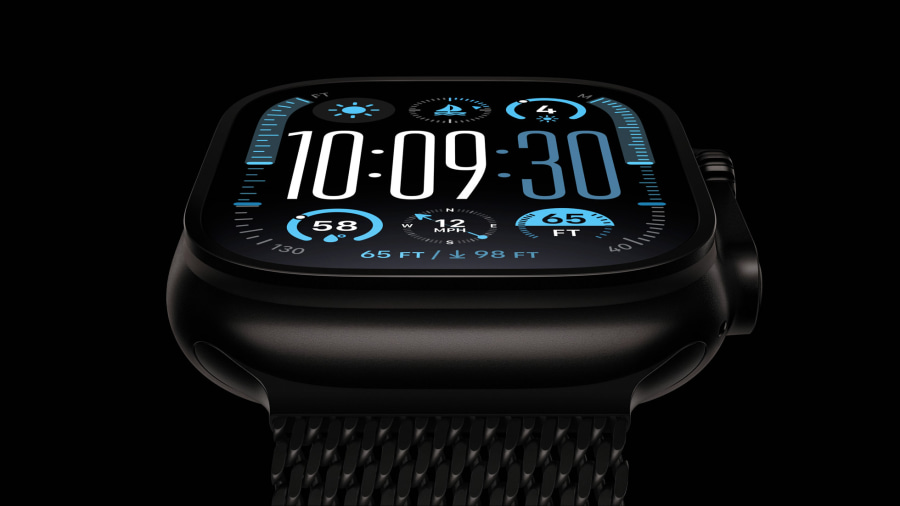
Apple Watch Series 12 and Ultra 4
The event is also expected to introduce the Apple Watch Series 12 and Watch Ultra 4. While early rumours suggested Touch ID might arrive on the wrist, current reports indicate no major design changes. Instead, the focus is on internal upgrades and the debut of a recording feature that Gurman flagged in his final pre-event dispatch. AirPods 5 are also on the roster, with camera-equipped AirPods Ultra tipped for a future release rather than this cycle.
What makes this event resonate beyond the product announcements is the shift in leadership. John Ternus, Apple's former hardware chief, steps onto the Apple Park stage for the first time as CEO. His tenure begins not with a gentle transition but with the most ambitious iPhone lineup the company has ever assembled. The foldable category is no longer Samsung's alone. Whether the iPhone Duo justifies its premium price and whether Ternus can sustain Apple's momentum remain the questions that only the next twelve months will answer.