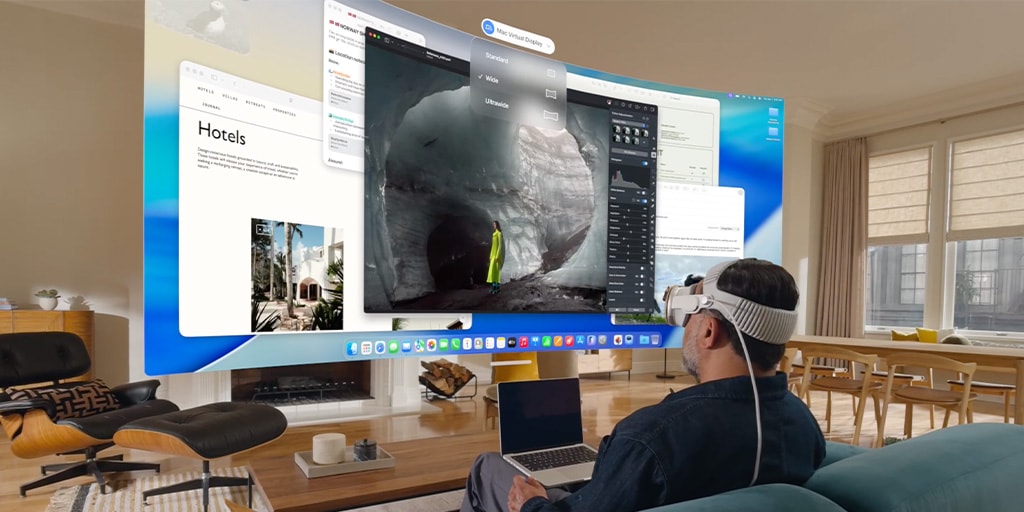
Apple Vision Pro divided opinion when it launched in early 2024. The technology was genuinely impressive, a spatial computing experience unlike anything else on the market. But the weight, the price, and the limited app ecosystem kept it firmly in early adopter territory. Two years later, the sequel is shaping up to address all three issues.
According to supply chain reports from Ming-Chi Kuo and Mark Gurman at Bloomberg, Vision Pro 2 will enter mass production in Q3 2026 for a likely launch in early 2027. The most significant change is physical. Apple has reportedly reduced the headset weight by approximately 30 percent through a combination of new materials, including a carbon fibre composite frame and thinner glass lenses.
Processing power comes from the M5 chip, paired with a second-generation R2 chip dedicated to sensor processing. This combination should deliver smoother passthrough video, better hand tracking, and significantly improved eye tracking accuracy.
"Vision Pro 2 is not an incremental update. Apple is treating this as the product that makes spatial computing mainstream."
Display resolution reportedly jumps to 4,500 pixels per eye, up from the current 3,660. The field of view expands from 100 to approximately 120 degrees, which should reduce the binocular-like tunnel vision effect that some users found distracting in the first generation.
Pricing is the big question. The current Vision Pro starts at 3,499 dollars, a barrier that limited its audience to developers, creatives, and tech enthusiasts. Multiple sources suggest Apple is targeting a price closer to 2,499 dollars for the base model, with a higher-spec "Pro" tier remaining near the current price point.
The app ecosystem has matured considerably since launch. Over 5,000 native visionOS apps are now available, and major platforms including Netflix, YouTube, and Spotify have all shipped spatial experiences. Gaming support through a partnership with Sony PlayStation is also rumoured.
Nothing is confirmed until Apple says so. But the trajectory is clear: lighter, faster, cheaper, and backed by a growing content library. Vision Pro 2 could be the device that shifts spatial computing from novelty to necessity.