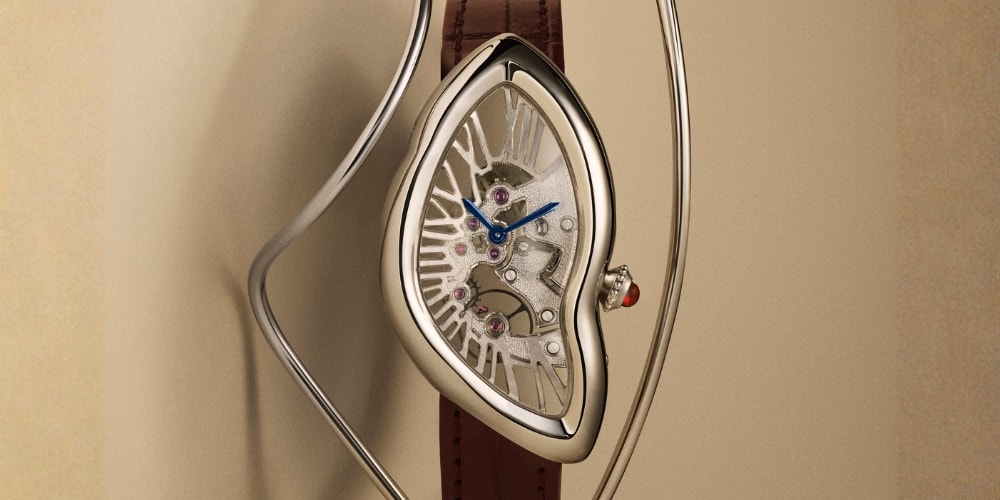
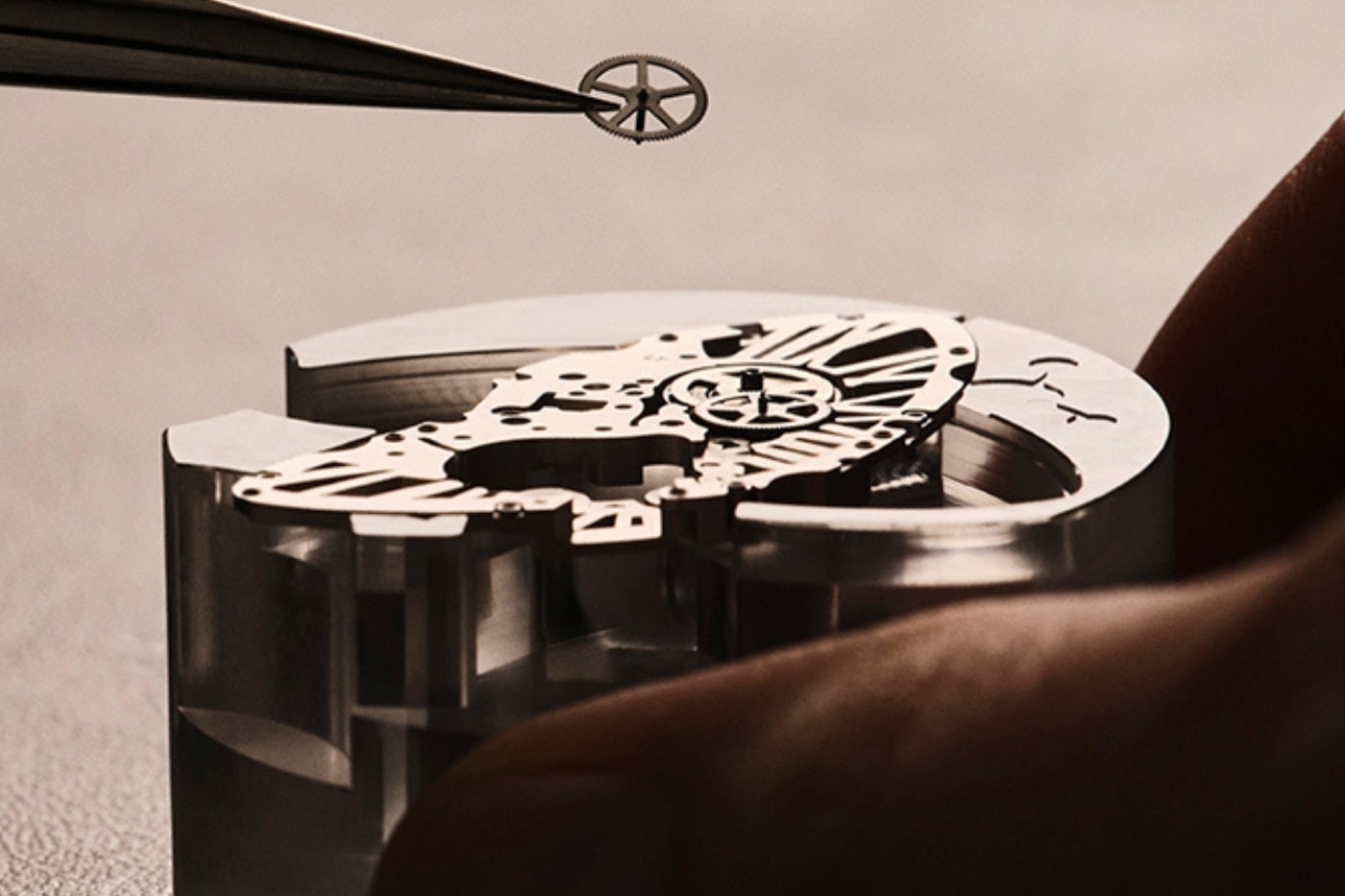
Cartier has arrived at Watches and Wonders 2026 with what might be its most expansive Geneva showing in years. The headline grabber is the return of the Crash, this time in a skeleton configuration that marks the most technically ambitious piece in the Cartier Prive line to date. Limited to 150 pieces in platinum, the Crash Squelette houses the Manufacture 1967 MC movement with hand-hammered bridges shaped as Roman numerals, 142 components packed into that famously distorted case. A ruby cabochon crown and burgundy accents running through strap and dial details give it a quietly lavish restraint that feels entirely appropriate for the Crash's mystique.
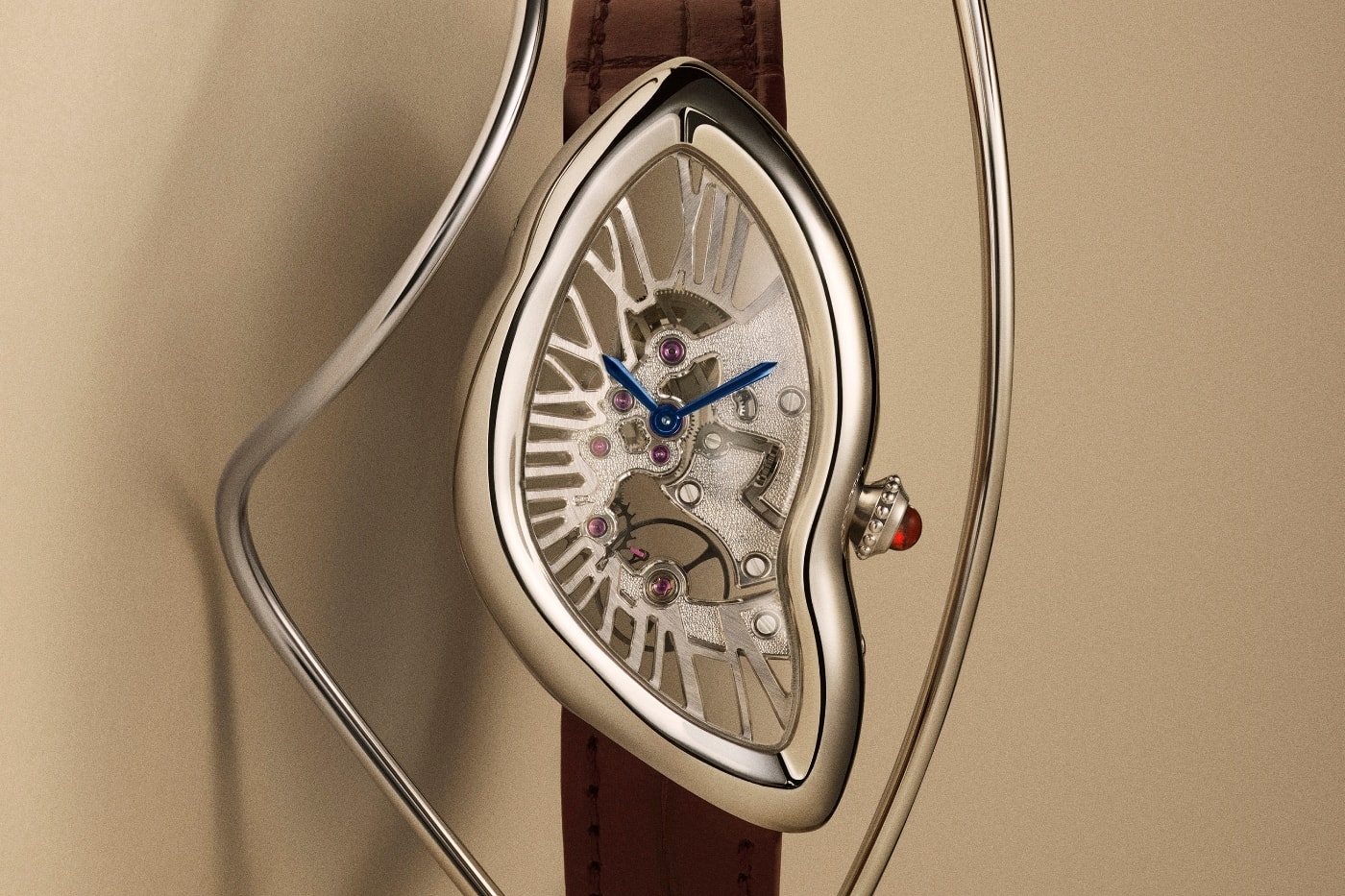
The Prive collection also marks its tenth edition this year, bringing back the Tank Normale and Tortue Chronographe Monopoussoir alongside the Crash, all rendered in platinum with that same burgundy thread. A new La Collection sub-line launches in yellow gold, broadening the entry point for collectors who have watched Prive pieces disappear from authorised dealers within hours.
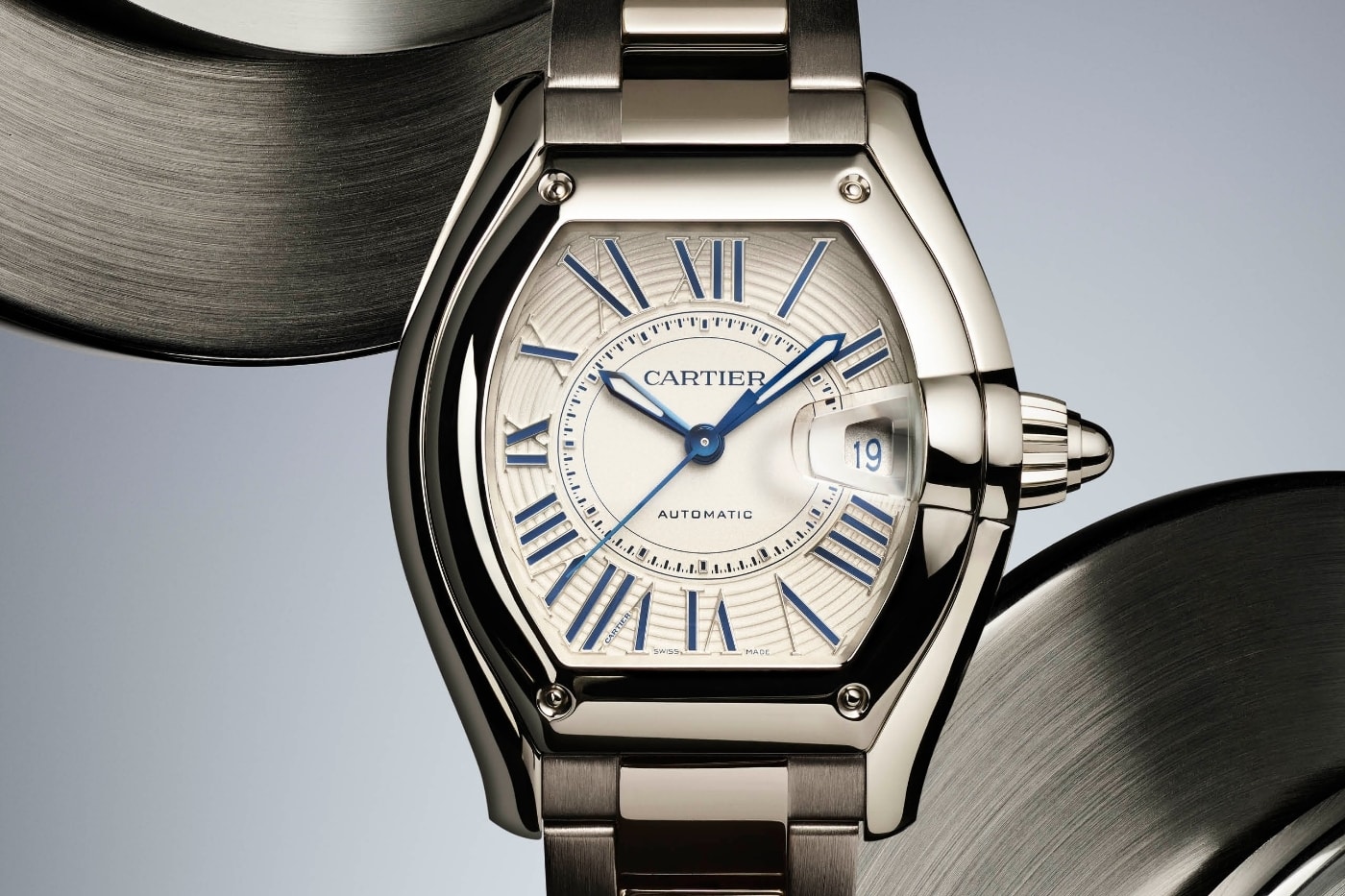
Beyond Prive, the Roadster makes a surprise return 23 years after its 2002 debut. The bold, rounded design language survives intact: trapezoidal case, conical crown, speedometer-inspired striated dial, corner rivet bezel. But proportions, finishes and ergonomics have been reworked by over 100 artisans. Available in steel, yellow gold and two-tone, in medium and large, with a QuickSwap bracelet system. It feels less like a nostalgia exercise and more like Cartier reminding everyone that its back catalogue runs deep.
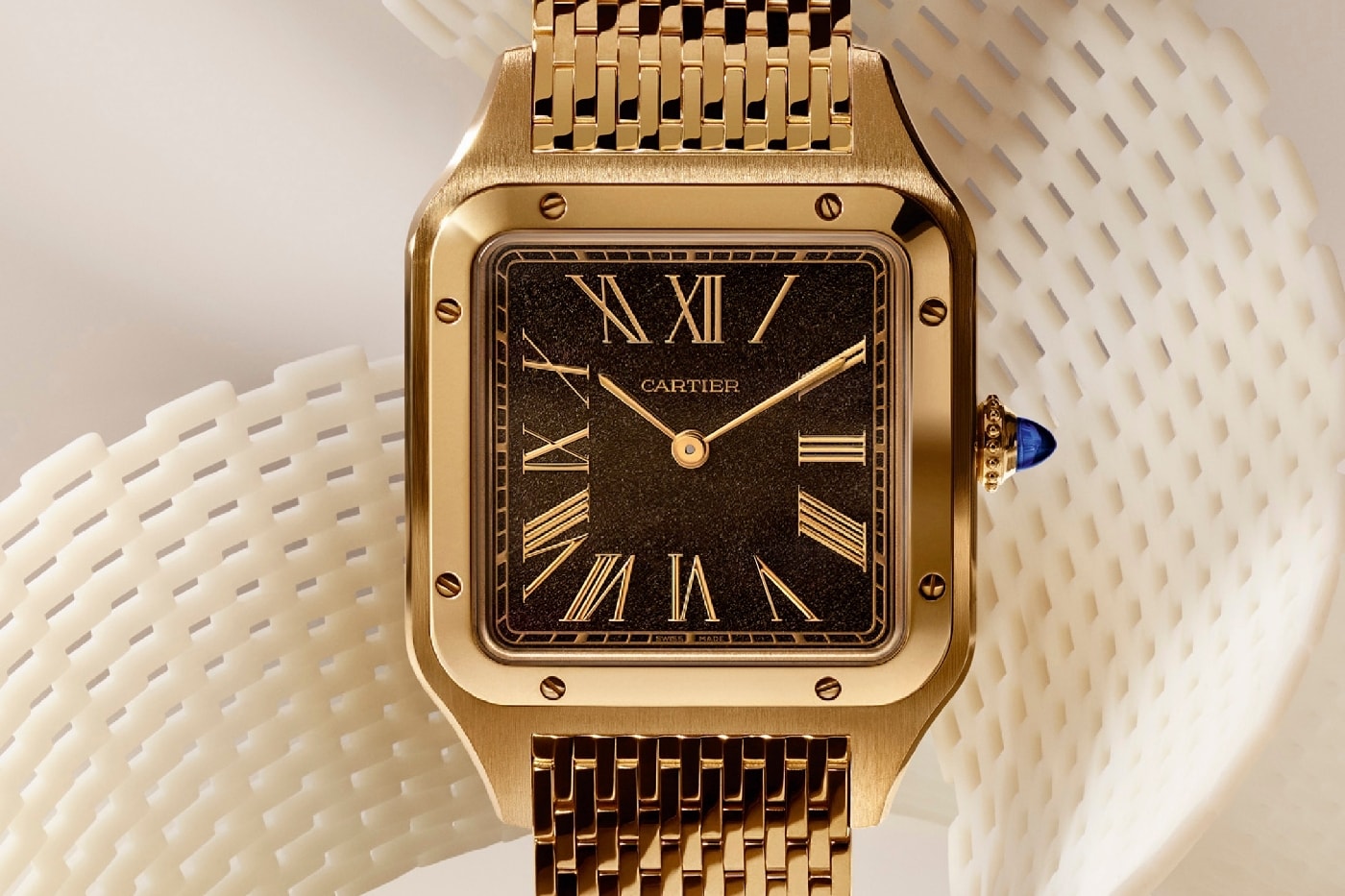
The Santos-Dumont takes its most substantial update in years, led by a new large model in yellow gold fitted with a 15-row mesh bracelet of 394 links, each 1.15mm thick, referencing Cartier's flexible gold bracelets from the 1920s. The standout is a gilt dial in polished obsidian, a volcanic stone from Mexico sliced to 0.3mm, where tiny trapped air bubbles make each piece uniquely iridescent. The black and gold combination is the sort of thing that stops you mid-sentence.
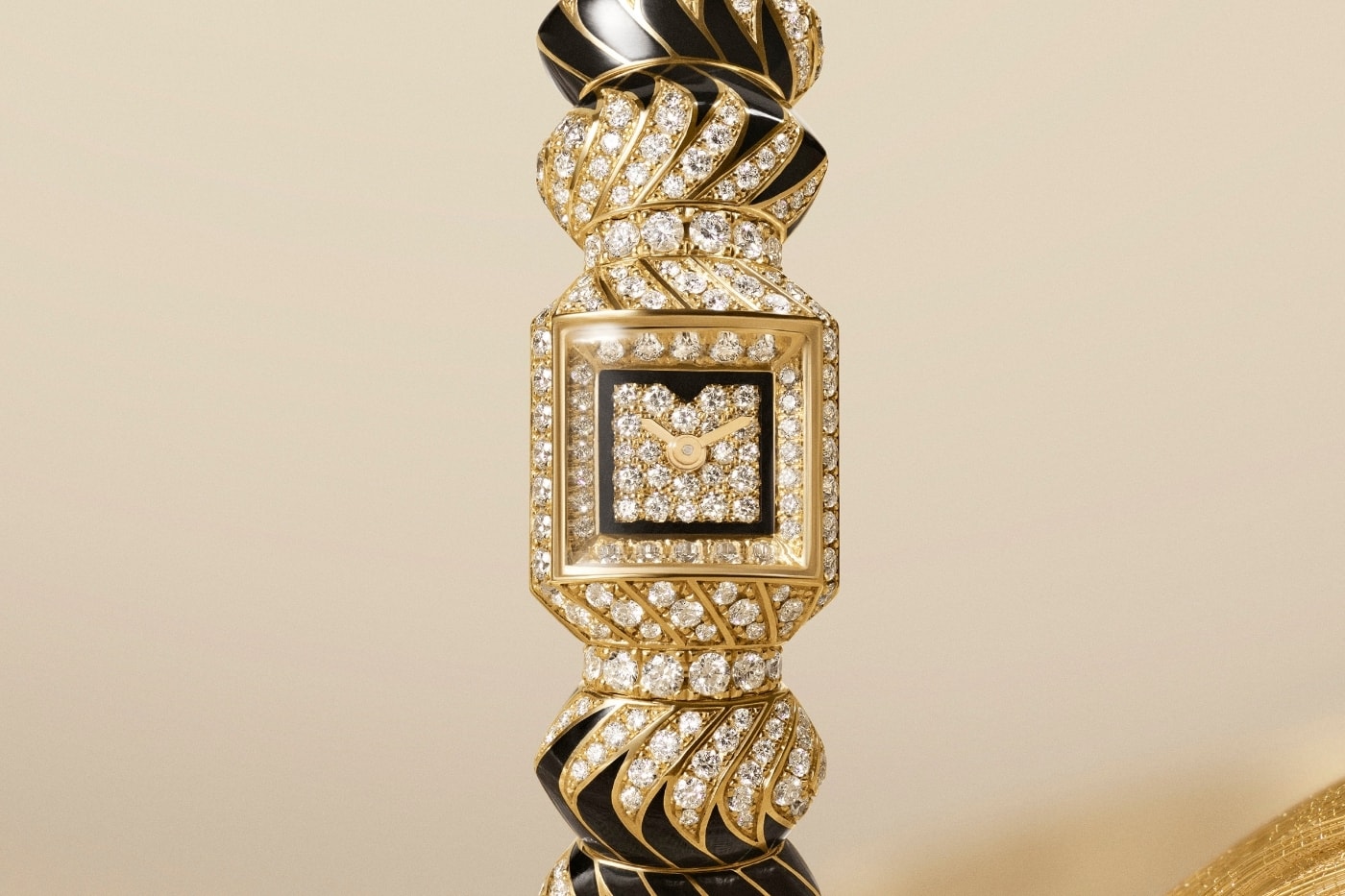
Elsewhere, the Baignoire gets a full Clou de Paris treatment in monochrome yellow gold, the Myst de Cartier arrives as a clasp-free jewellery watch strung with talismans and up to 986 diamonds, and the Tortue is substantially reworked with softened proportions and an embossed relief motif replacing the traditional guilloche. Even the Santos Chronograph has been scaled up with alternating satin and sunray finishes across its three sub-dials.
What binds this collection is not a single design language but a confidence in shape. Cartier is leaning into its archive without being beholden to it, treating canonical forms as starting points rather than museum pieces. The Crash skeleton proves the point: a watch that has become an auction phenomenon, now given a movement worthy of its distorted case, in a year when the brand's turnover and collector credibility continue to climb in tandem.