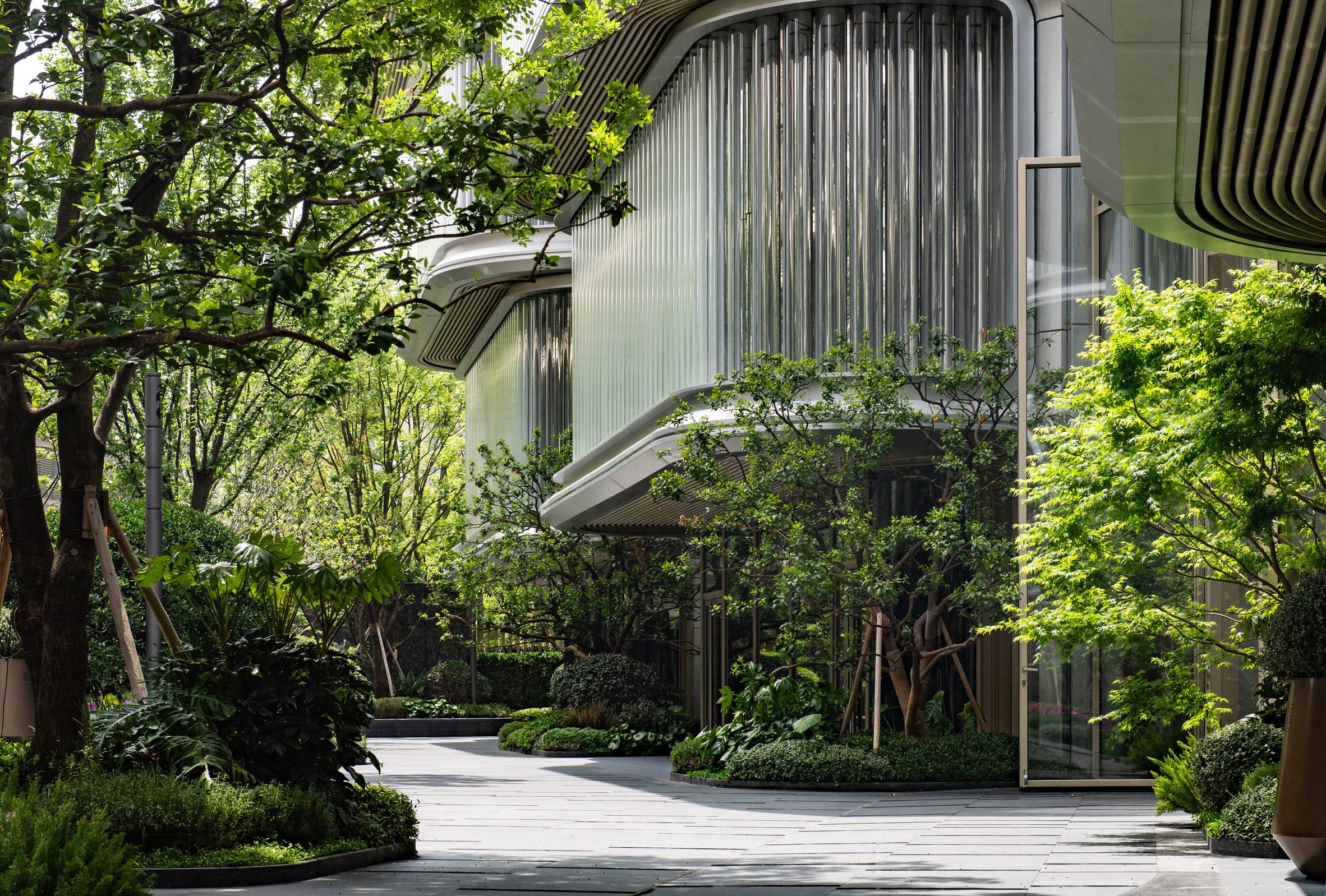
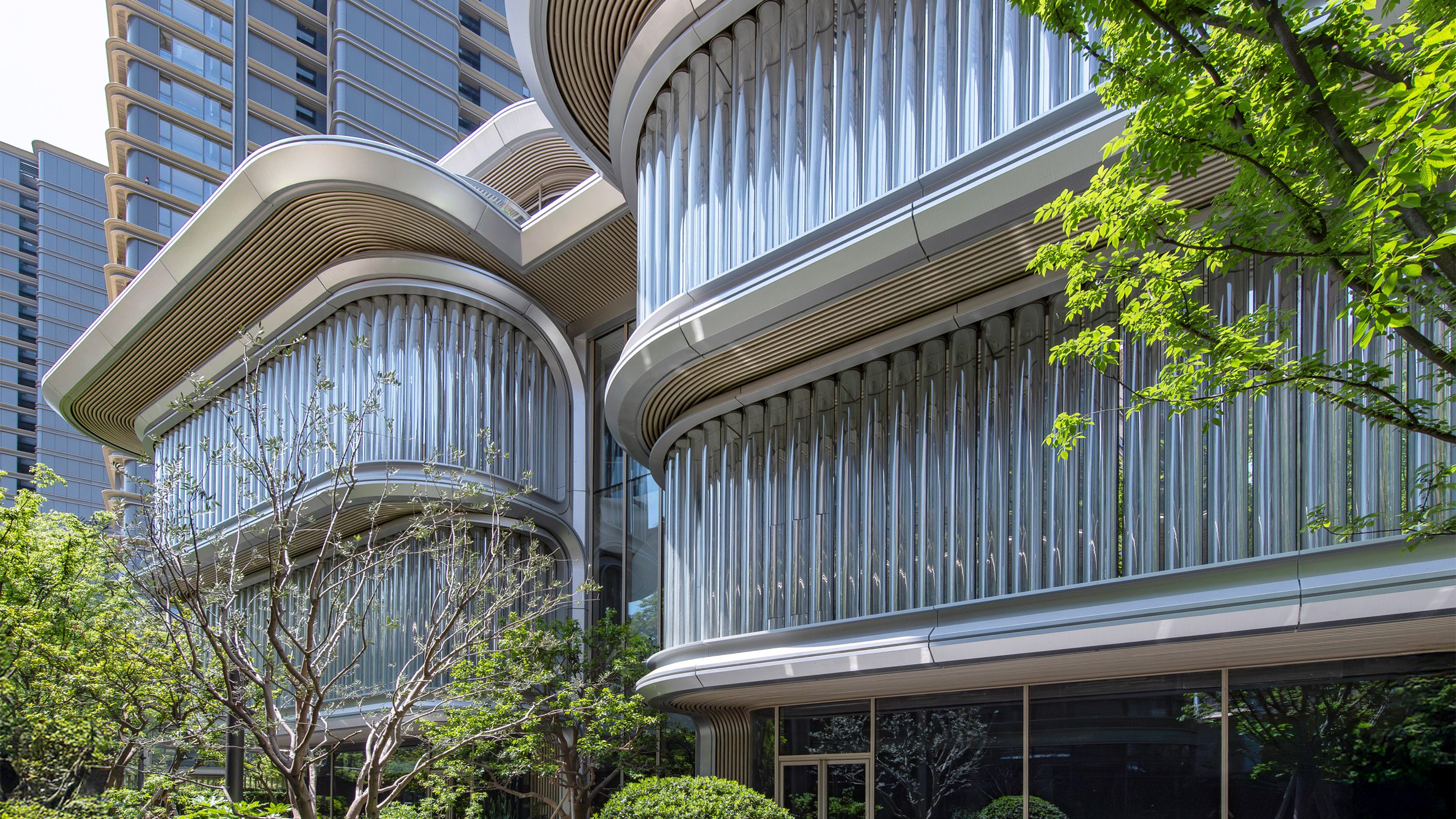
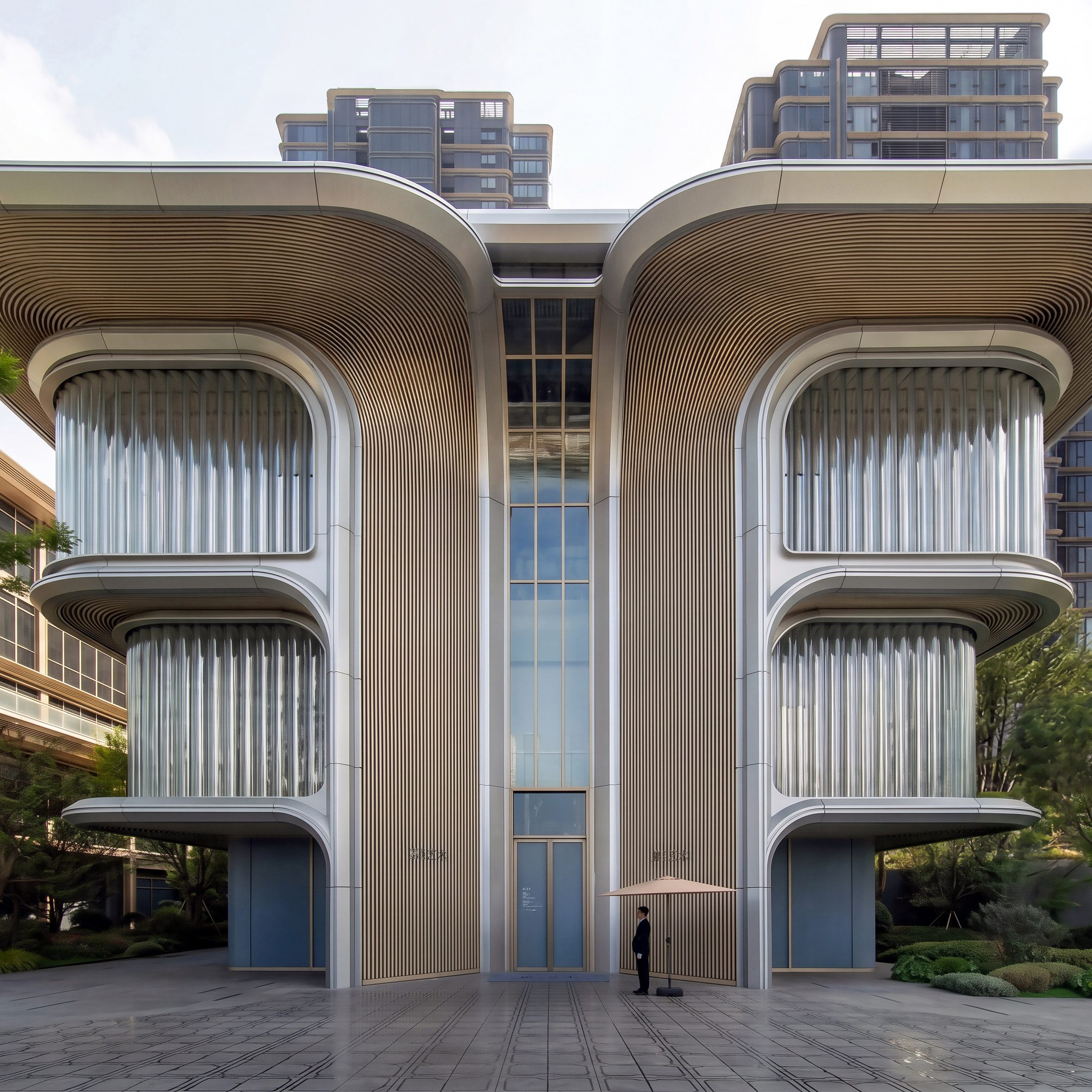
Foster + Partners has opened the doors to Jia Art, a new gallery in Shanghai's Putuo district that anchors the Changfeng mixed-use development with a quietly confident architectural statement. The building, with its stepped silhouette wrapped in tubular glass, marks a deliberate shift toward embedding culture at the heart of urban regeneration.
Drawing on the geometry of a blossoming flower, the gallery's curvilinear form appears to grow outward from its centre. The reference is not literal, nor should it be. Instead, Foster + Partners has translated the organic logic of petals unfurling into a building that feels both grounded and expansive. "The building's inherent symmetry establishes a sense of calm and balance in this fast-paced city," said senior partner John Blythe, describing a structure designed to hold its own amid Shanghai's relentless verticality.
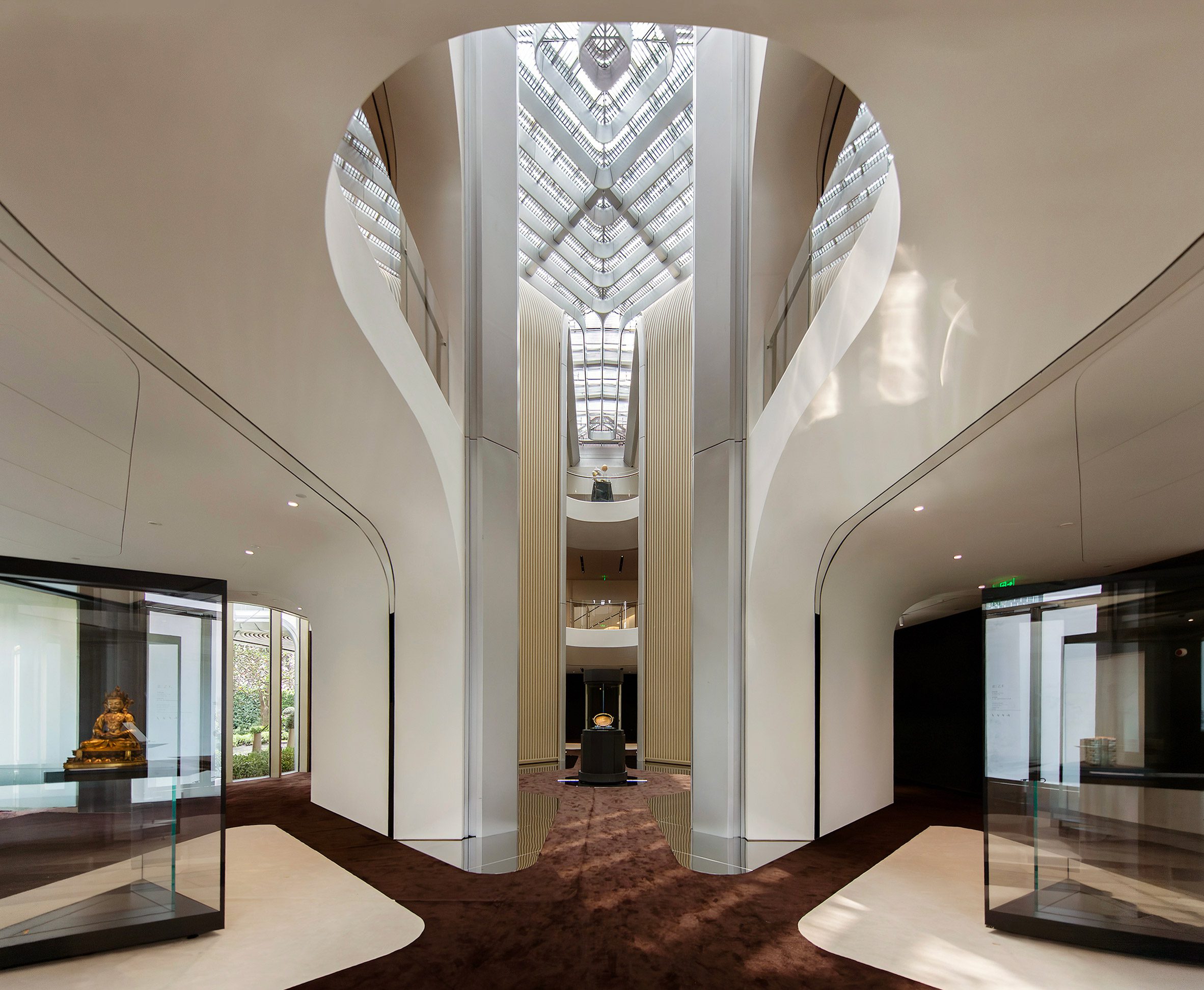
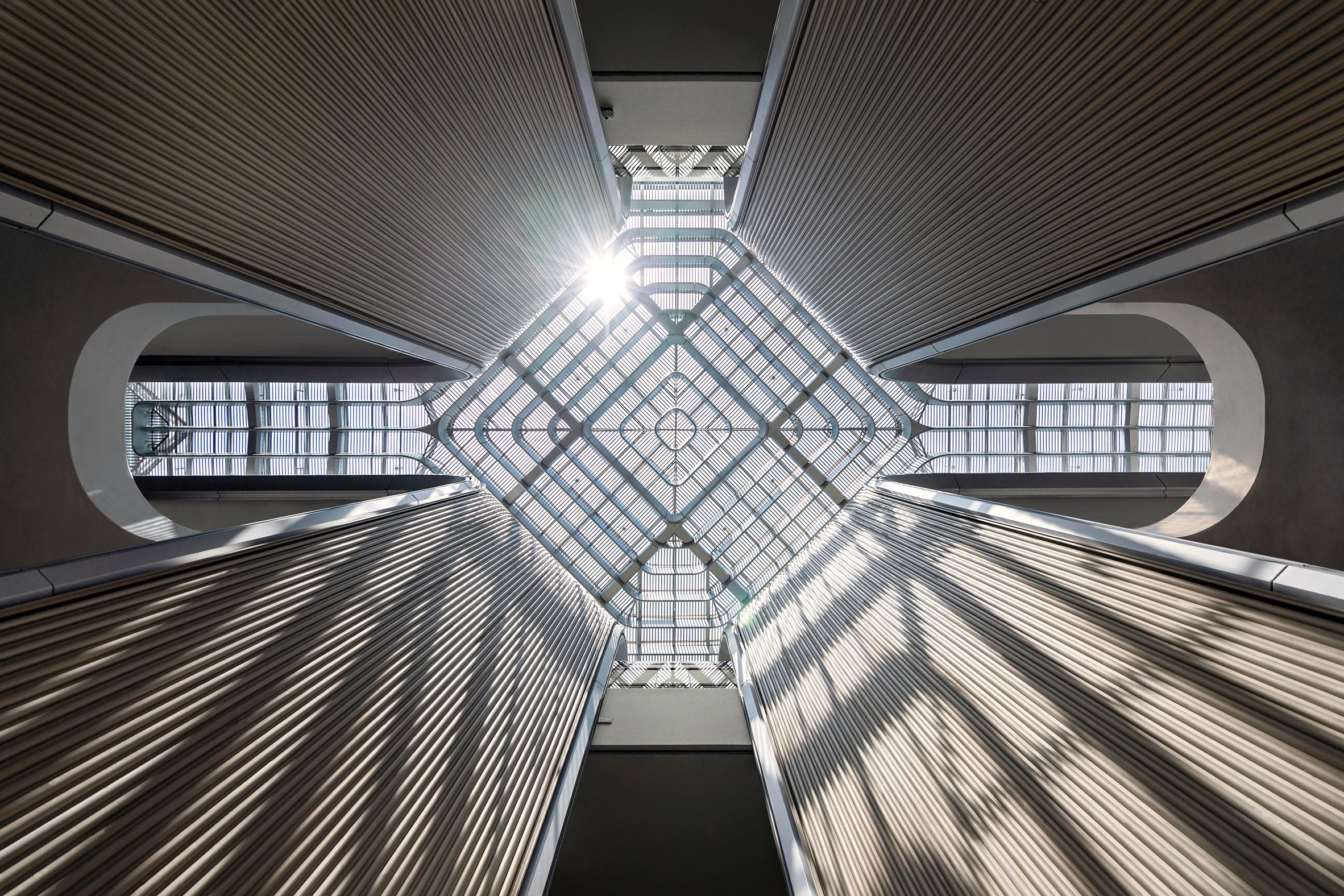
A double-height atrium splits the gallery in two, drawing natural light down through a central glass skylight. The northern wing houses the main exhibition spaces, while the southern side accommodates community education and event areas, a deliberate move to position the gallery as a genuinely public asset rather than a private collection with a viewing window. It is a building that understands cultural infrastructure as civic infrastructure.
The facade is where the project earns its place in conversation. Tubular glass ribs travel vertically up the building, set against mirror-finished stainless steel curved back panelling. The effect is a ribbed, almost textile surface that shifts with the light, creating depth on the upper levels as they cantilever outward over the public plaza below. The steel tubes continue across the undersides of the cantilevers and wrap around the balconies inside the atrium, creating a visual continuity between exterior and interior that rewards close attention.
Norman Foster himself framed the project in terms of urban responsibility. "Jia Art demonstrates the significance of embedding art and culture in our cities," he said. "It will bring life to the public spaces, nurturing a sense of community identity, while playing an important role in integrating our new Changfeng development into the wider fabric of Shanghai." The language is characteristically precise, but the sentiment carries weight in an era where cultural buildings are increasingly expected to justify their existence beyond their exhibition programmes.
The 5,000-square-metre gallery sits at the intersection of two primary axes within the Changfeng masterplan, making it both a destination and a waypoint. The adjacent Changfeng Park provides a green counterpoint, and the practice's broader vision for the area positions the gallery as the social and cultural anchor for what will become a denser urban quarter. In a city that has seen no shortage of statement cultural buildings, Jia Art makes its case not through height or spectacle, but through proportion, material refinement, and a genuine commitment to public access. That is an architectural argument worth making.