North of Chiang Mai, where the Mae Rim Valley opens into a corridor of rice paddies and forested hills, the air changes. It becomes cooler, greener, quieter. The road from the city climbs gently past roadside stalls selling rambutan and sticky rice, past temples where monks are still making their morning rounds, past fields that have been farmed for generations. And then, at the end of a lane that feels like it was never meant for through traffic, Four Seasons Resort Chiang Mai appears not as a destination but as a landscape. The pavilions and villas do not announce themselves. They settle into the terrain as though they have always been here, which is the entire point.
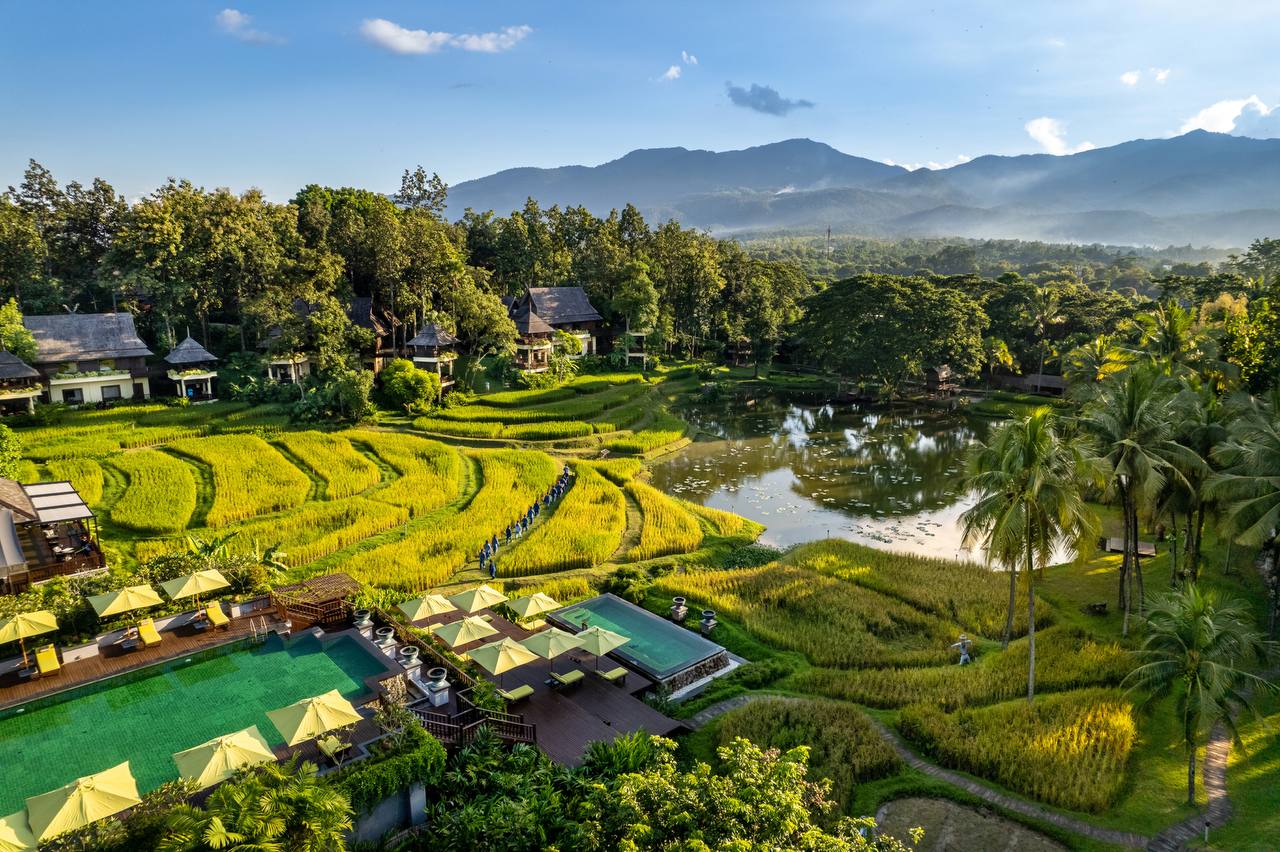
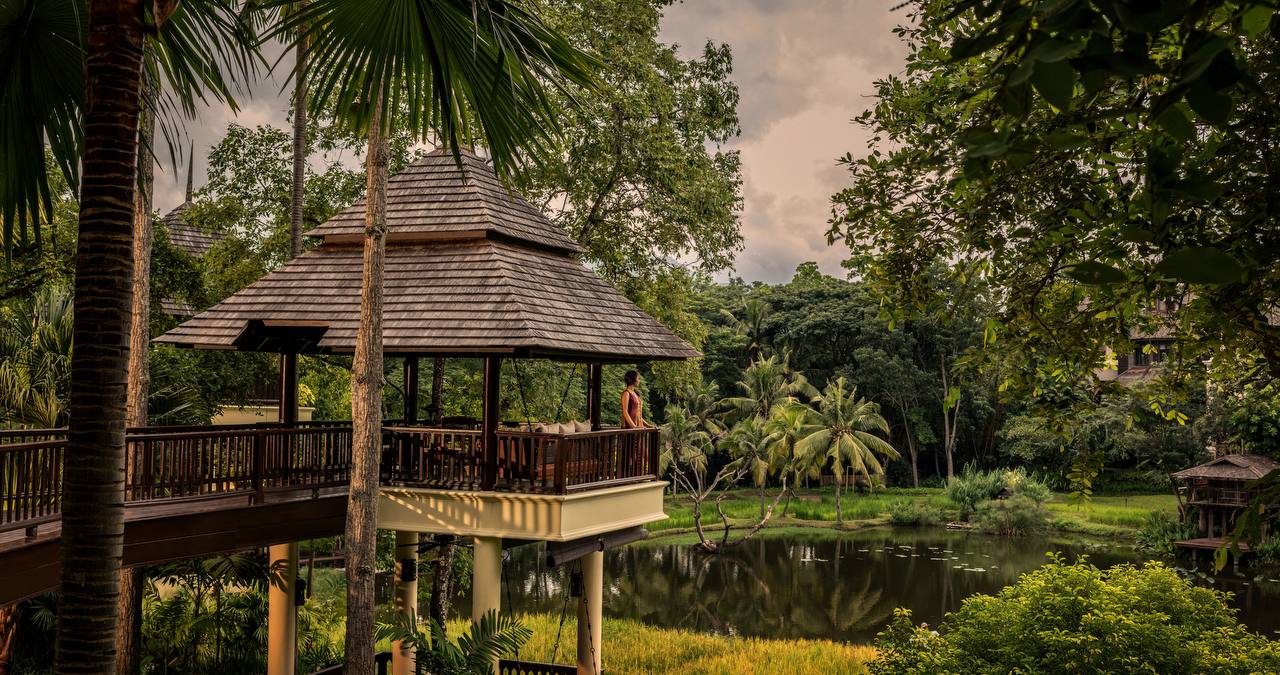
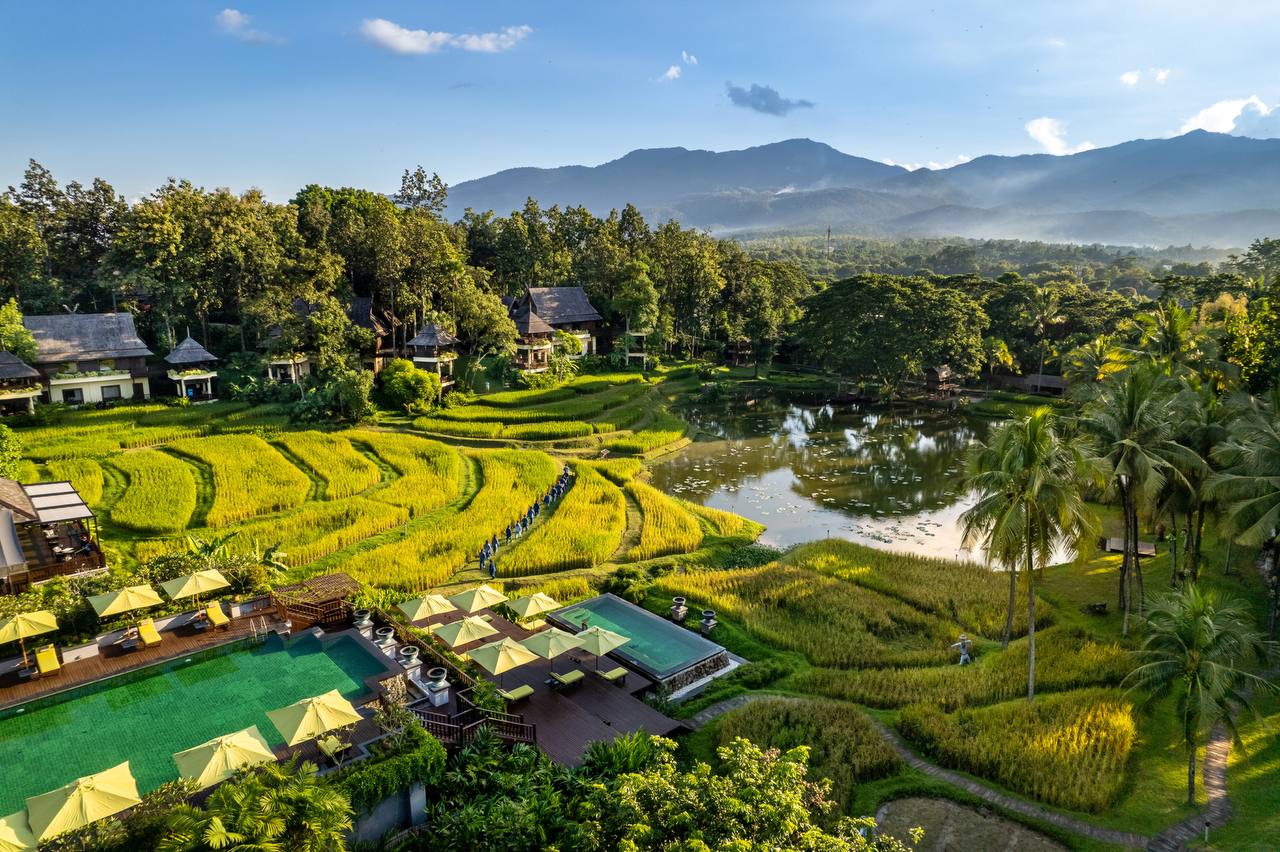
The resort spans 32 acres of rice terraces, lotus ponds, and tropical gardens in the Mae Rim district, roughly 30 minutes from Chiang Mai's old city. The Lanna Kingdom, which ruled northern Thailand from the 13th century until it was absorbed into Siam, left behind an architectural and cultural vocabulary that the resort draws from without replicating. Lanna means "a million rice fields," and the name is not decorative. The rice paddies at the centre of the resort are working paddies, harvested by local farmers using methods that predate the hotel by centuries. The water buffalo that guests are invited to bathe in the golden hour are real buffalo, working the same fields their ancestors worked. Nothing here is themed. It is simply what this valley does.
Pavilions in the Paddies
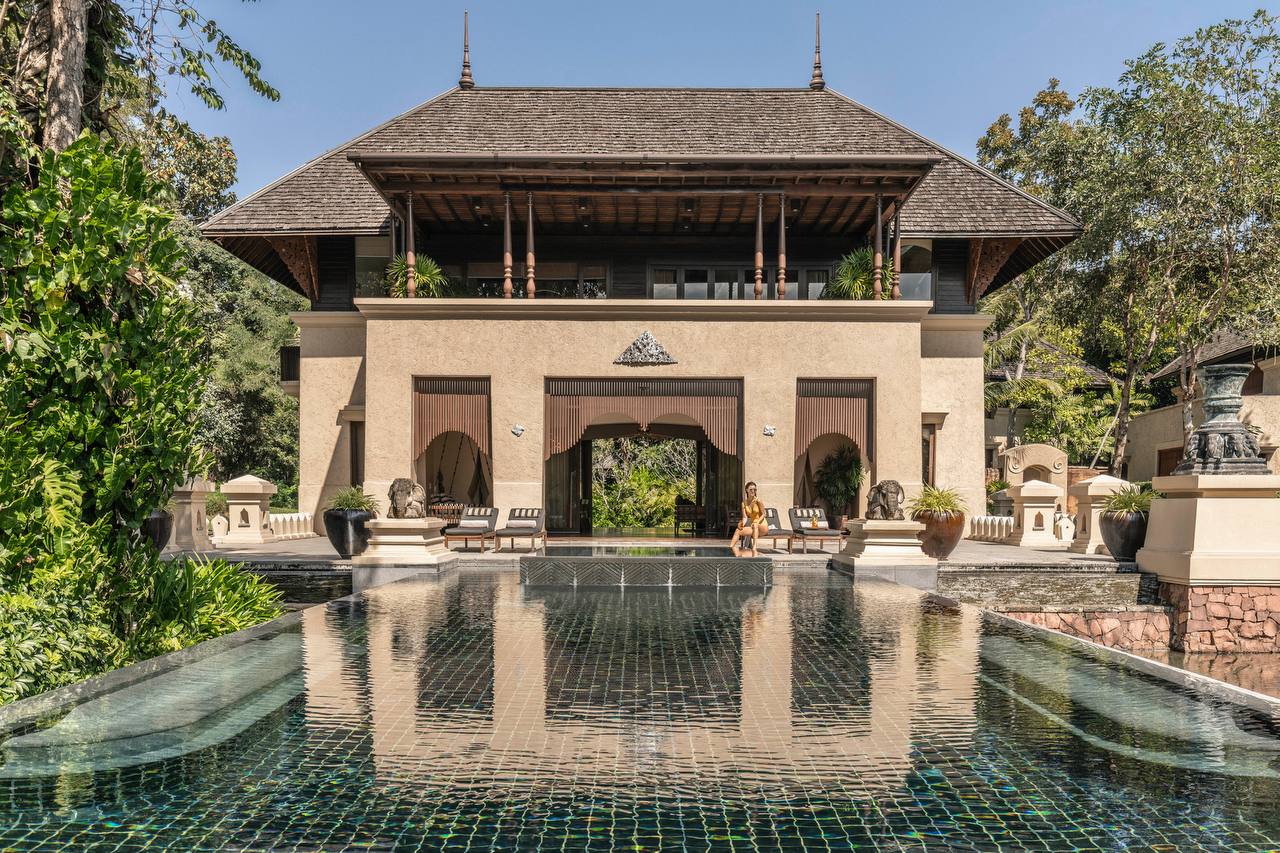
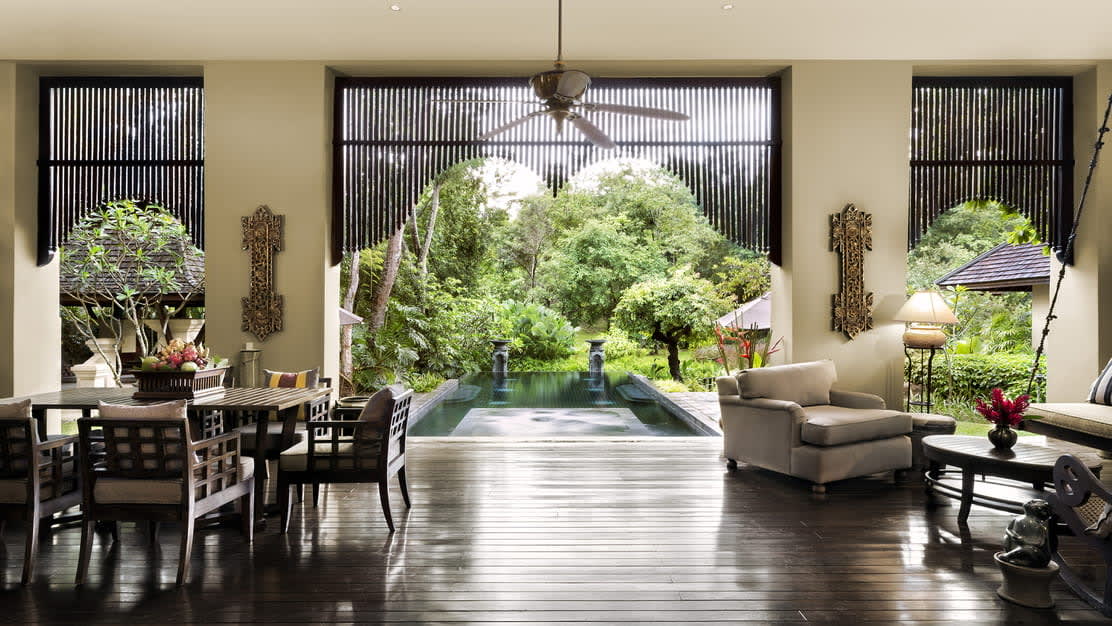
The architecture is Lanna in its bones: pitched roofs with ornamental finials, teak floors, open-air salas, and an insistence on natural materials that makes the transition from room to garden feel like stepping from one room into another. Set among rice paddies and mist-covered mountains, the resort blends Lanna architecture with contemporary comfort across pavilions and private pool villas. The pavilions come in four tiers, from Garden Pavilions tucked among flowering paths to Upper Rice Terrace Pavilions that look directly over the fields. The pool villas add private plunge pools and expansive verandas where the distinction between indoors and outdoors becomes a polite suggestion rather than a wall.
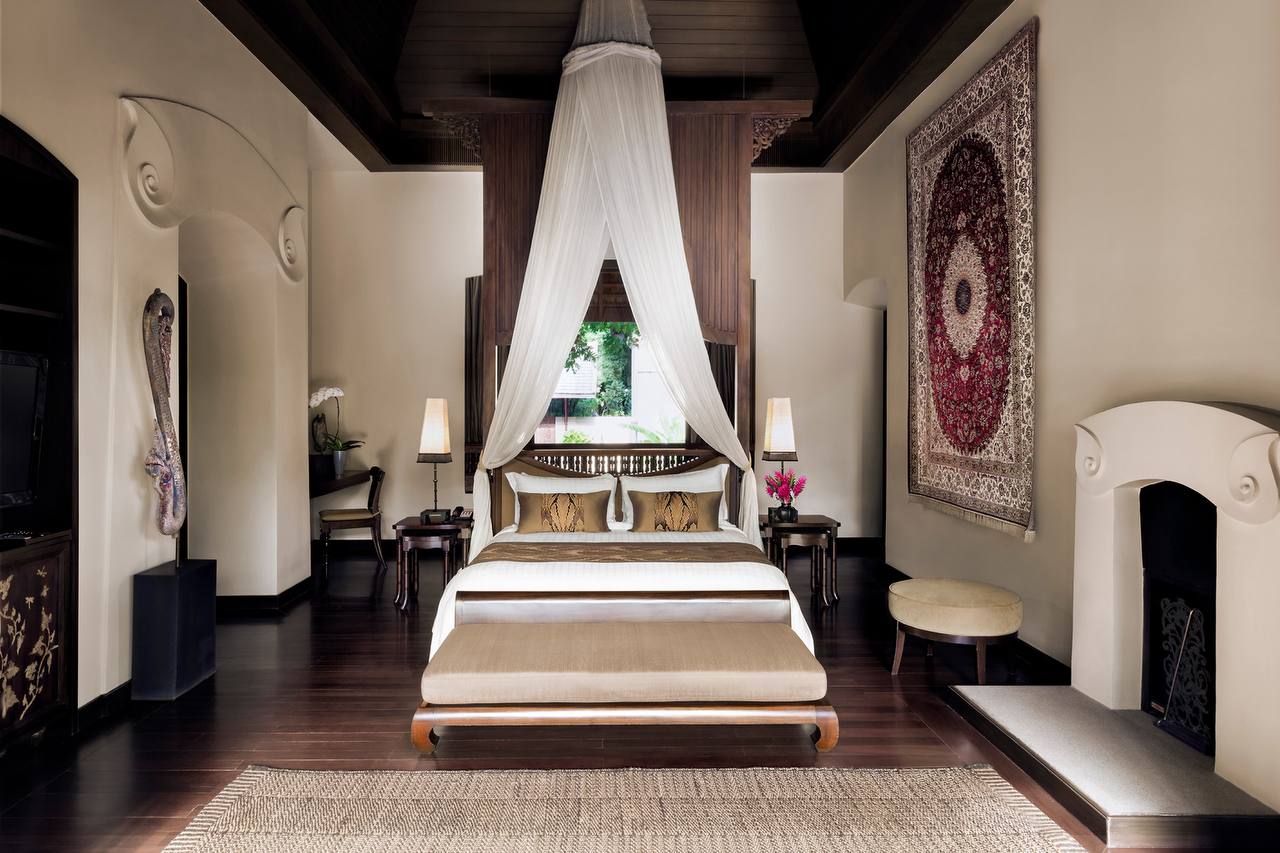
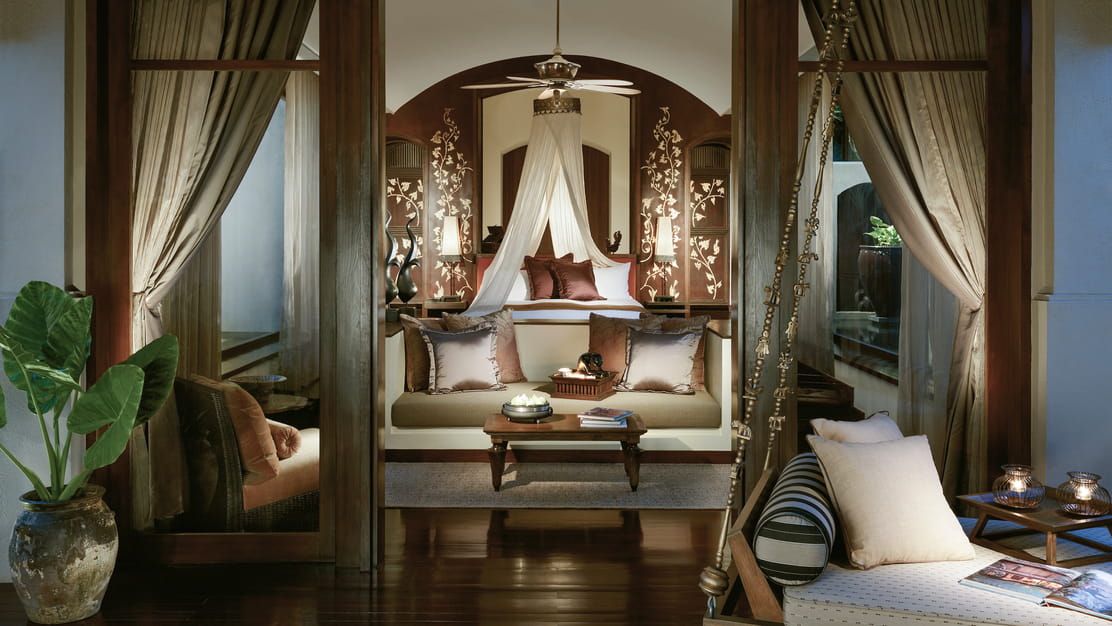
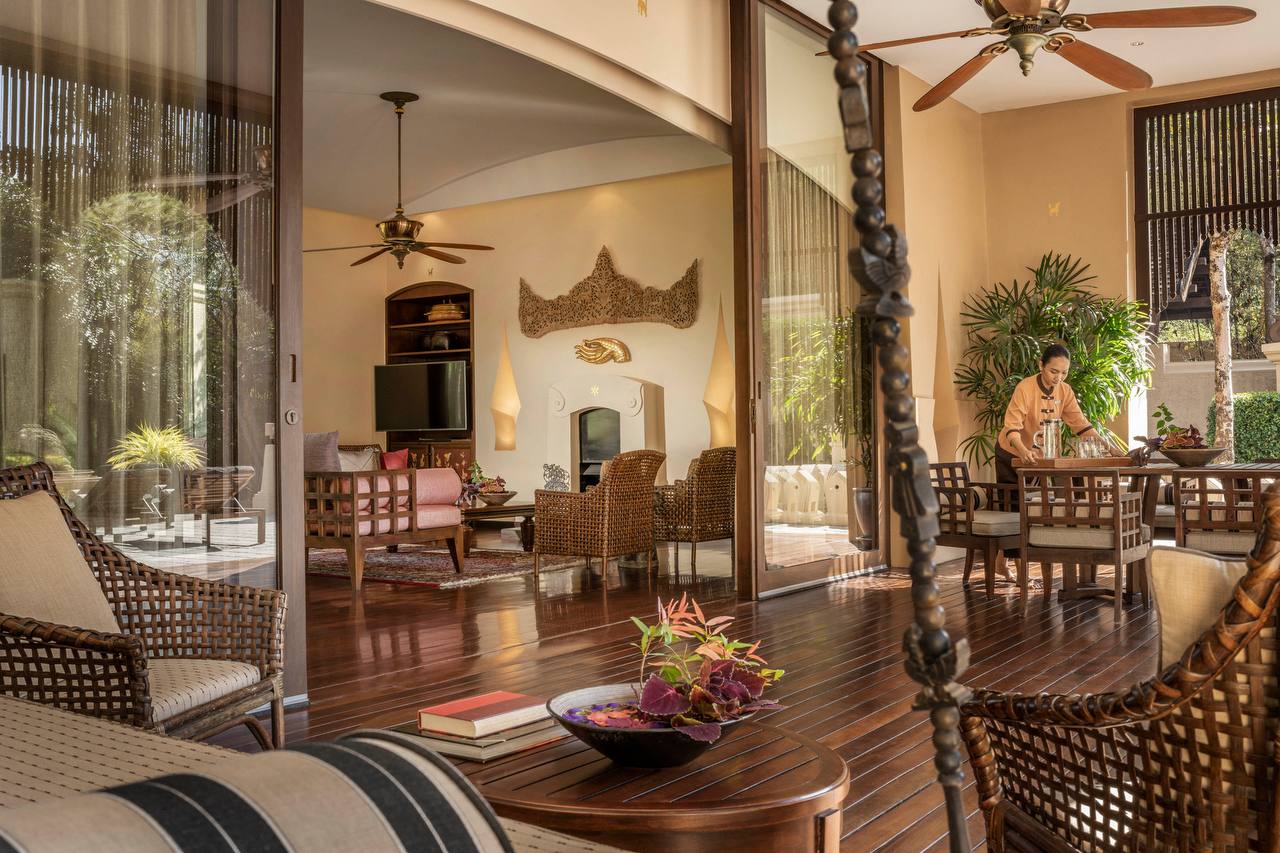
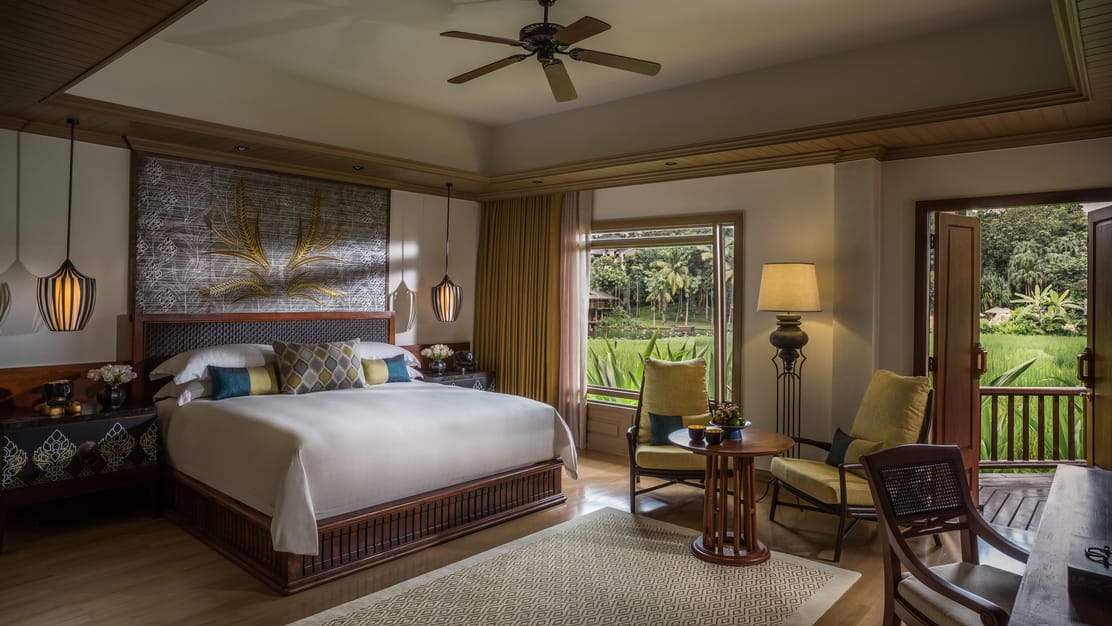
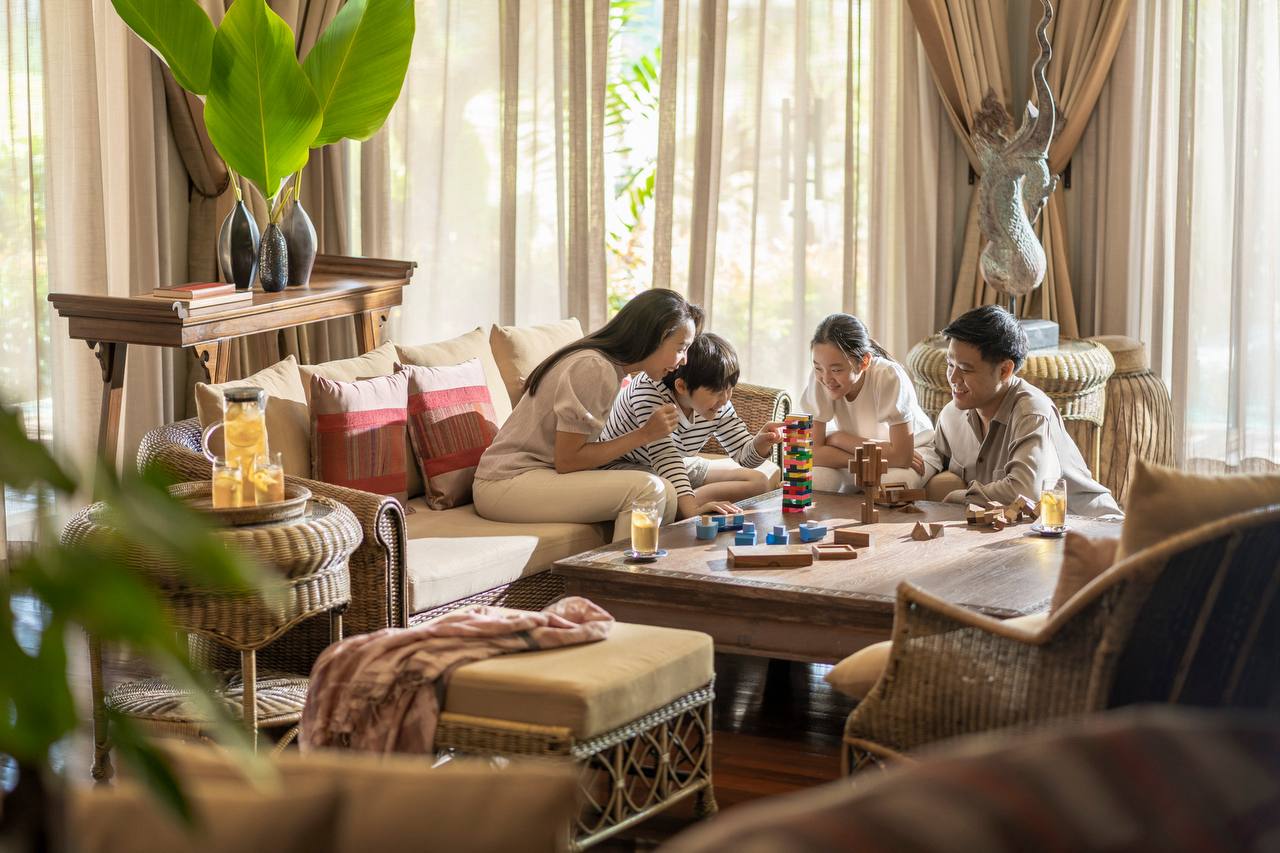
Inside, the rooms are studies in warm restraint. Four-poster beds draped in white cotton, rattan furniture, teak panelling, and Lanna textiles in muted earth tones. The residential villas go further, with separate living and dining areas, fireplaces, and residential assistants who handle the kind of details that separate a hotel stay from actually living somewhere. Each residence features an expansive open lounge, elegant dining area, and a dedicated Residential Assistant ensuring every detail of your stay is flawless. The verandas face the rice paddies, and the rice paddies face the mountains, and the mountains catch the last light, and by that point you have stopped checking your phone entirely.
Wara Cheewa: The Art of Living
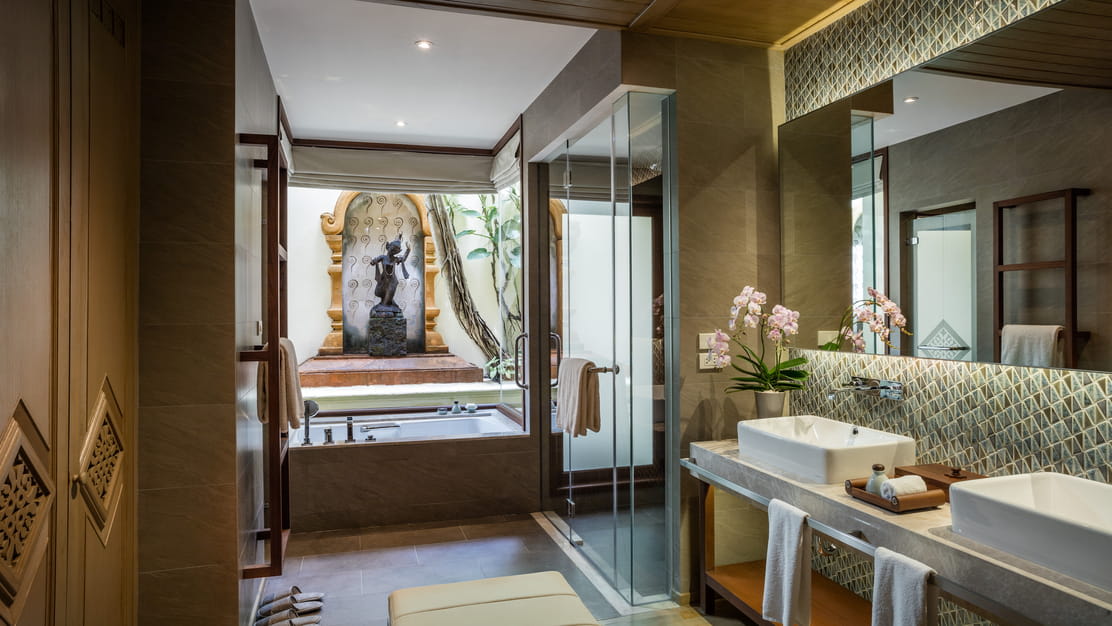
The spa is called Wara Cheewa, which translates roughly as "the art of living," and it is a three-storey wellness temple built around a central courtyard with a turquoise lap pool flanked by two reclining stone figures. The design is both contemplative and architectural, a place where the building itself encourages you to slow down before any treatment has begun. The Wara Cheewa Spa draws on northern Thailand's healing heritage, offering yoga overlooking the rice fields, Muay Thai in a dedicated ring, and Lanna-inspired body rituals that incorporate local herbs and ancient techniques. Treatments use indigenous ingredients: tamarind, lemongrass, turmeric, and jasmine rice scrubs that have been part of Lanna wellness practice for longer than anyone has been calling it wellness.
The wellness programme extends well beyond the treatment rooms. Yoga sessions overlook the rice paddies at dawn. Muay Thai training takes place in a dedicated ring with professional instructors. Guided meditation walks through the resort grounds are led by practitioners who understand that the landscape itself is the practice. There is a fitness centre, of course, but the real training here happens in the open air, with the sounds of water buffalo and temple bells as your soundtrack.
The Cooking School
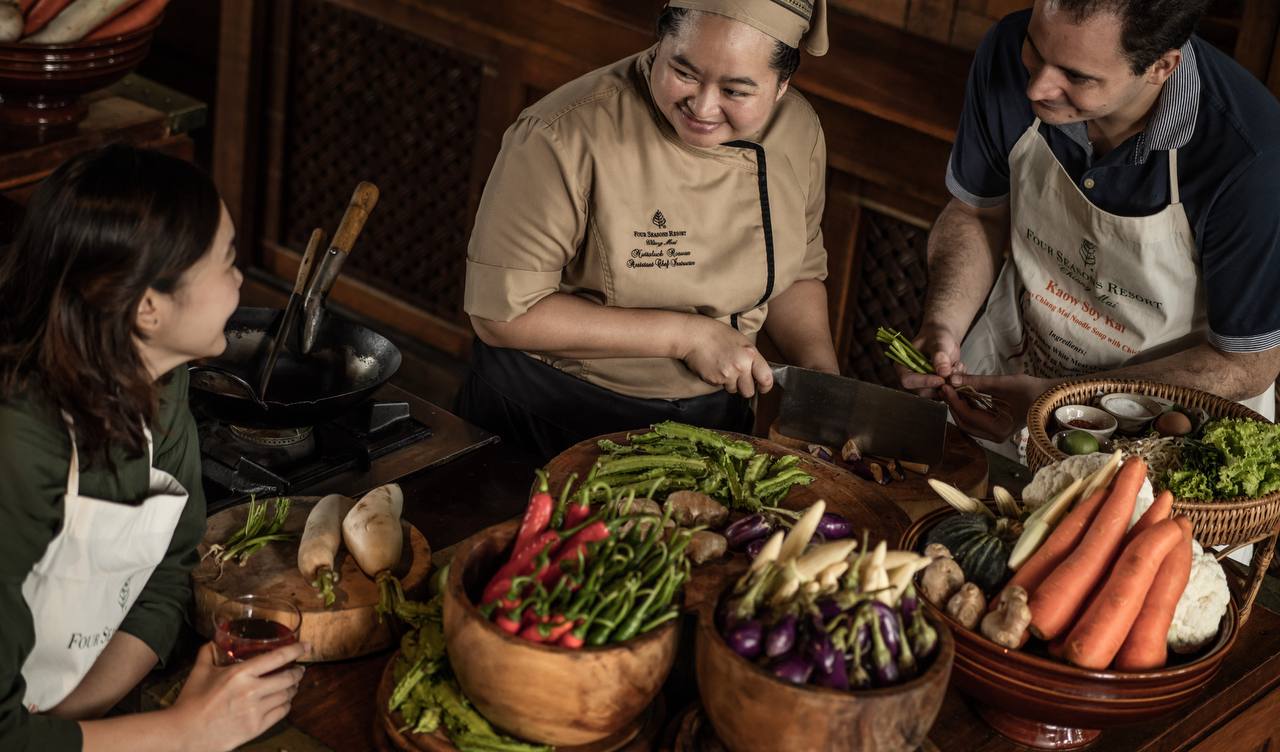
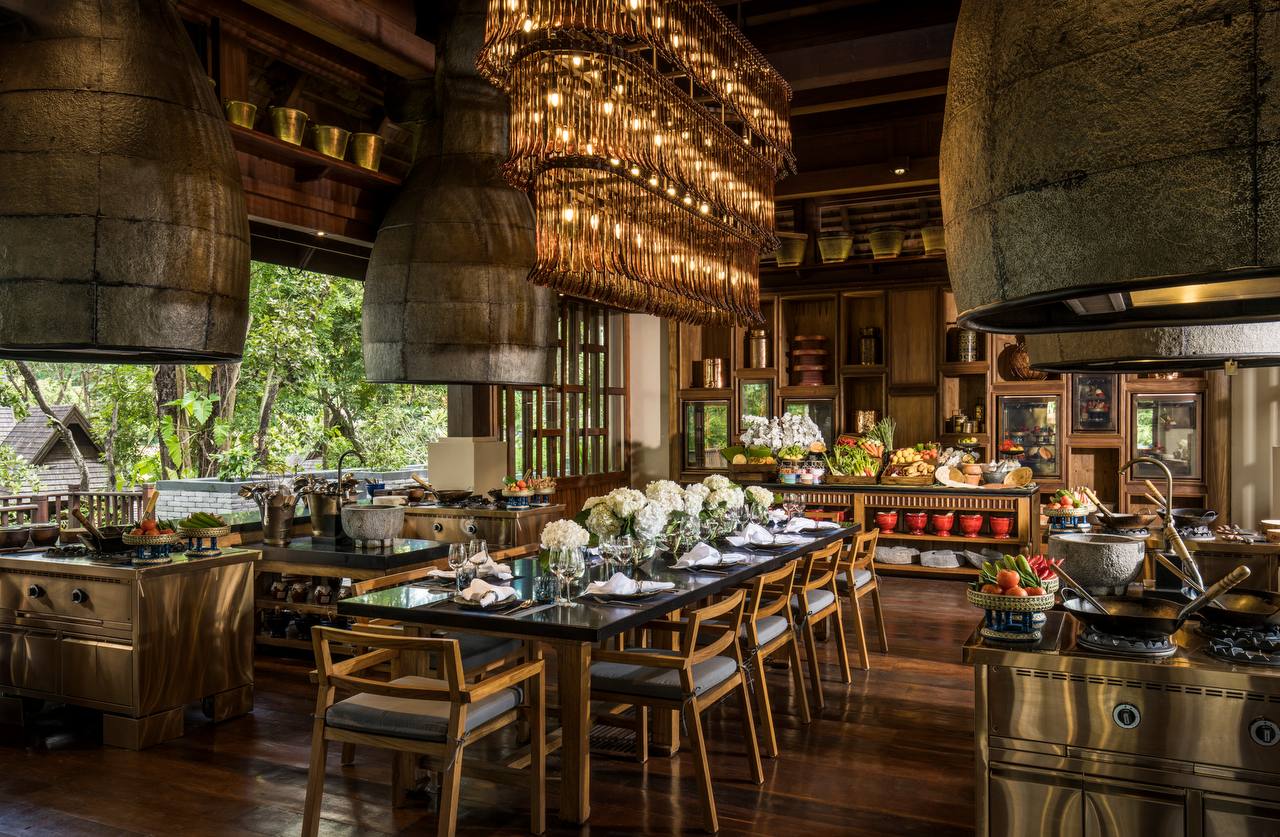
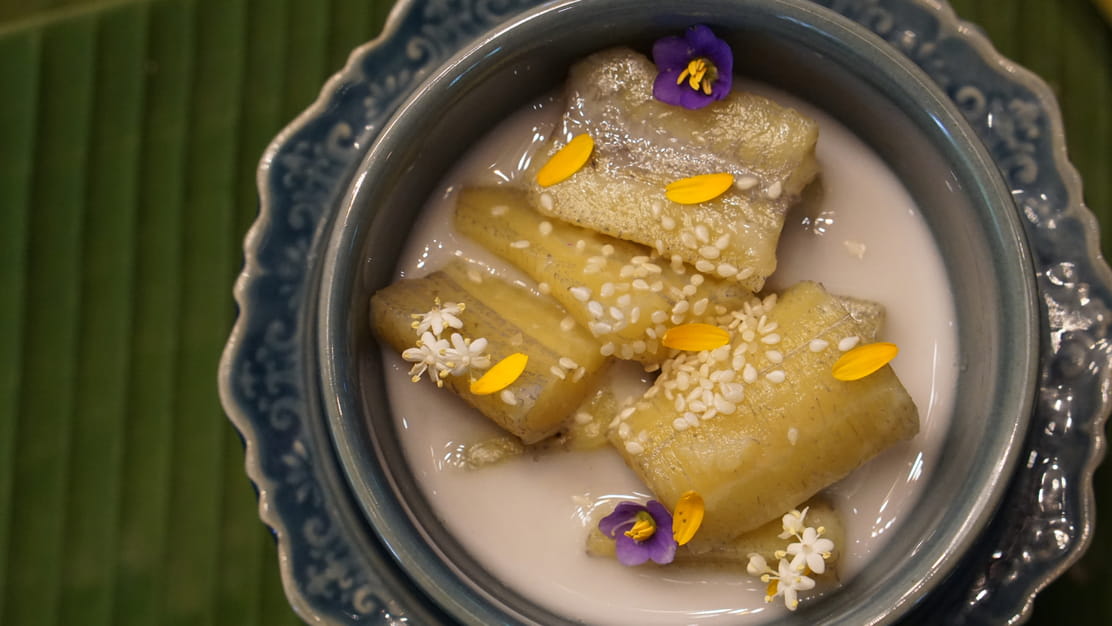
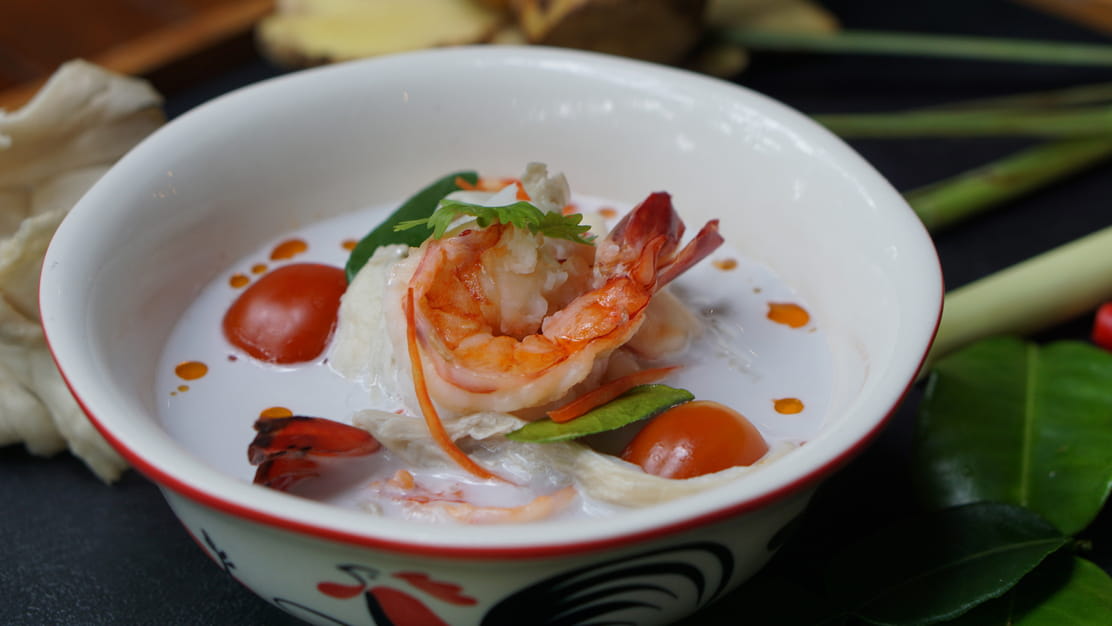
Designed by Bill Bensley, the resort's cooking school and restaurant is housed in a charming Thai teak house that celebrates traditional Lanna cuisine with the kind of theatricality that Bensley brings to everything he touches. The cooking classes are immersive, not demonstrative. Guests work alongside chefs in an open kitchen, learning to balance the four pillars of northern Thai cooking: salt, sour, spice, and smoke. Housed in a Thai teak house designed by Bill Bensley, the cooking school celebrates Lanna cuisine with immersive classes where guests learn to balance salt, sour, spice, and smoke alongside professional chefs. The ingredients come from the resort's own garden, the techniques from generations of Lanna home cooks, and the result is a meal that tastes like it could only have been made here, which is precisely the point.
Cultural Immersion, Not Cultural Tourism
What separates Four Seasons Chiang Mai from resorts that merely decorate themselves in local motifs is the depth of its cultural programming. The Lanna experiences are not bucket-list items arranged for Instagram. They are genuine workshops led by local artisans and practitioners. Guests learn indigo dyeing from families who have been working with natural pigments for generations. They paint traditional umbrellas with artists who learned the craft as children. They participate in Buddhist blessing ceremonies with monks from nearby temples who have been part of this community since before the resort existed. The Lanna Kingdom's customs and traditions live on in the architecture, crafts, and cuisine of northern Thailand, and the resort offers immersive workshops in indigo dyeing, umbrella painting, pottery, and temple visits that connect guests to living heritage rather than curated performance.
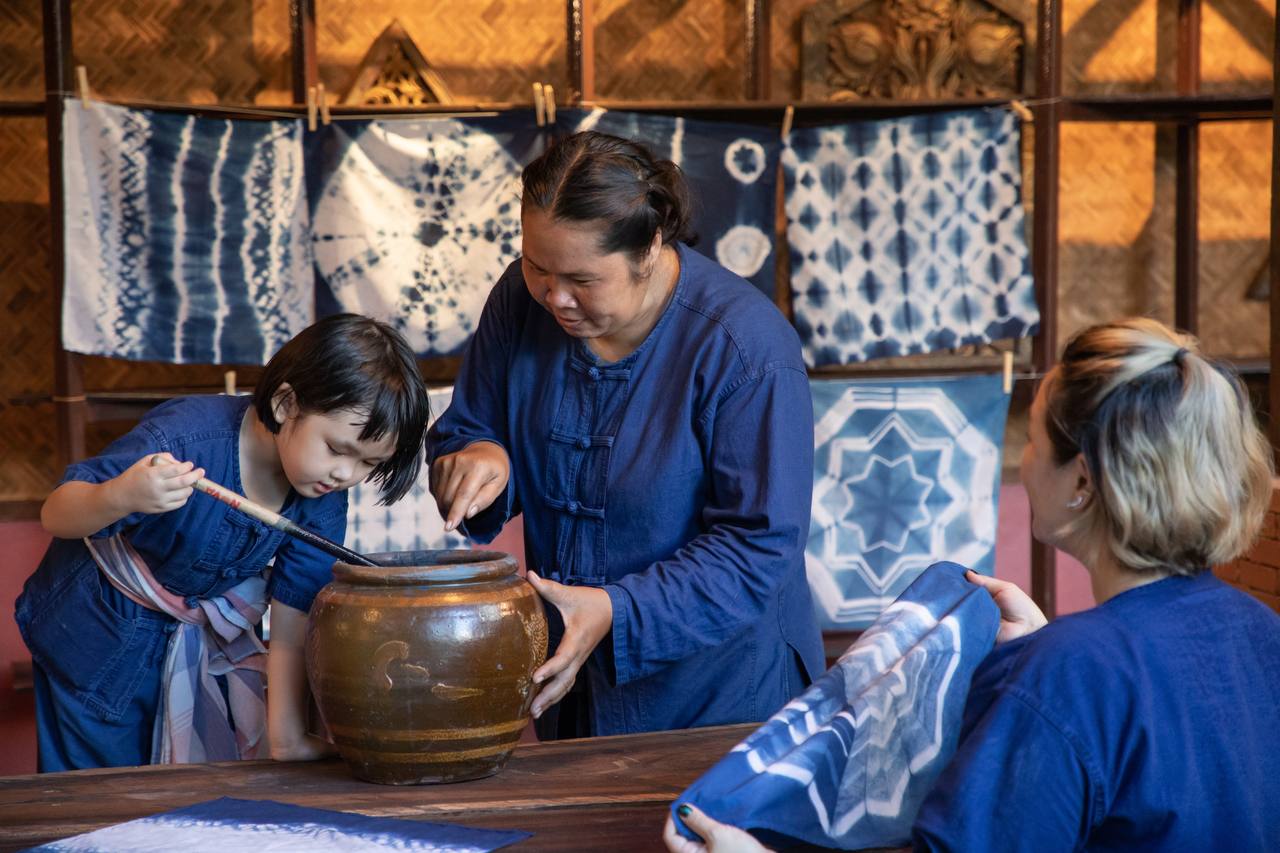
The pottery workshop is three generations working around a single table. The monk blessing happens at a local temple, not a staged recreation. The rice planting is real rice, harvested by the same community that farms these paddies year-round. This is the difference between experiencing a culture and consuming one, and Four Seasons Chiang Mai understands that distinction deeply enough to make it the defining characteristic of the stay.
Dinner Under the Stars, Dinner in the Fields
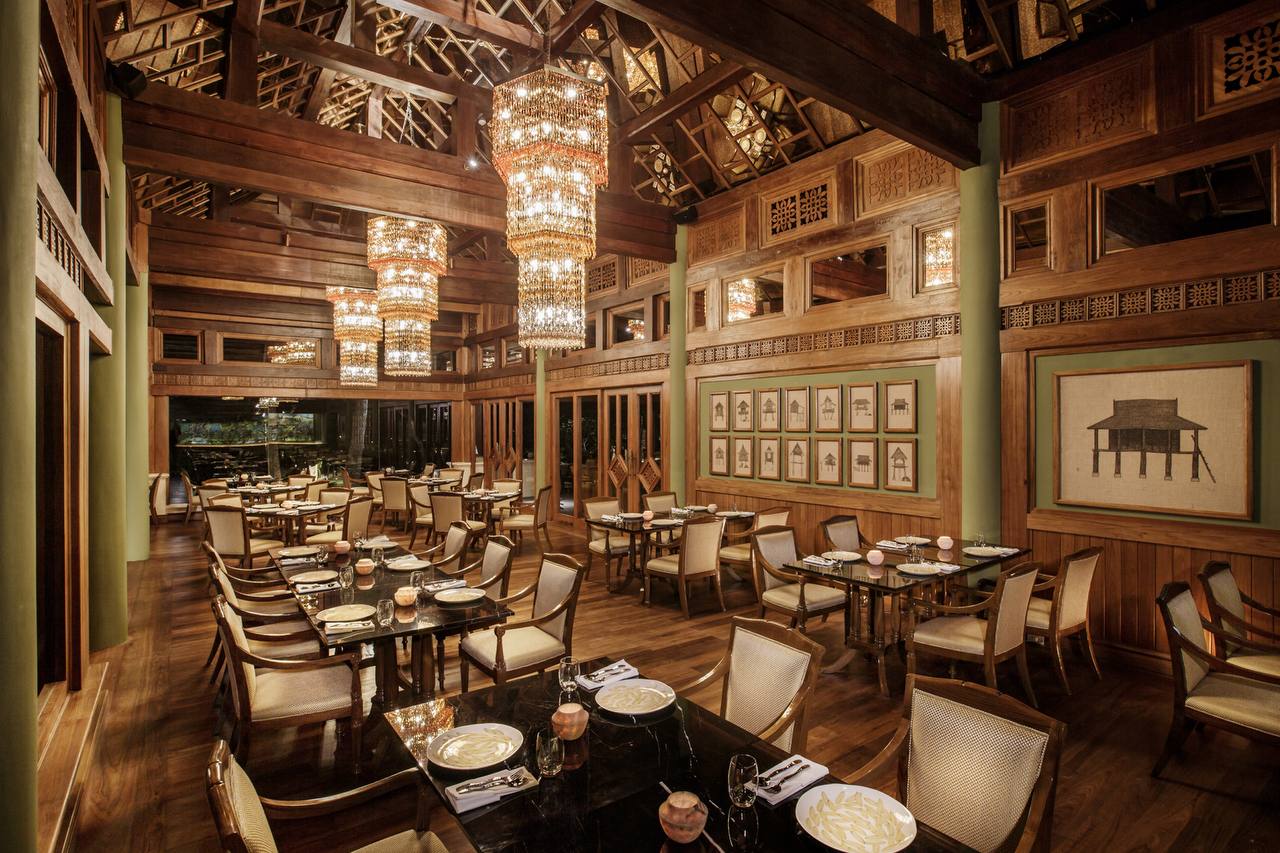
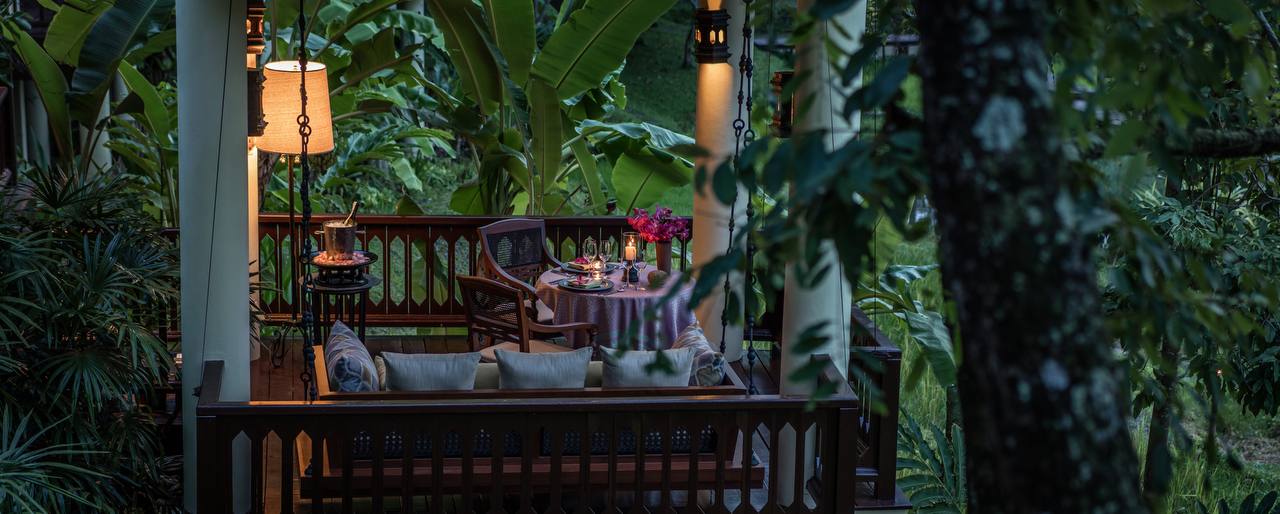
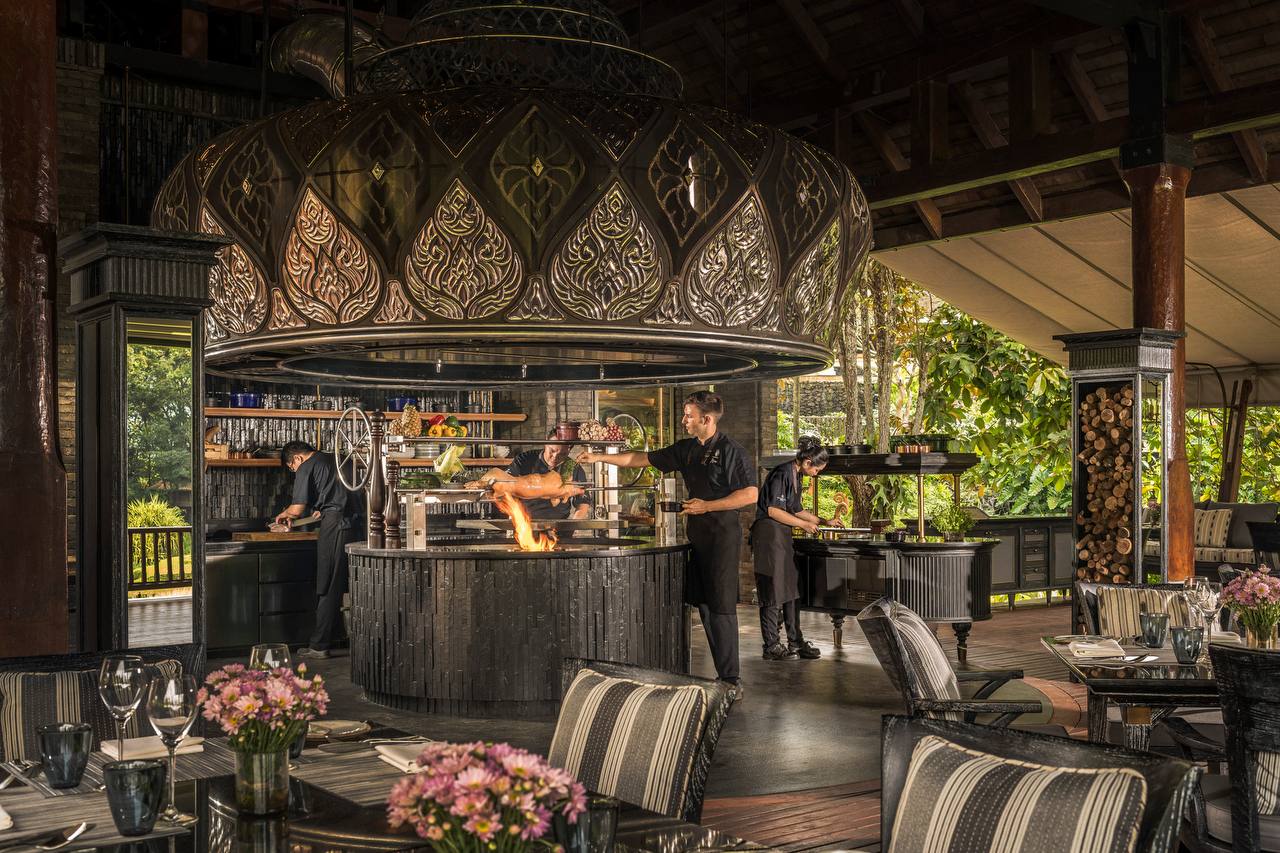
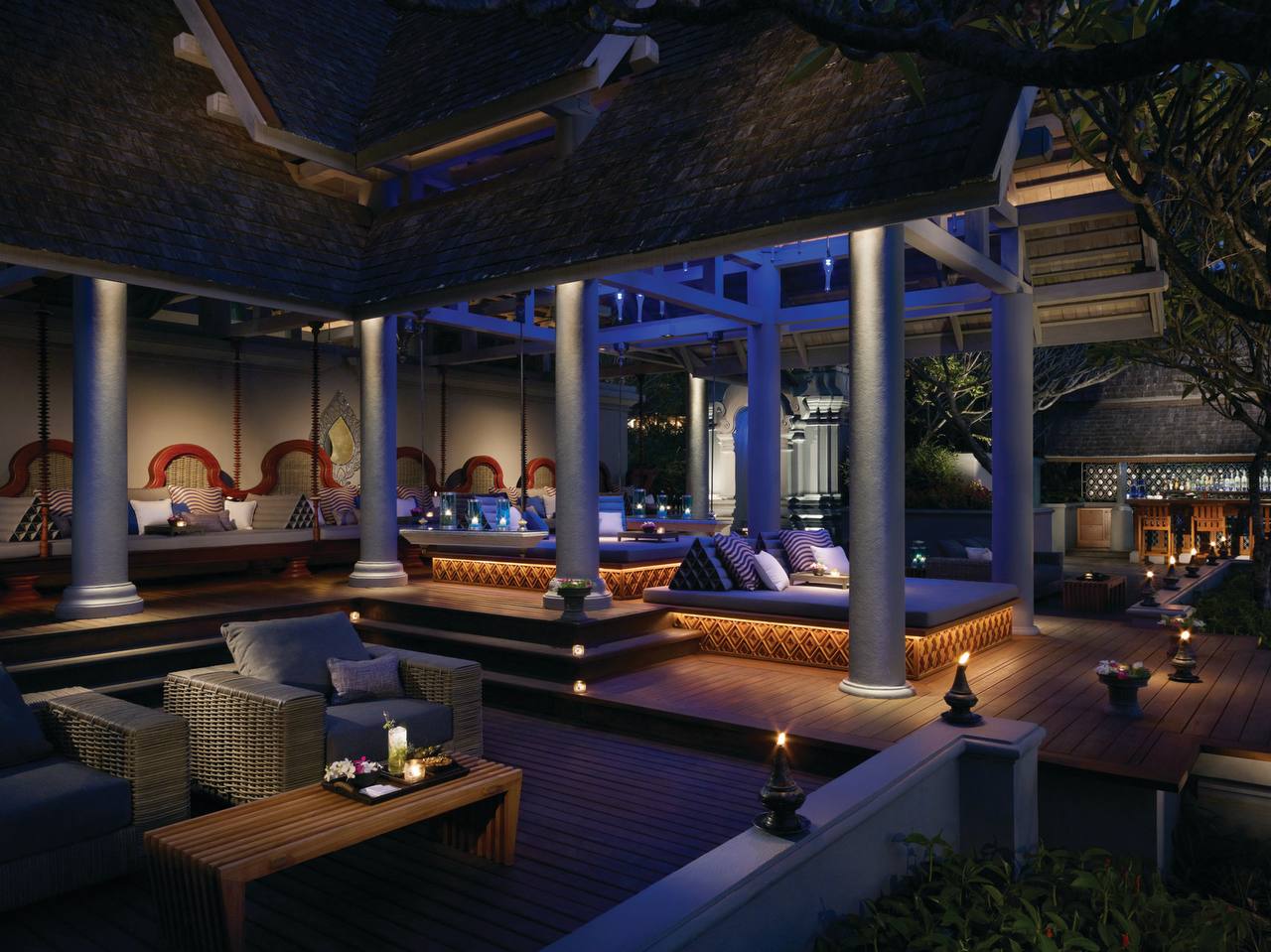
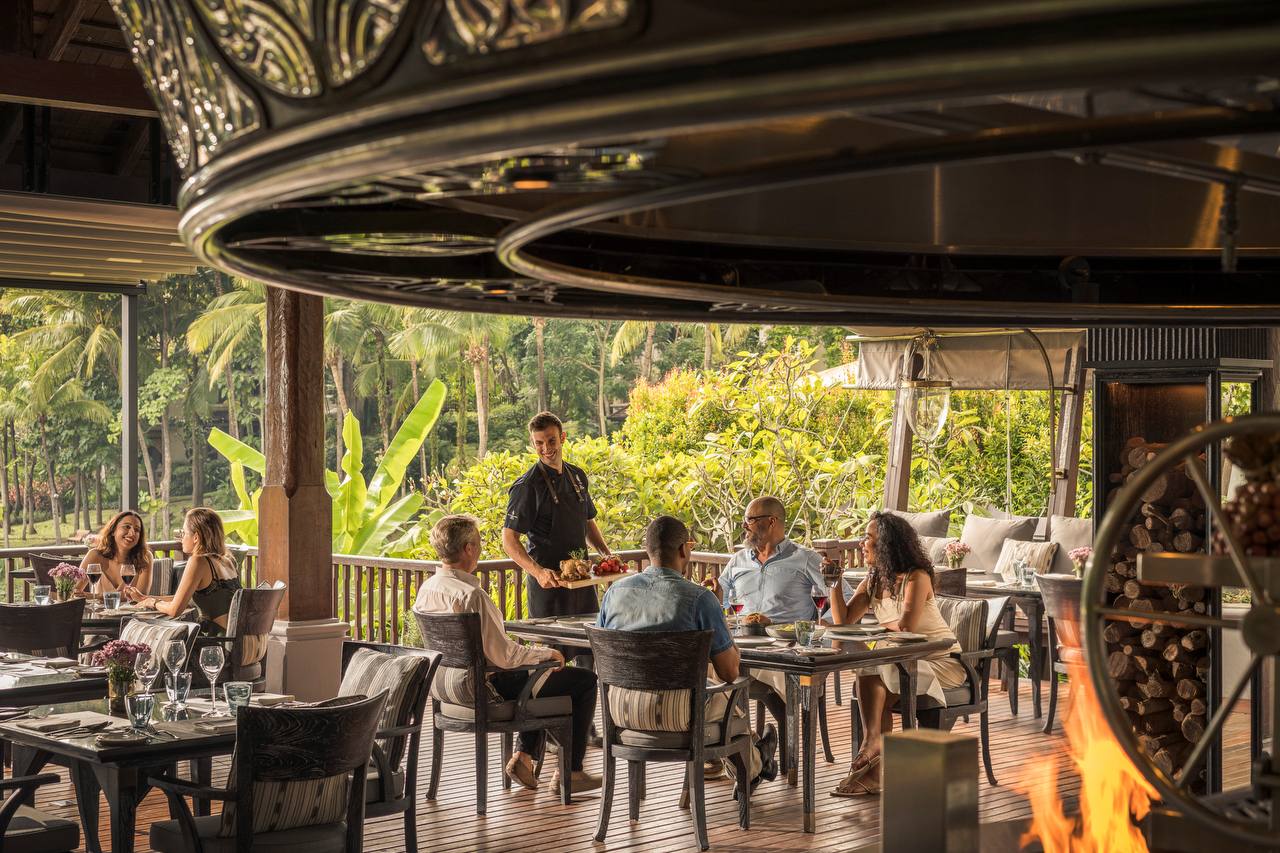
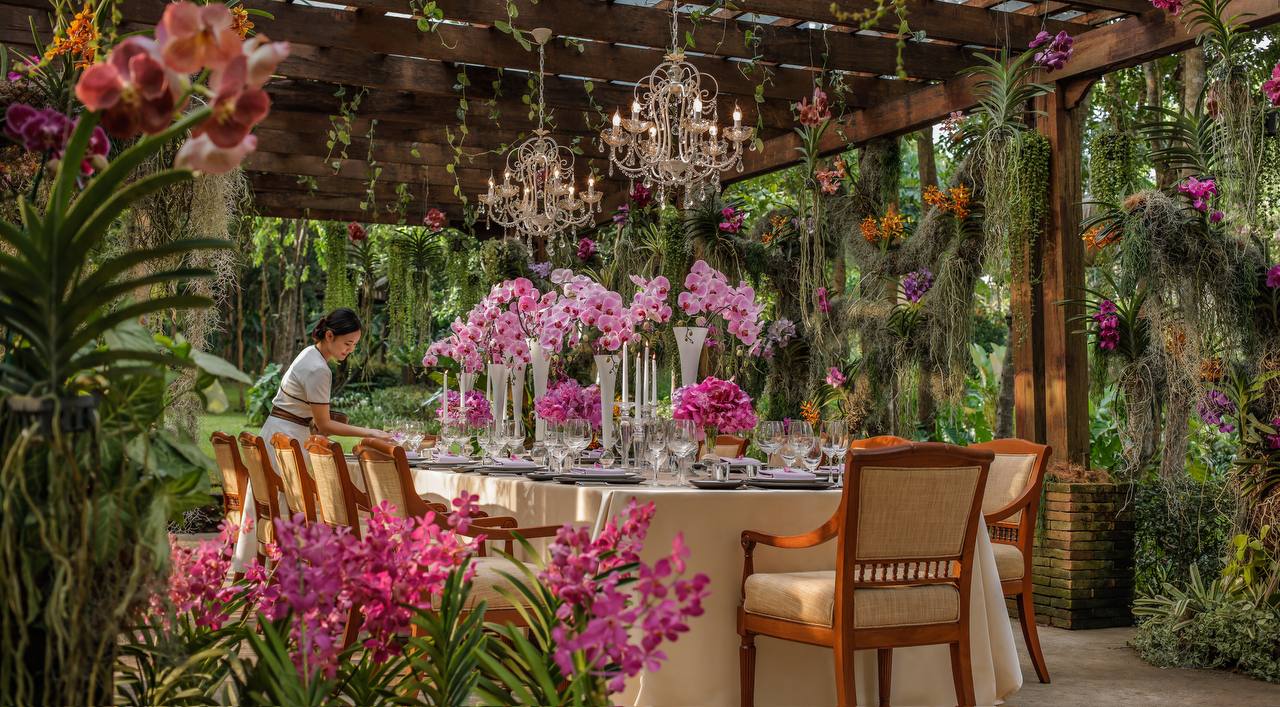
The dining at Four Seasons Chiang Mai follows the same philosophy as everything else here: it is rooted in place, not transplanted from elsewhere. Khao, the resort's main restaurant, serves Lanna-influenced northern Thai cuisine in an open-air pavilion with vaulted ceilings and crystal chandeliers. The menu draws from local markets, the resort's own organic garden, and centuries of northern Thai culinary tradition. From Lanna-influenced northern Thai cuisine at Khao to intimate private dining under the stars, the resort's culinary programme celebrates local ingredients and regional technique. Private dining experiences can be arranged in the rice paddies at sunset, on your villa veranda, or in a candlelit pavilion surrounded by tropical greenery. The food does not try to be international. It tries to be northern Thai, and it succeeds because the ingredients and the cooks are both from here.
The Valley as Anchor
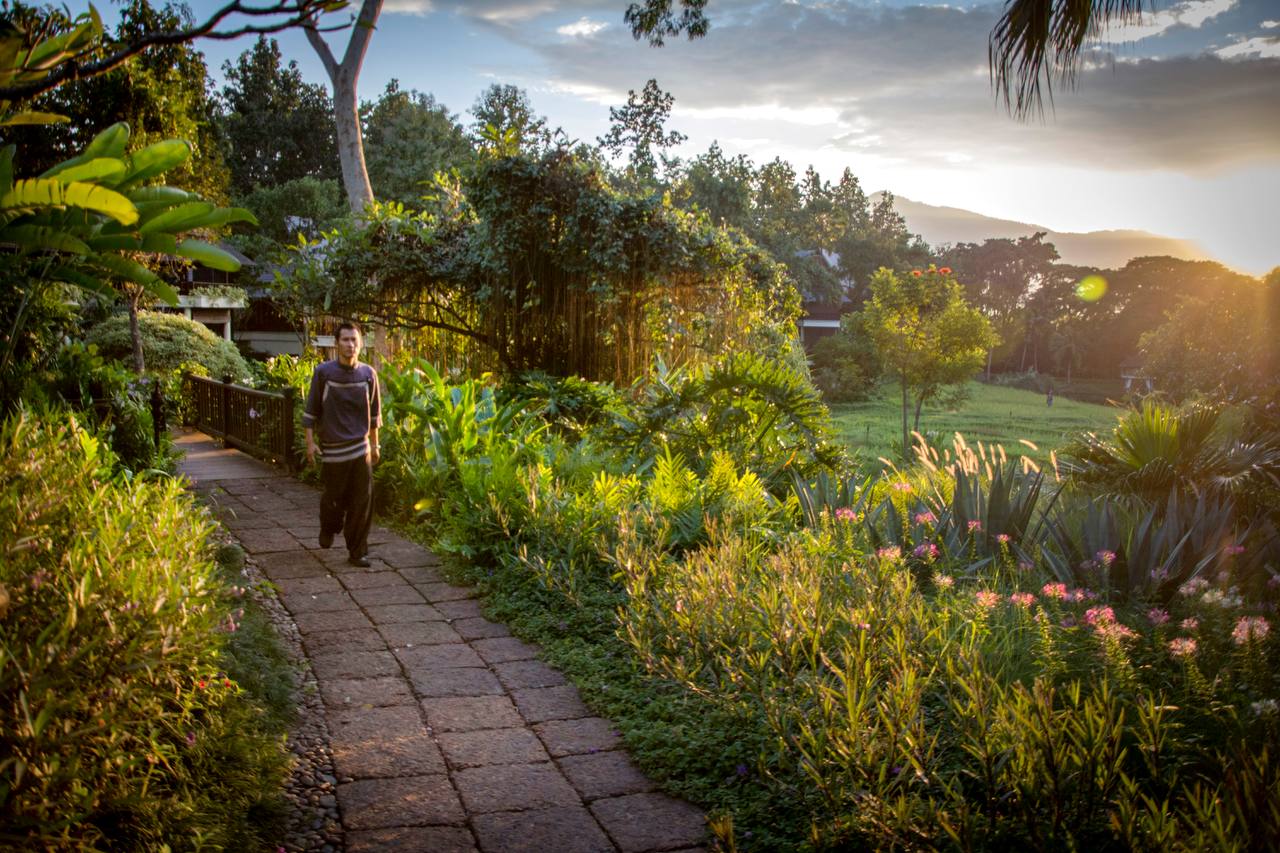
The Mae Rim Valley is not a backdrop at Four Seasons Chiang Mai. It is the reason the resort exists. The rice paddies at the centre of the property are farmed by local families who have been working this land for generations. The mountains that frame every view are the same ones that have defined the Lanna calendar for centuries, dictating the seasons of planting and harvest, of temple festivals and firefly nights. Set in the Mae Rim Valley at an elevation of approximately 400 metres, surrounded by active rice paddies, lotus ponds, and forested hills that frame Doi Suthep to the south, the resort exists in dialogue with its landscape rather than in opposition to it. The resort's position in the valley means that the air is cooler than the city, the mornings are misty in a way that makes early yoga feel inevitable rather than aspirational, and the evenings close with the kind of silence that only exists in places where the loudest sound is frogs.
Chiang Mai's old city is 30 minutes away, with its temples, its night markets, its ancient walls, and its refusal to become merely a tourist attraction. But the pull of the valley, once you have spent a morning in it, tends to make the drive feel unnecessary. The resort is not a base for exploring northern Thailand. It is northern Thailand, distilled into 32 acres of rice paddies, teak pavilions, and Lanna craftsmanship. And it is, quietly and without announcement, one of the finest resorts in Southeast Asia.