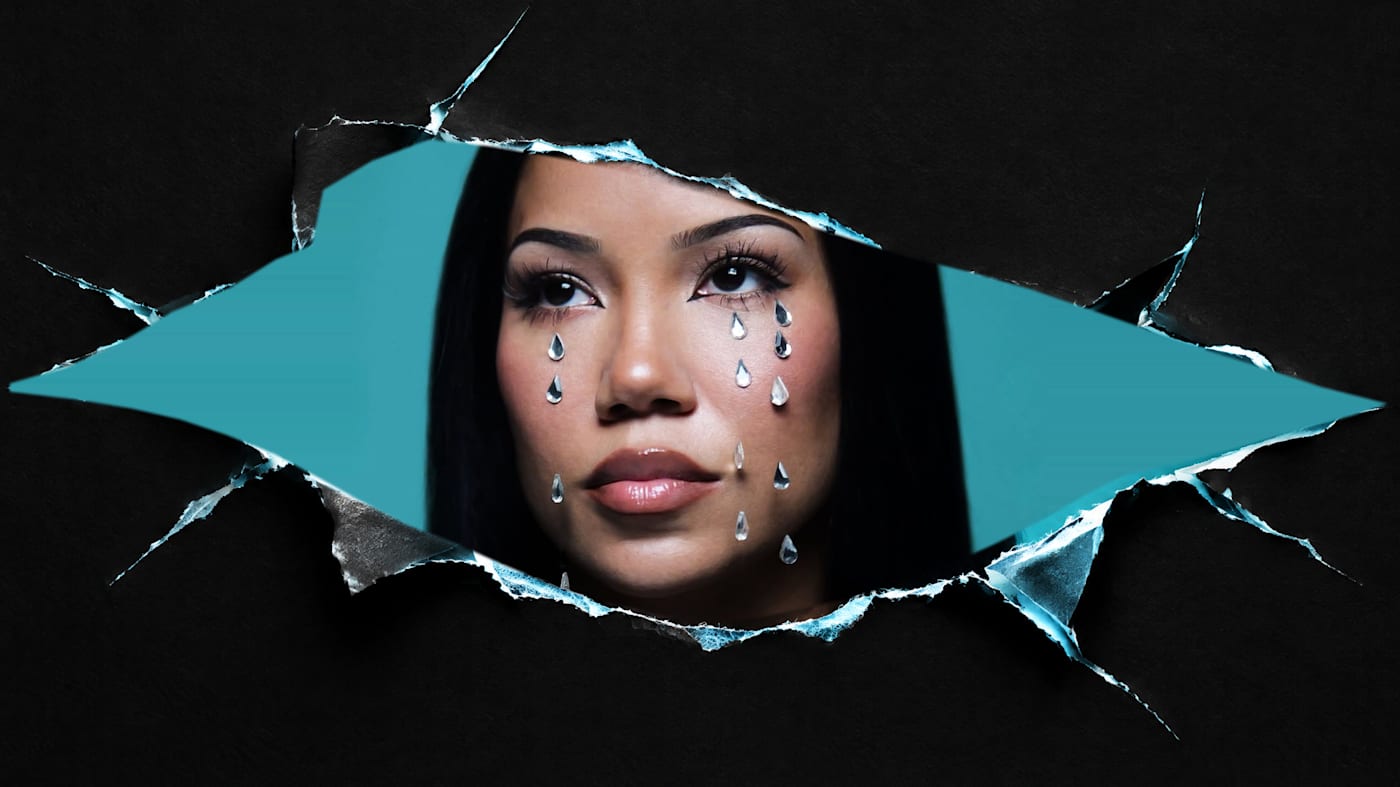
Six years is a long time between albums. Long enough for a global pandemic, a devastating wildfire season that swallowed entire neighbourhoods, and more than enough life to rearrange everything you thought you understood about yourself. Jhene Aiko has lived through all of it, and Westside Whimsy, her fourth studio album, is the beautifully unsettled document of someone who refuses to tidy up the mess before showing it to you.

Crystal Tears and Golden Coastlines
Announced with just three days' notice on 8 September, the album arrives via Def Jam and Aiko's own ArtClub International with virtually no rollout. No slow-burn single campaign, no TikTok tease cycle. Just the cover art, a close-up of Aiko against a teal backdrop with crystal teardrops running down her cheeks, and a simple message: "Six years in the making." The urgency of that gesture feels deliberate. This is not an album that needed months of anticipation. It needed to exist.
Across 20 tracks, Aiko maps the geography of a relationship's beginning, middle and disintegration, then circles back toward something like grace. The arc is not linear. Songs like "Ghost" and "Ceiling (Freestyle)" sit in the rawest kind of anger, while "Neighbors" with Larry June and "So Good" with Kendrick Lamar feel like exhales after holding your breath underwater. The sequencing rewards a full listen, each track bleeding into the next like late-night drives on the 10.

The Kendrick Reunion
The most talked-about feature on Westside Whimsy is also its most natural. "So Good" marks the third collaboration between Aiko and Kendrick Lamar, and their first in over a decade. Produced by Sounwave, M-Tech, Scott Bridgeway and Jahaan Sweet, the track trades the combative energy of Kendrick's recent output for something warmer. He raps in harmonies rather than attack patterns, and Aiko meets him there: "You look so good / Sinful, but godly / I got you, you got me." It is the most openly tender Kendrick has sounded in years, and Aiko's melody gives him the room to be exactly that.
Ab-Soul appears on "Love Bomb", the fourth track, revisiting a creative partnership that stretches back to TDE's mixtape era. Tyga drops in for "Like, Whatever," and OHMA closes the album on "Golden Coast," a track that reads like a direct address to Los Angeles after the 2025 wildfires that destroyed Aiko's own home.

A Coast Built on Contradiction
In April, Aiko told Complex that the album was shaped by West Coast car culture, surfing and the particular laid-back energy of California road trips. You can hear it. The production, handled largely by Fisticuffs and Julian Le, leans into low-end warmth and reverb-heavy keys that feel like windows down on PCH at golden hour. But the lyrical content pulls in the opposite direction. These are songs about being cheated on, about refusing to turn "a fling into a real thing," about learning to sit with the discomfort before you rush to resolve it. The tension between the sun-drenched sound and the storm-cloud subject matter is the whole point.
Aiko addressed speculation directly on Threads: "He Belongs" is not about Big Sean. Regardless of biography, the track stands on its own as a masterclass in restrained fury. "He belongs to the streets, yeah / He belongs to every woman he meets" lands harder than any diss track because it refuses to raise its voice.

Worth the Wait
For all its sprawl, Westside Whimsy never feels indulgent. Aiko has always understood that vulnerability is not the same as confession, and her best writing here lives in the spaces between the lines. The closing track, "Golden Coast," is the emotional centre of the entire record. Over OHMA's atmospheric vocal, Aiko sings to a city still smouldering: "I still think you're beautiful / Even though your golden coast is filled with ashes." It is the kind of line that collapses the distance between a love song and a eulogy, between personal grief and collective memory.
Six years was a long wait. Westside Whimsy makes the case that some albums cannot be rushed, that they need the weight of lived experience behind them to land with this kind of force. Aiko has been through it. The album is better for it.