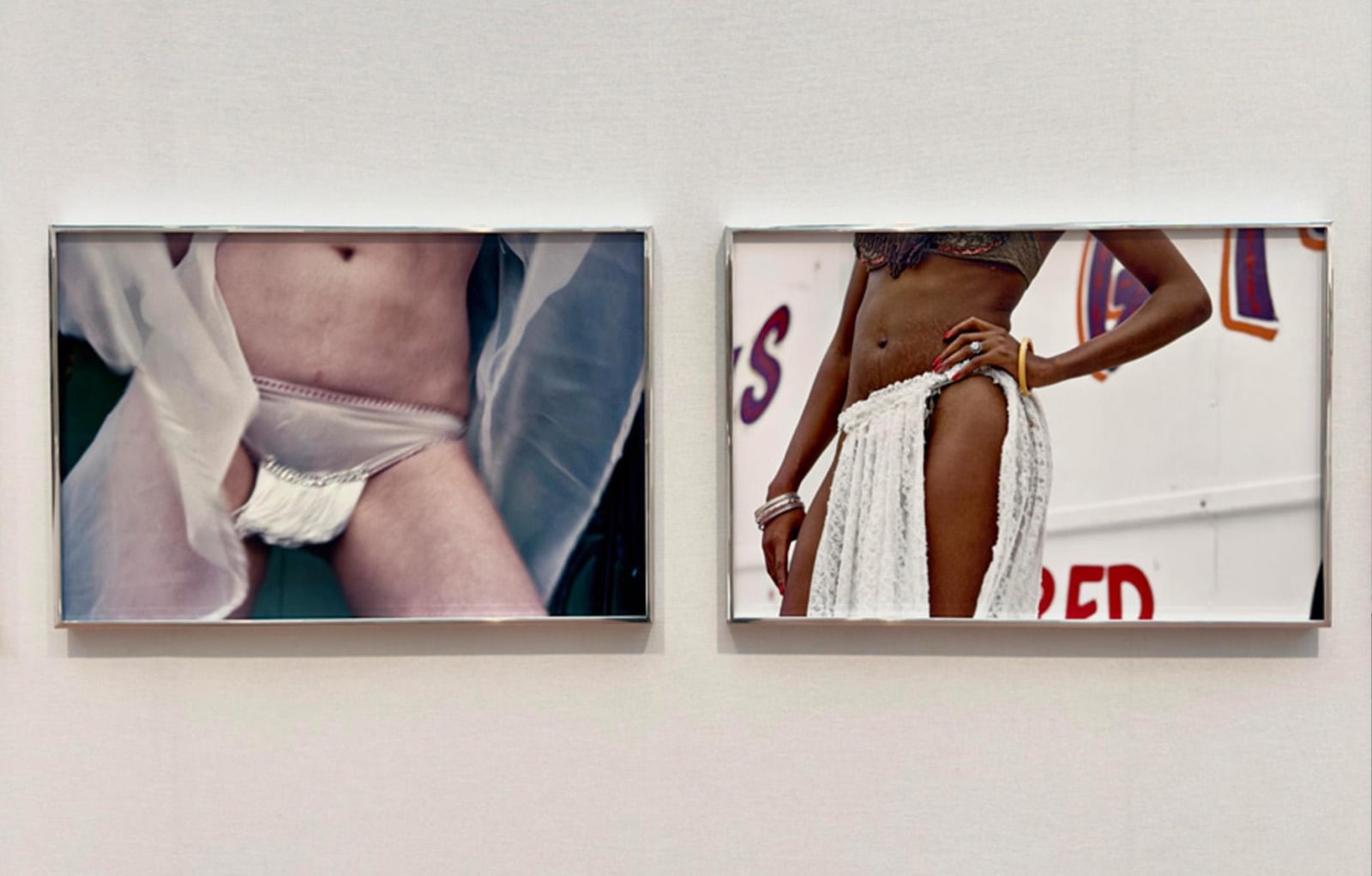
Paris Photo has landed back at the Grand Palais for its 29th edition, and this year carries a weight that goes beyond the usual fairground excitement. The 2026 edition coincides with the bicentenary of photography itself, two hundred years since Nicephore Niepce fixed the first surviving photograph in Burgundy around 1826. To mark the occasion, the fair has assembled 246 exhibitors from 38 countries, 197 galleries, 49 publishers and over 1,200 artists, making it one of the most expansive editions in recent memory.
Thomas Ruff at the Entrance
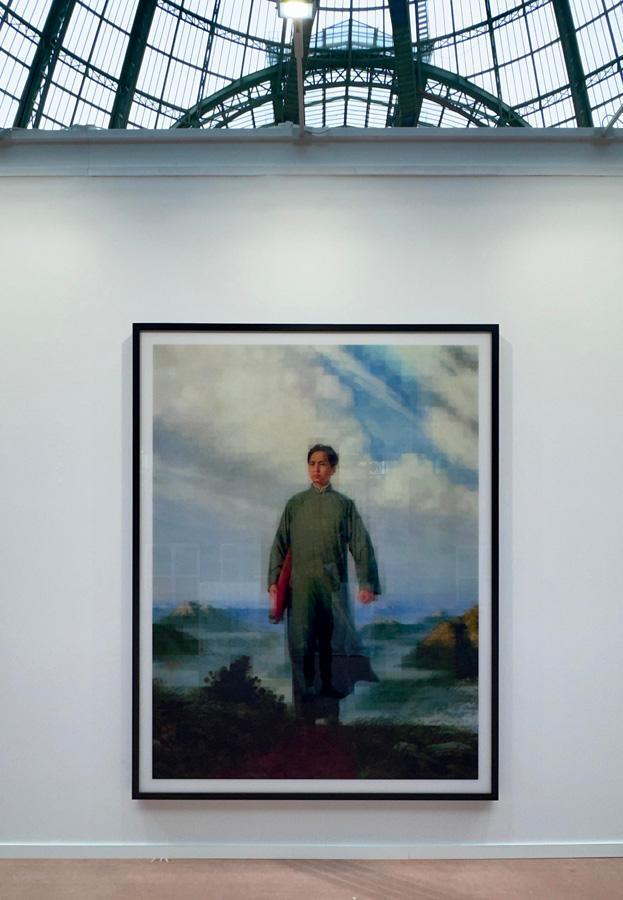
The first thing visitors encounter is a 36-metre wall of work by Thomas Ruff, the German photographer who has spent four decades dismantling the conventions of the medium. Presented jointly by his five galleries, David Zwirner, Konrad Fischer, MAI 36, Lia Rumma and Spruth Magers, the installation spans from his early passport-style Portrats of the 1980s to his recent photograms made without a camera. Ruff studied under Bernd and Hilla Becher at the Kunstakademie Dusseldorf alongside Andreas Gursky and Thomas Struth, and his subject has always been photography itself, its conventions and the habits of seeing it instils.
The Vogue France profile published this week notes that Ruff's portraits, enlarged to two metres in 1986, revealed what he called an image that was completely new. The face becomes surface. The photograph becomes its own subject. At Paris Photo, this retrospective installation functions as a statement of intent for the entire fair, a reminder that the medium has always been about invention and reinvention of our gaze.
A Trail Through Two Hundred Years
For the bicentenary, the fair has laid a trail of twenty works through the galleries, one from each decade of photography's history. The route runs from the earliest experiments of Niepce and William Henry Fox Talbot through Man Ray and onwards to Ruff's digital images. It is a compact history lesson woven into the fair floor, guiding visitors through the dealers in early photographs and reminding them that every contemporary image on display stands on two centuries of technical and conceptual evolution.
Alongside the historical trail, the prizes offer a snapshot of where photography is heading. The Prix DUO, awarded for long partnerships between photographer and gallery, went to Viktoria Binschtok and Klemm's of Berlin. The BMW Art Makers prize winners, artist Lara Tabet and curator Yasmine Chemali, present Vitreous Body, images made by letting water samples and microbes act on light-sensitive surfaces. The Prix Pictet, the photography prize for environmental and social subjects, is at Paris Photo for the first time, with former winners Valerie Belin and Alfredo Jaar.
Standout Presentations
Among the 44 solo presentations in the Principal sector, several demand attention. Michael Hoppen Gallery, a Paris Photo fixture since the fair's first edition in 1997, leads with Tim Walker's Hungry aka Johannes Jaruraak and Octopus, a 2024 work made in London and part of his National Portrait Gallery exhibition. The booth mixes vintage and contemporary prints by 22 photographers including Cecil Beaton, Man Ray, Daido Moriyama and Sarah Moon.
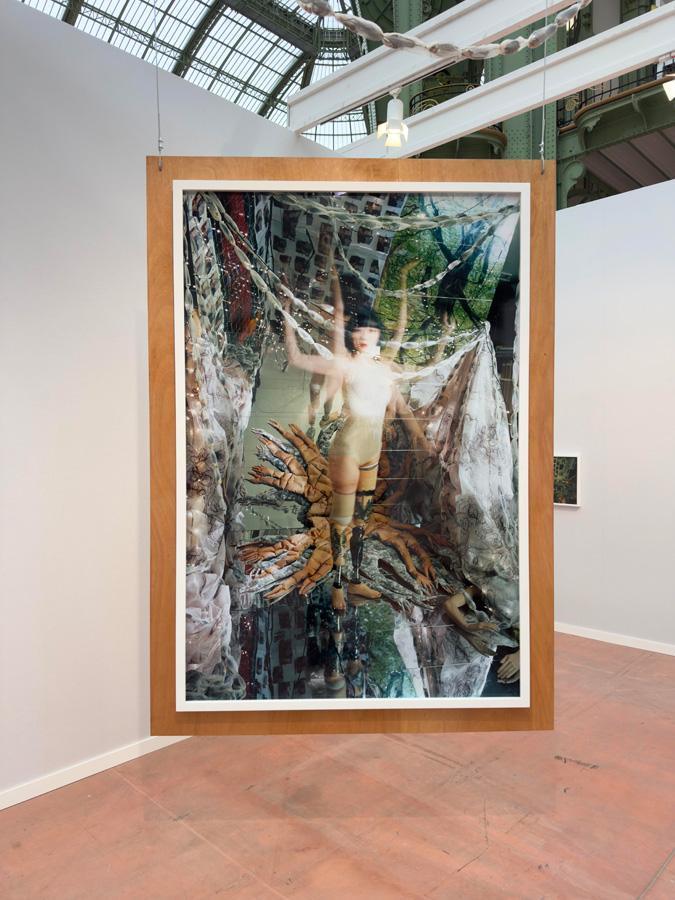
At Suzanne Tarasieve, Japanese artist Mari Katayama presents tree of life, a commission from the Victoria and Albert Museum. Katayama photographs her own body surrounded by textile sculptures she sews herself and mirrors that destabilise the frame. Amputated of both legs as a child, she constructs a body whose extensions escape normative anatomy, and she does it all on film, no digital montages. The sophistication of the images belies their analogue construction.
Photography as Power
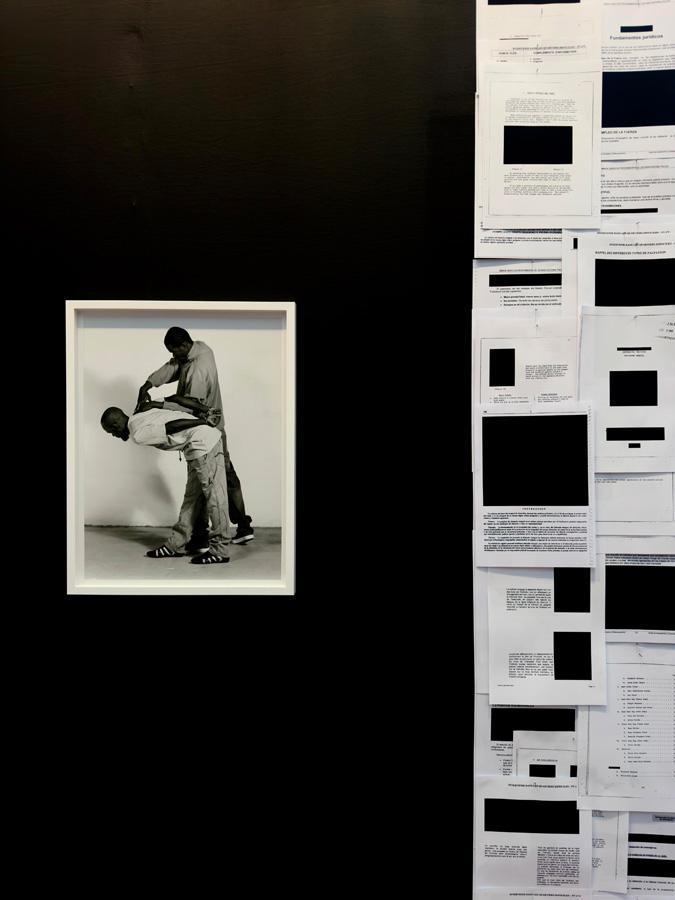
At Klemm's gallery, Felipe Romero Beltran's Reduccion takes a Spanish police defence manual and has migrants re-enact its techniques. The absence of uniforms unsettles the distribution of roles, but the gestures of domination remain perfectly recognisable. It is photography as a mechanism for exposing how institutions learn to control bodies, and it is one of the most politically charged presentations at the fair.
Fraenkel Gallery from San Francisco brings Richard Learoyd's The boy with a thorn in his side, made with a room-sized camera obscura. Howard Greenberg Gallery from New York runs from Edward Steichen's 1915 Lotus to Vivian Maier and Henri Cartier-Bresson. Hamiltons of Mayfair shows Hiro's fighting bird Polaroids from 1981, each 20 by 24 inches, believed never to have been exhibited before.
Paris Photo 2026 runs at the Grand Palais until Sunday 15 November. Whether you come for the historical trail, the Ruff retrospective or the emerging artists in the Digital Sector, the fair makes a convincing case that after two centuries, photography remains the medium most actively questioning how we see.