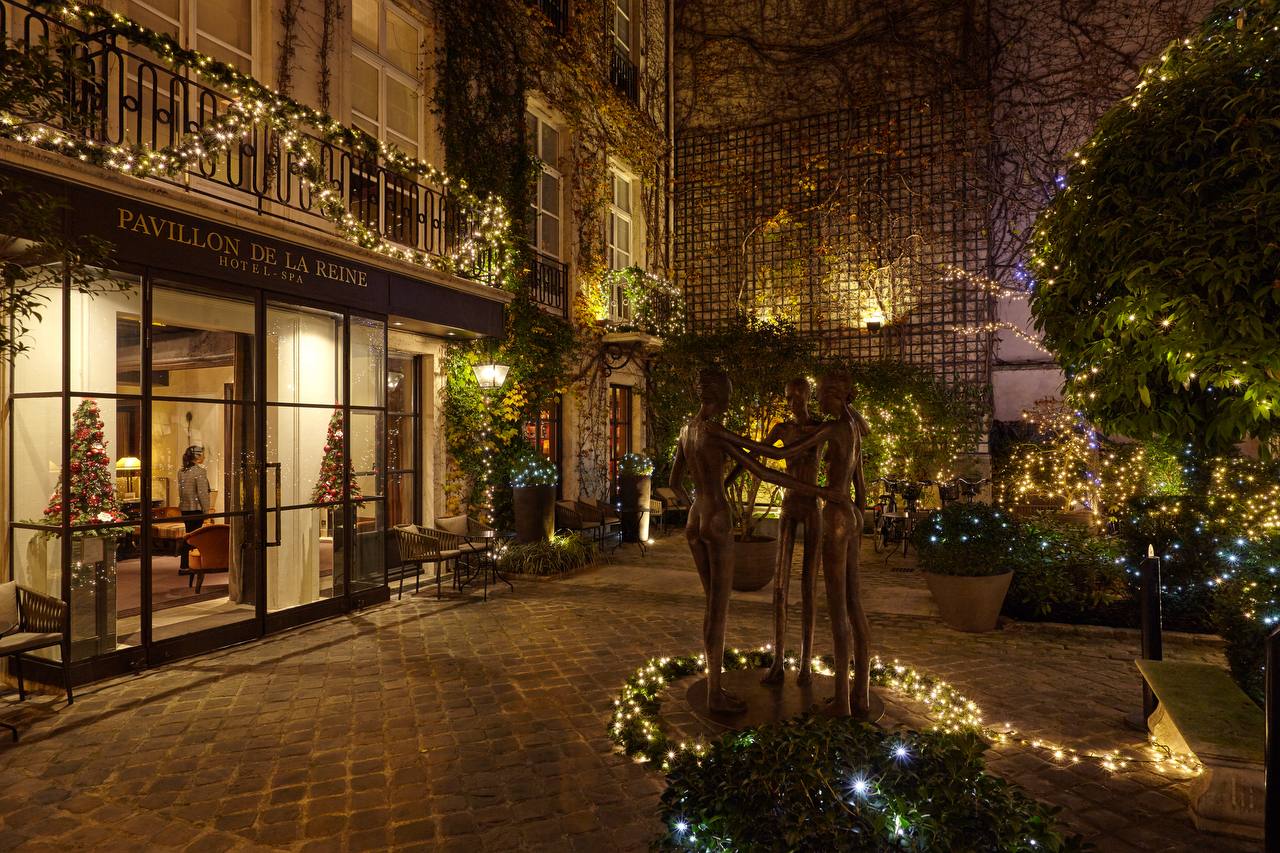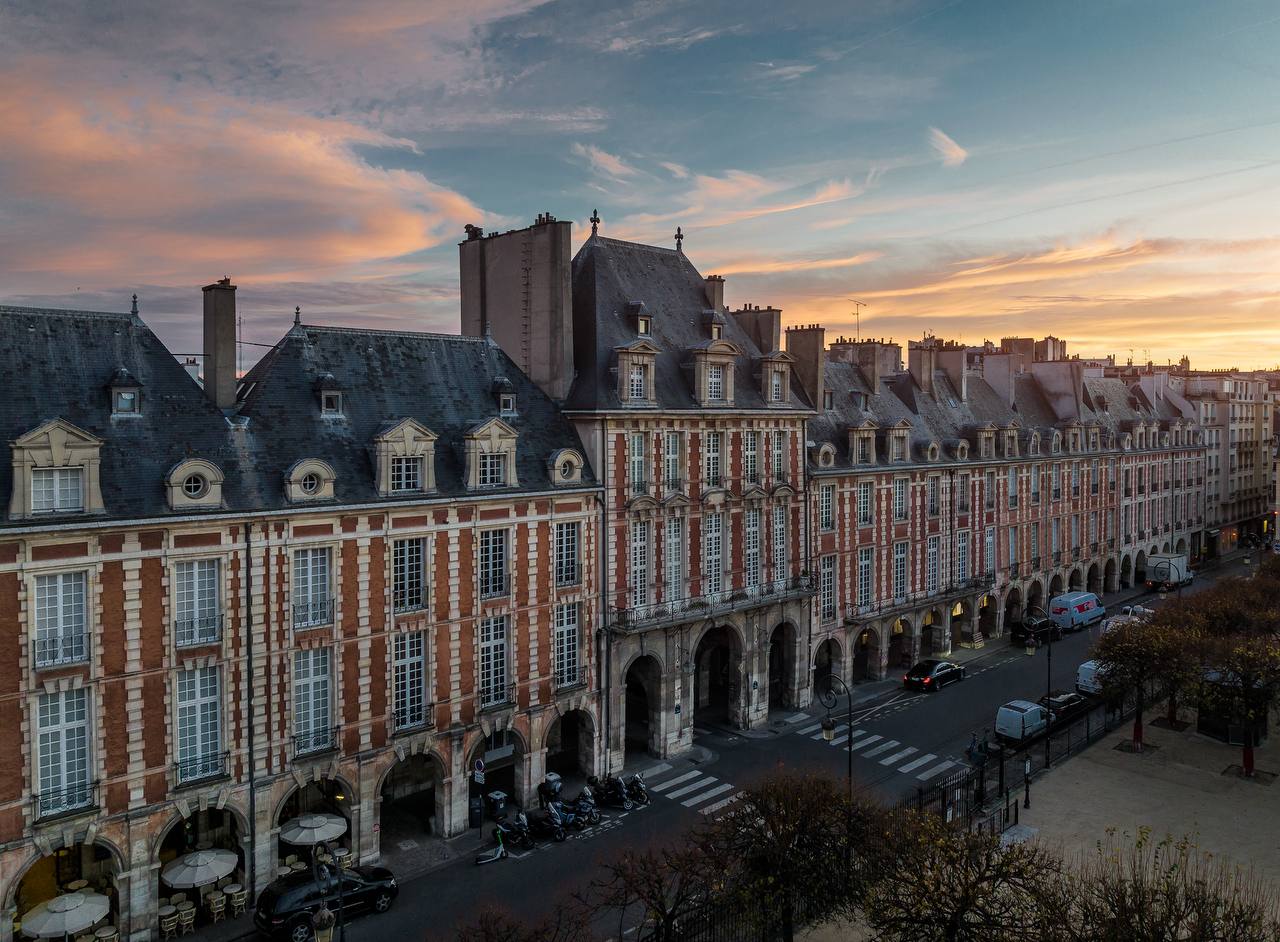
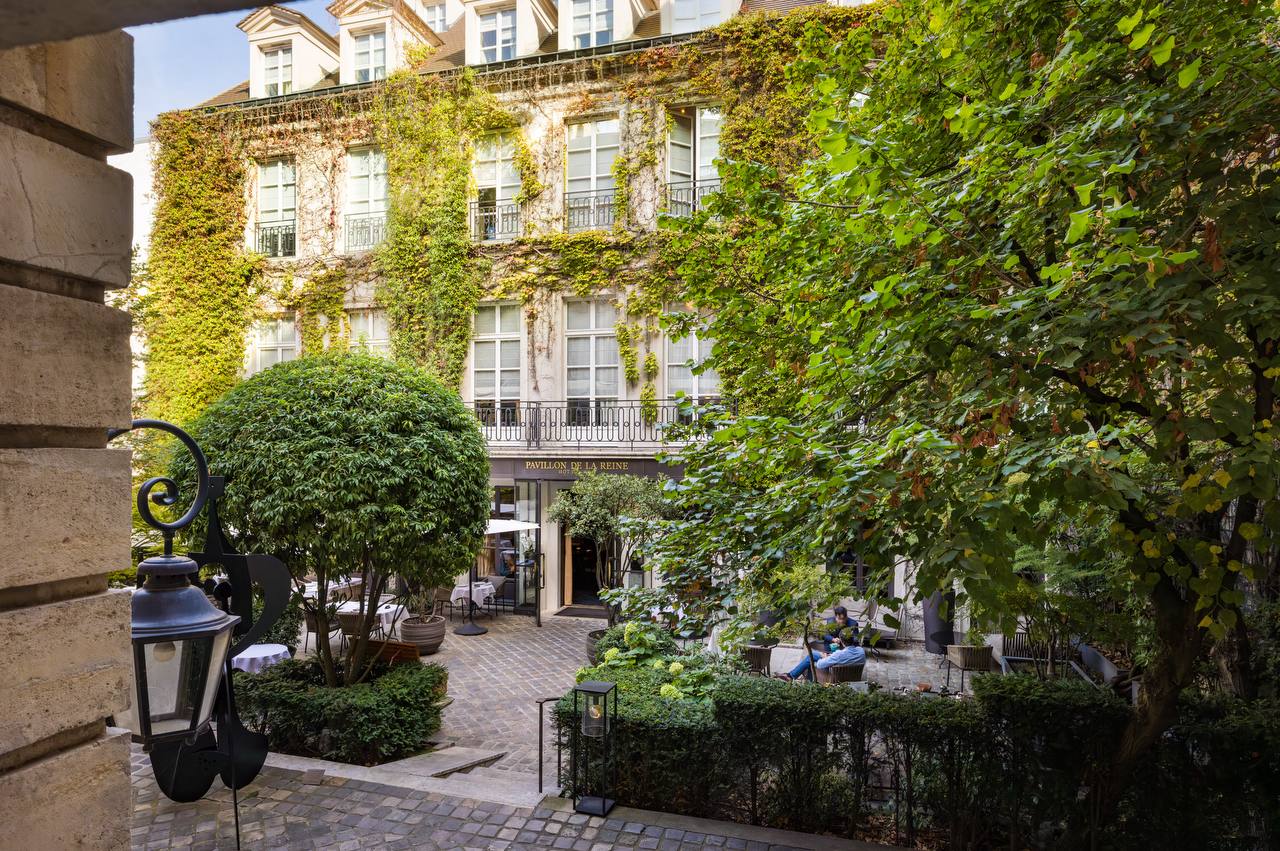
Place des Vosges does not announce itself. You turn a corner in the Marais and suddenly the street opens into a perfect square of red-brick pavilions and slate roofs, arcades running beneath the buildings like a covered promenade from another century. It is the oldest planned square in Paris, built by Henry IV in 1612, and it remains the city's most convincing argument that urban beauty is not a luxury but a foundation. In the south-east corner, behind an arched passageway and a courtyard thick with ivy, is Pavillon de la Reine.
The hotel's name translates to the Queen's Pavilion, a reference to Anne of Austria, who once stayed in one of the wings. The building has been many things across four centuries: a royal residence, a private mansion, a place where the walls remember more than any guest ever will. In its current incarnation it is a five-star hotel that feels like a private home because, in a sense, it is. Independent, family-owned, and deliberately unstuffy for a place with this much history in its bones.
An independent, family-owned hotel offering discreet luxury and personal hospitality behind a private courtyard on Place des Vosges. A peaceful, residential retreat in the heart of Le Marais where service feels natural and effortless.
Pavillon de la Reine
Architecture as Memory
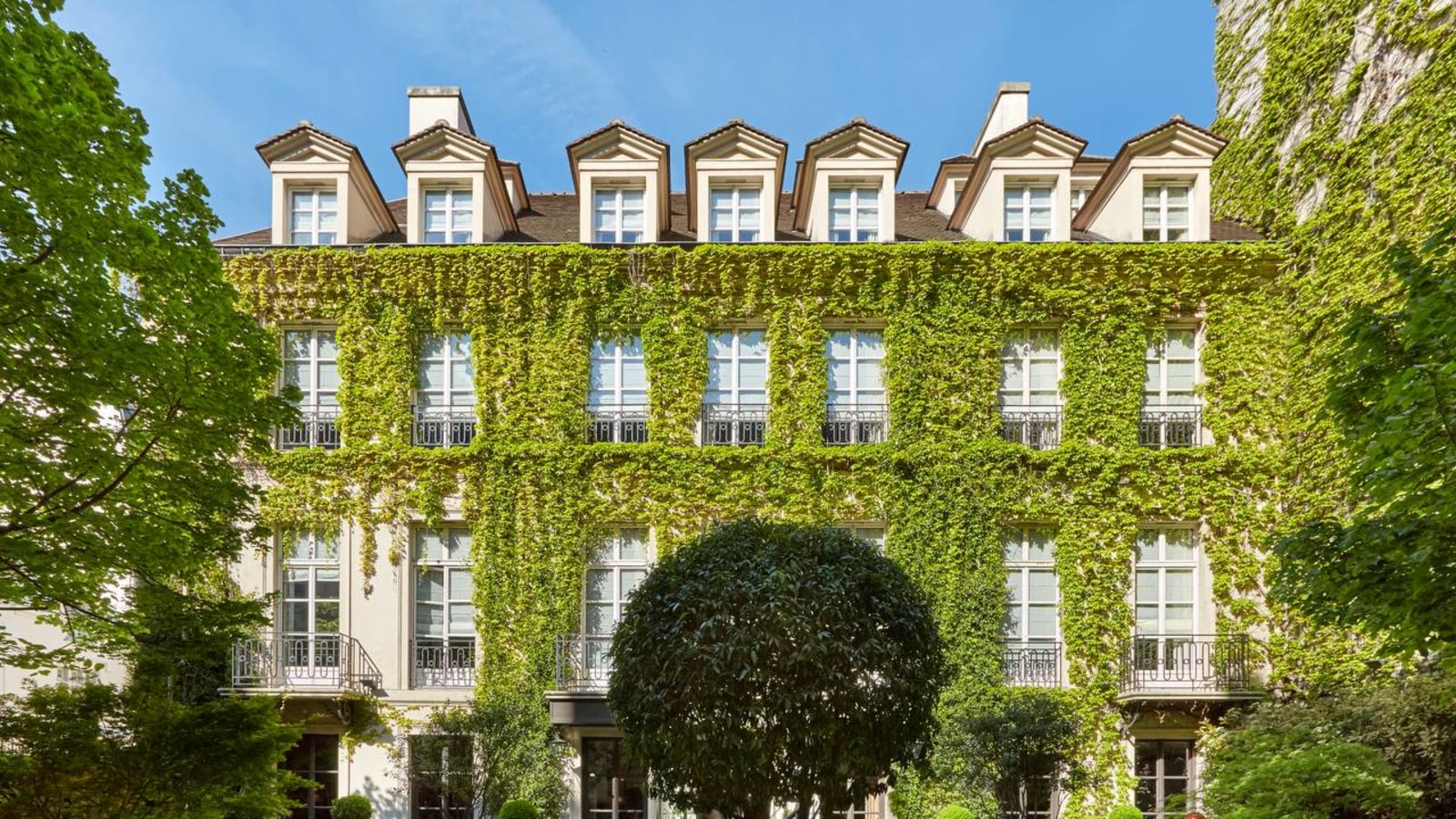
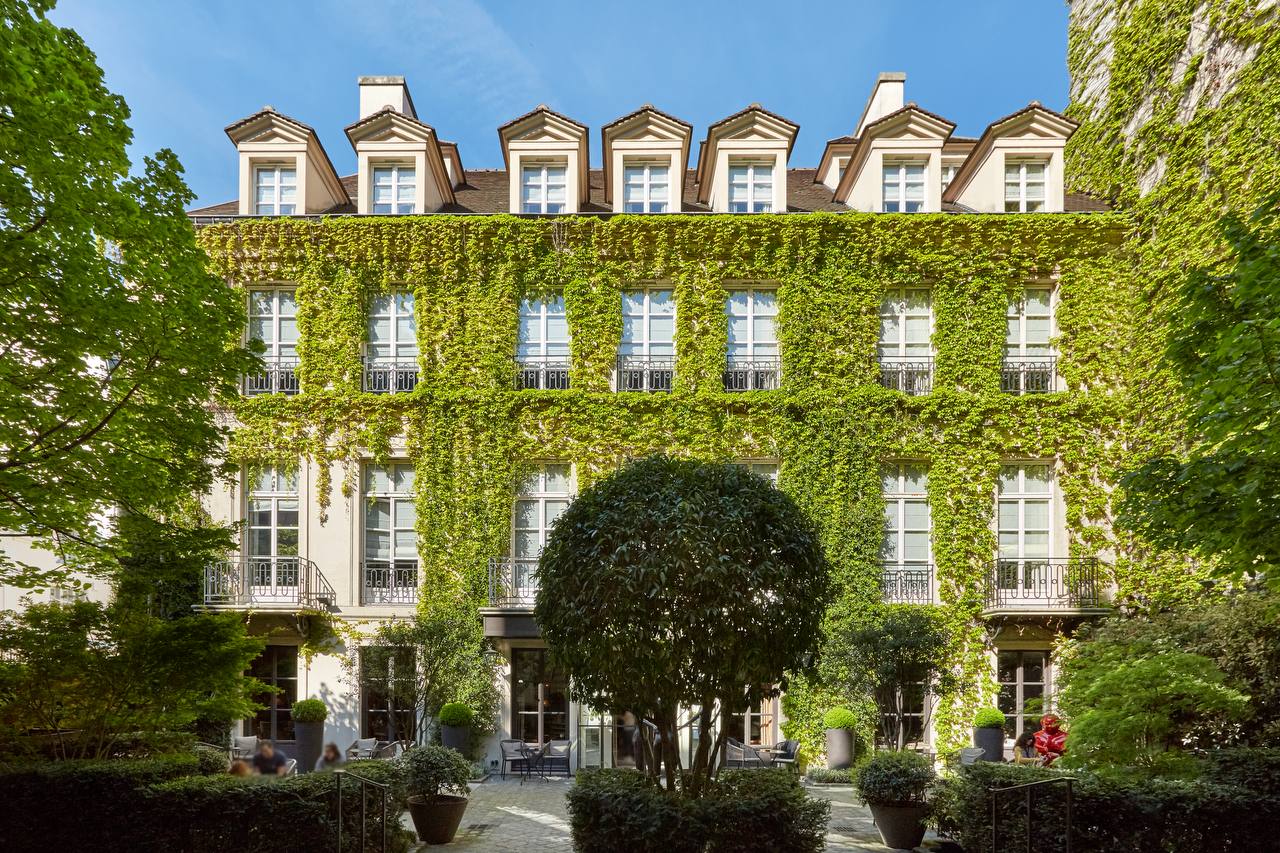
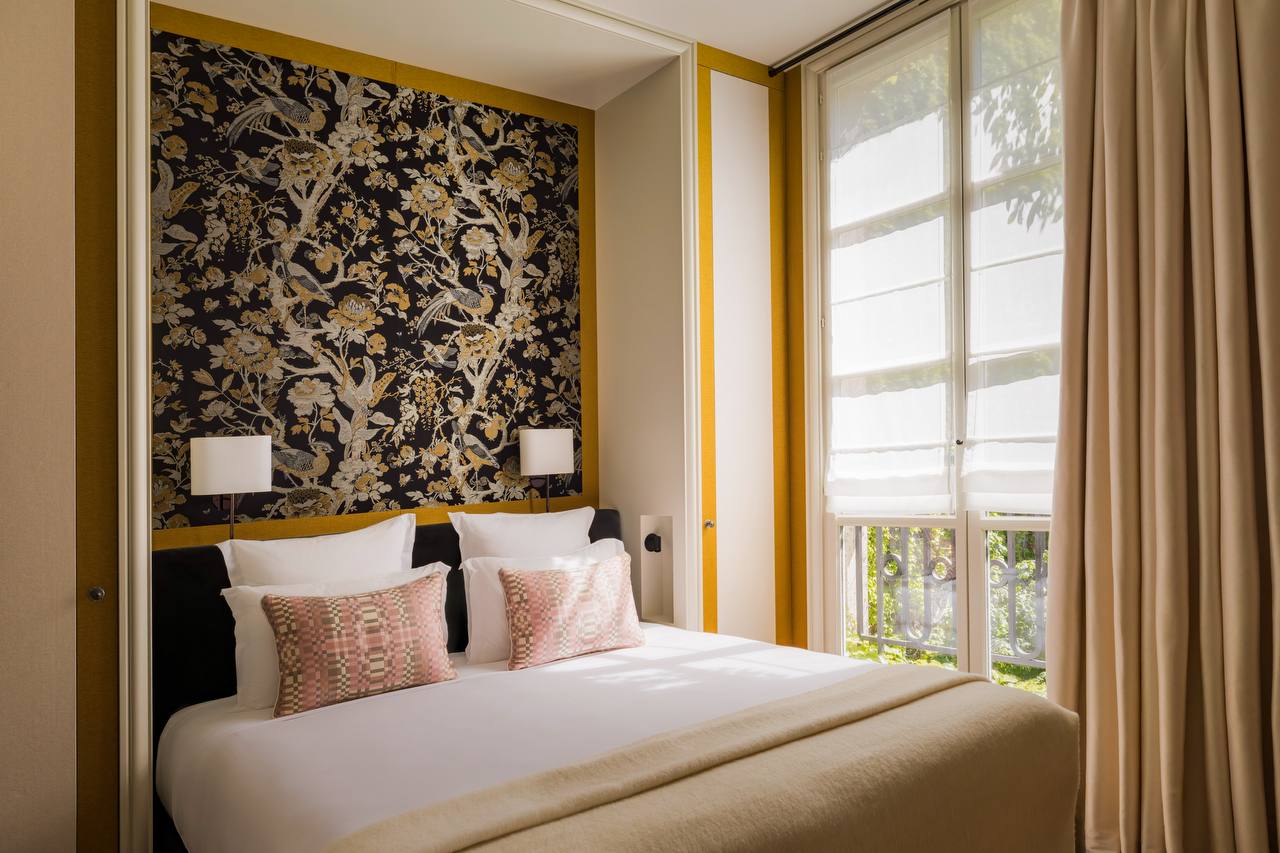
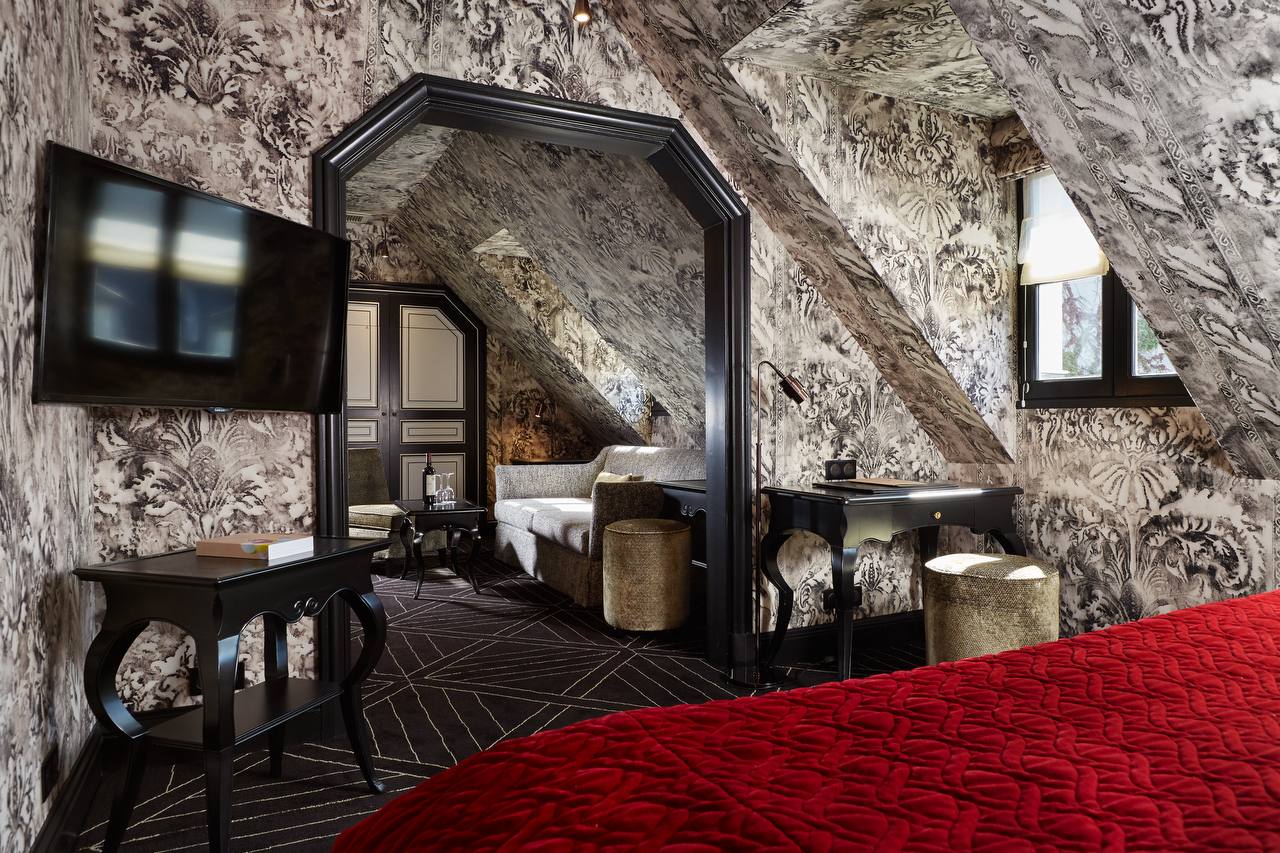
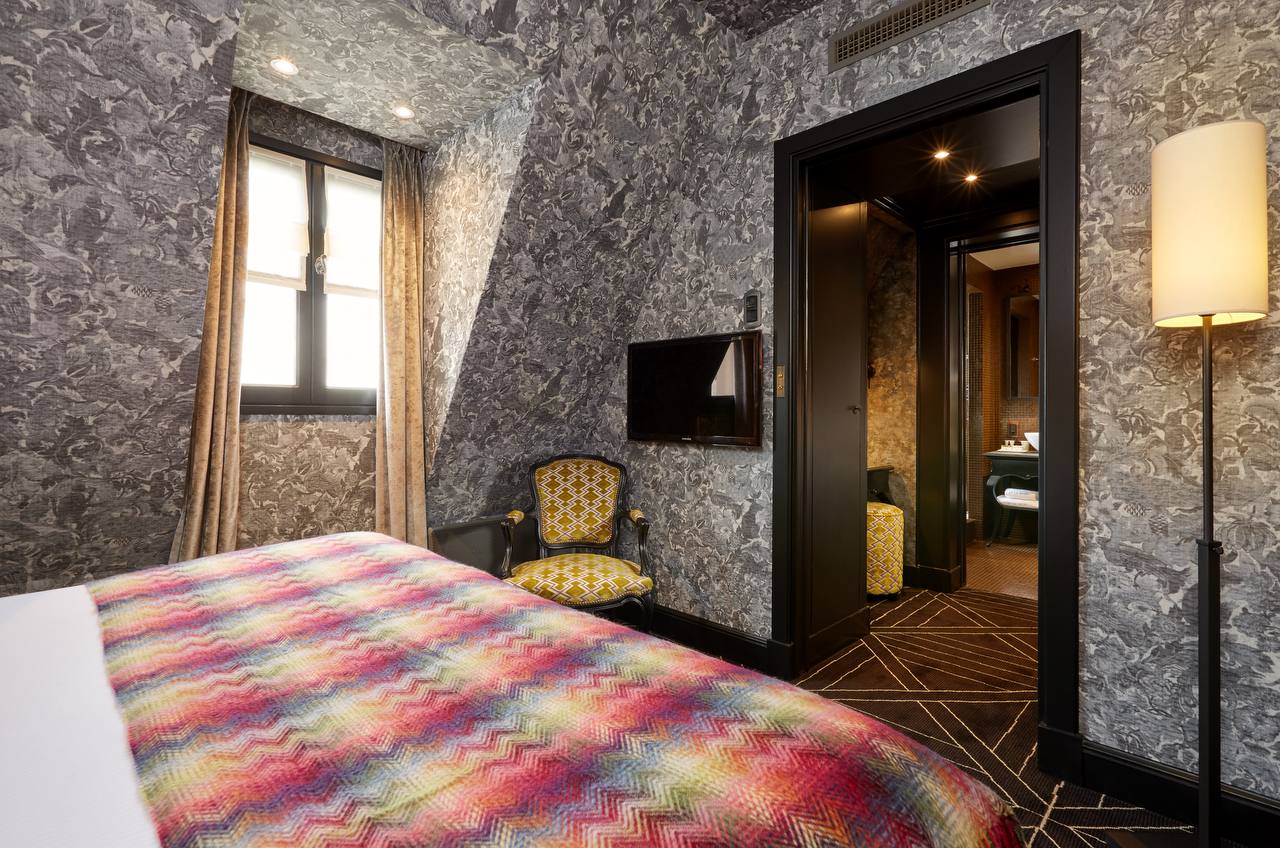
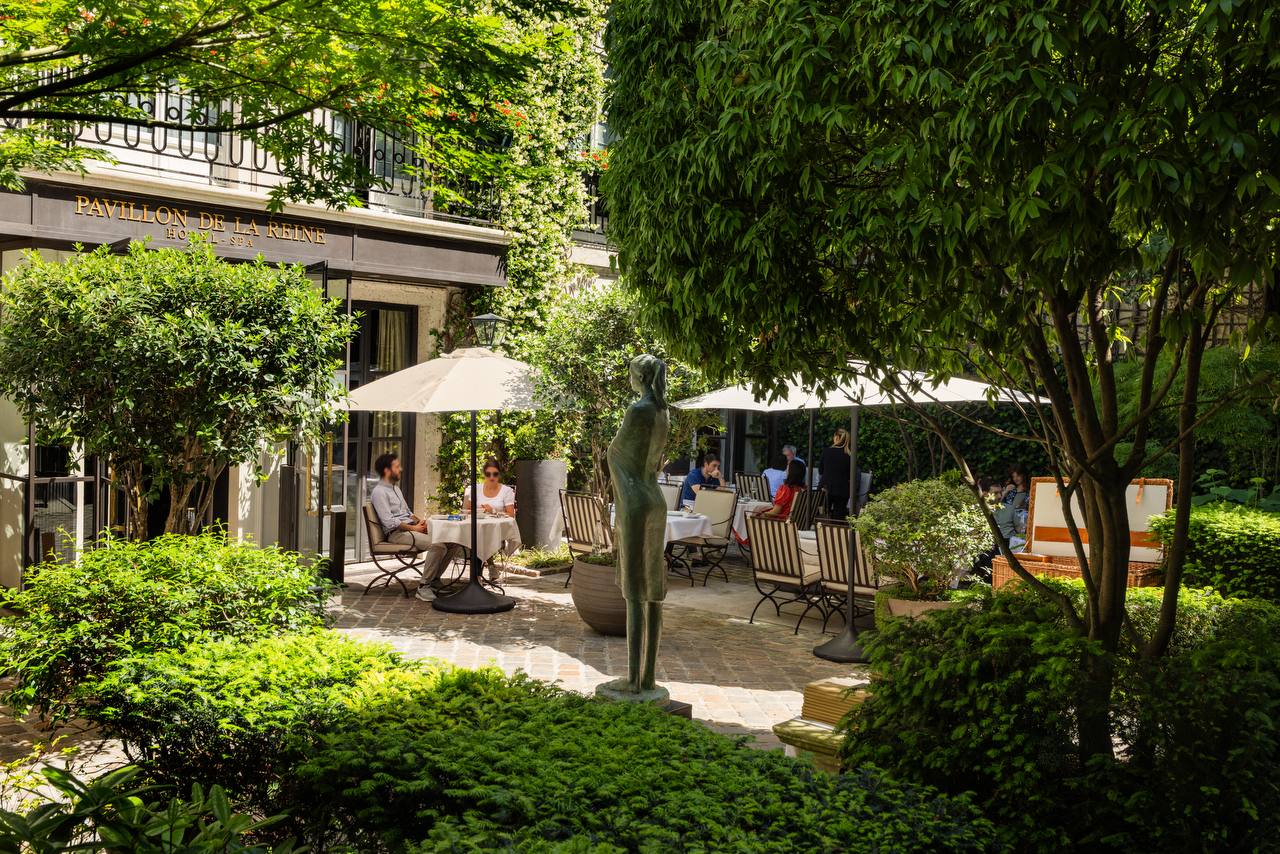
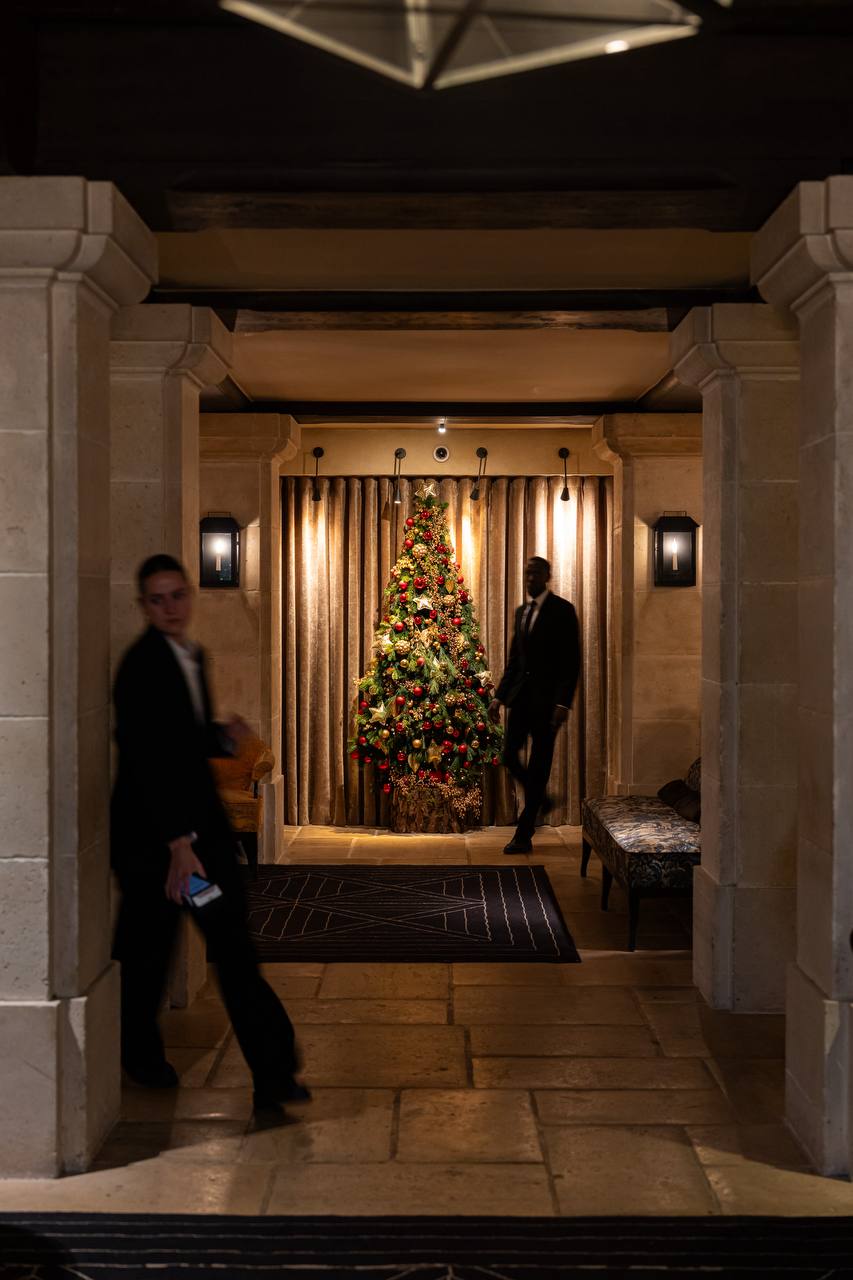
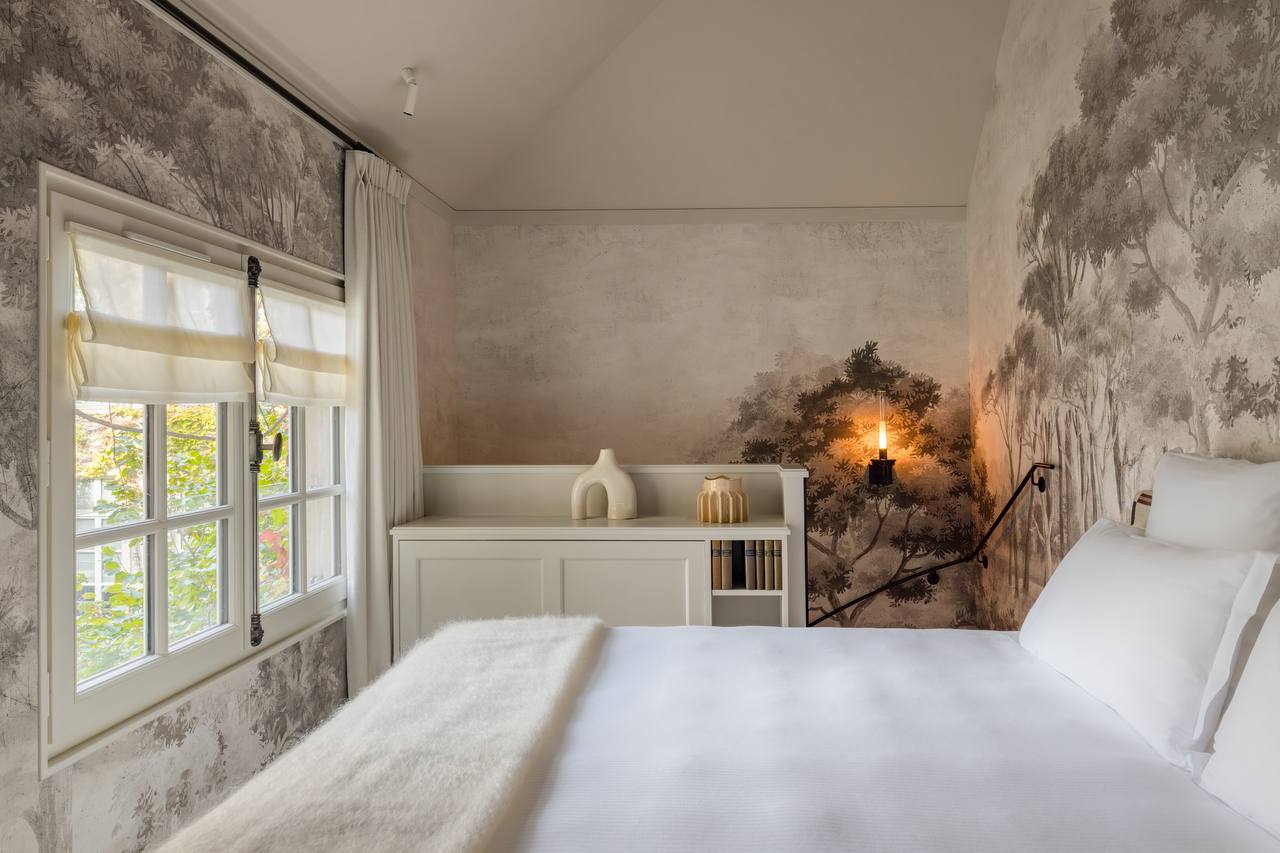
The ivy-covered facade is what photographs tell you about. What they cannot convey is the way the courtyard feels like stepping out of a city and into a pause. Exposed wooden beams run overhead in the public rooms, some dating back to the original construction. Antique-inspired furnishings sit alongside rich fabrics in deep jewel tones, and the walls are thick enough that the Marais exists only as a suggestion beyond the gate. Each room and suite is styled differently, a conscious decision that treats heritage as a living material rather than a museum piece. Contemporary comfort is not bolted on. It is woven in, so the underfloor heating and the rainfall shower feel as natural as the original stone fireplaces.
Characterised by an iconic ivy-covered facade, secluded courtyard, exposed wooden beams, antique-inspired furnishings, and rich fabrics. Combines heritage charm with contemporary five-star comfort across uniquely styled rooms and suites.
Restaurant Anne
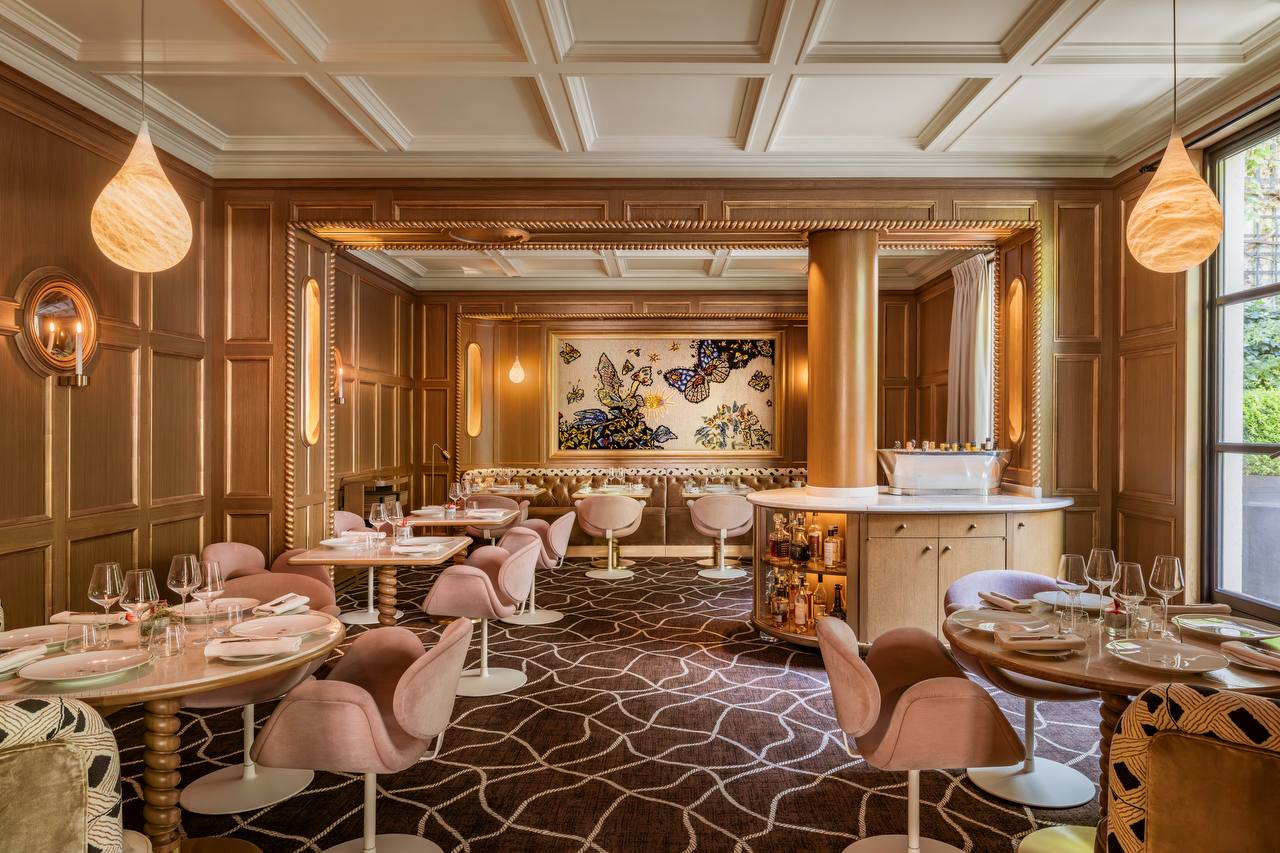
Downstairs, overlooking the courtyard garden, is Restaurant Anne. Not a hotel restaurant in the conventional sense but an intimate gastronomic destination that has drawn its own audience from across Paris. Chef Thibault Sombardier took the reins in late 2025, bringing a philosophy that the kitchen describes as timeless. Classic yet lively, elegant without pretension. Seasonal ingredients and precise flavours, served in a room where the garden is visible through the windows and the pace is unhurried. The restaurant is open Tuesday through Saturday for lunch and dinner, with brunch on Sundays, and it is the kind of place where the menu changes not because trends dictate it but because the produce does.
An intimate gastronomic destination led by Chef Thibault Sombardier, featuring seasonal ingredients and precise flavours. Offers a personal dining experience overlooking the hotel's peaceful courtyard garden.
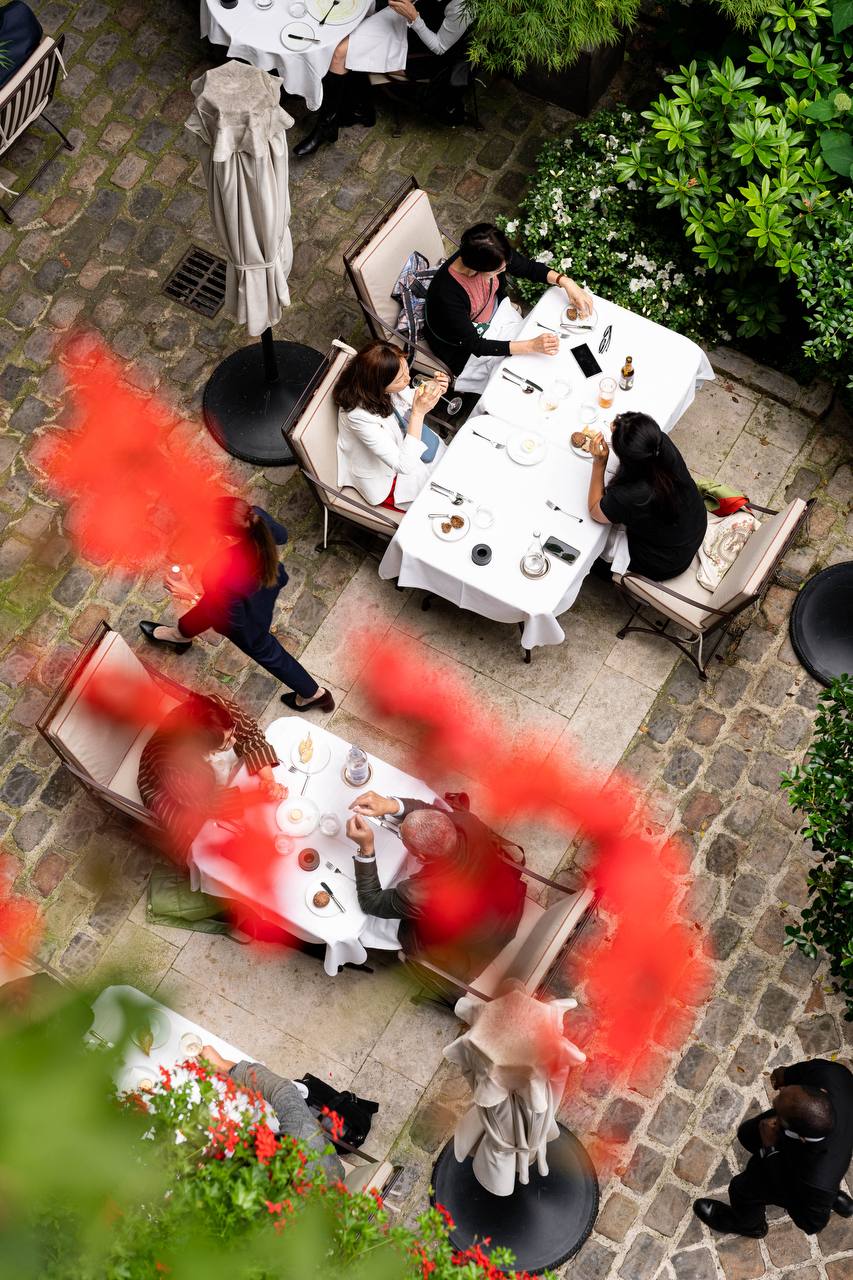
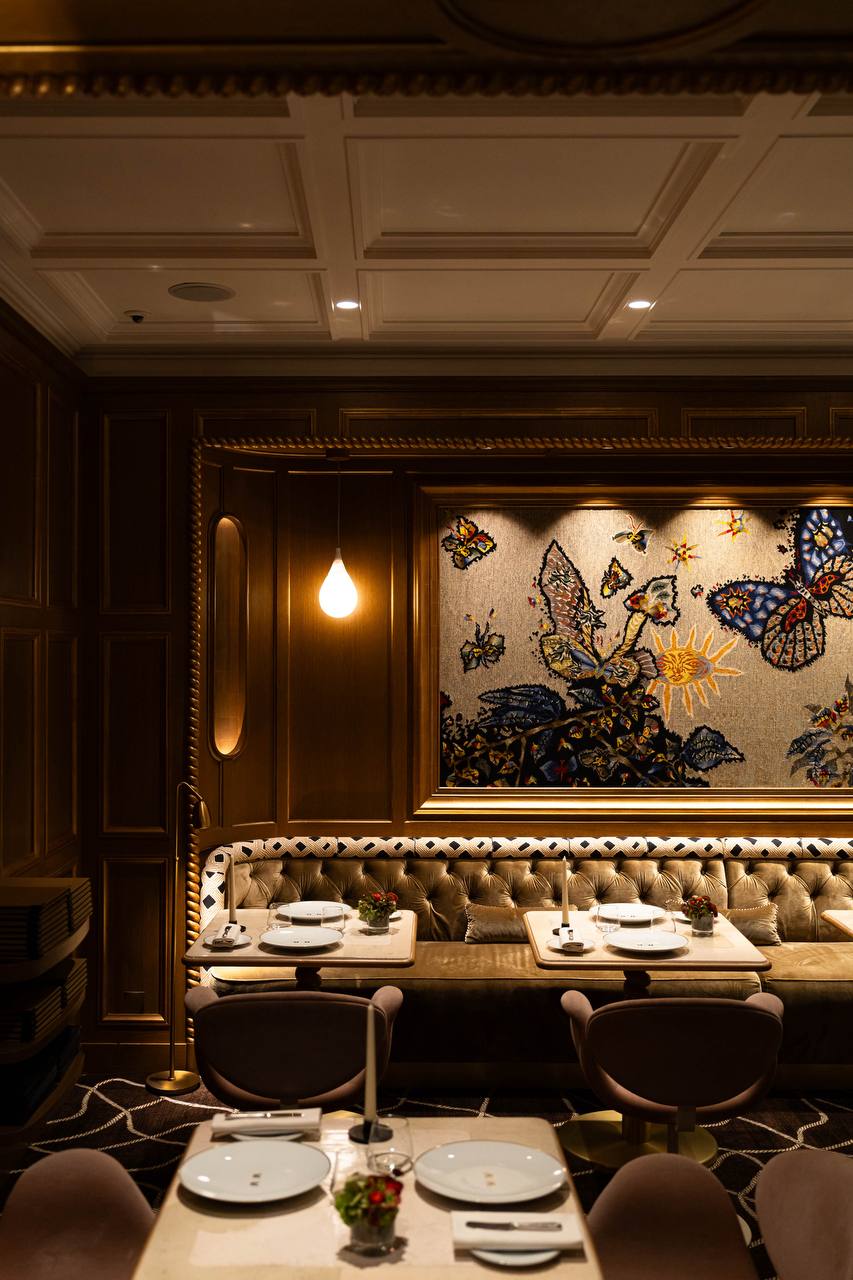
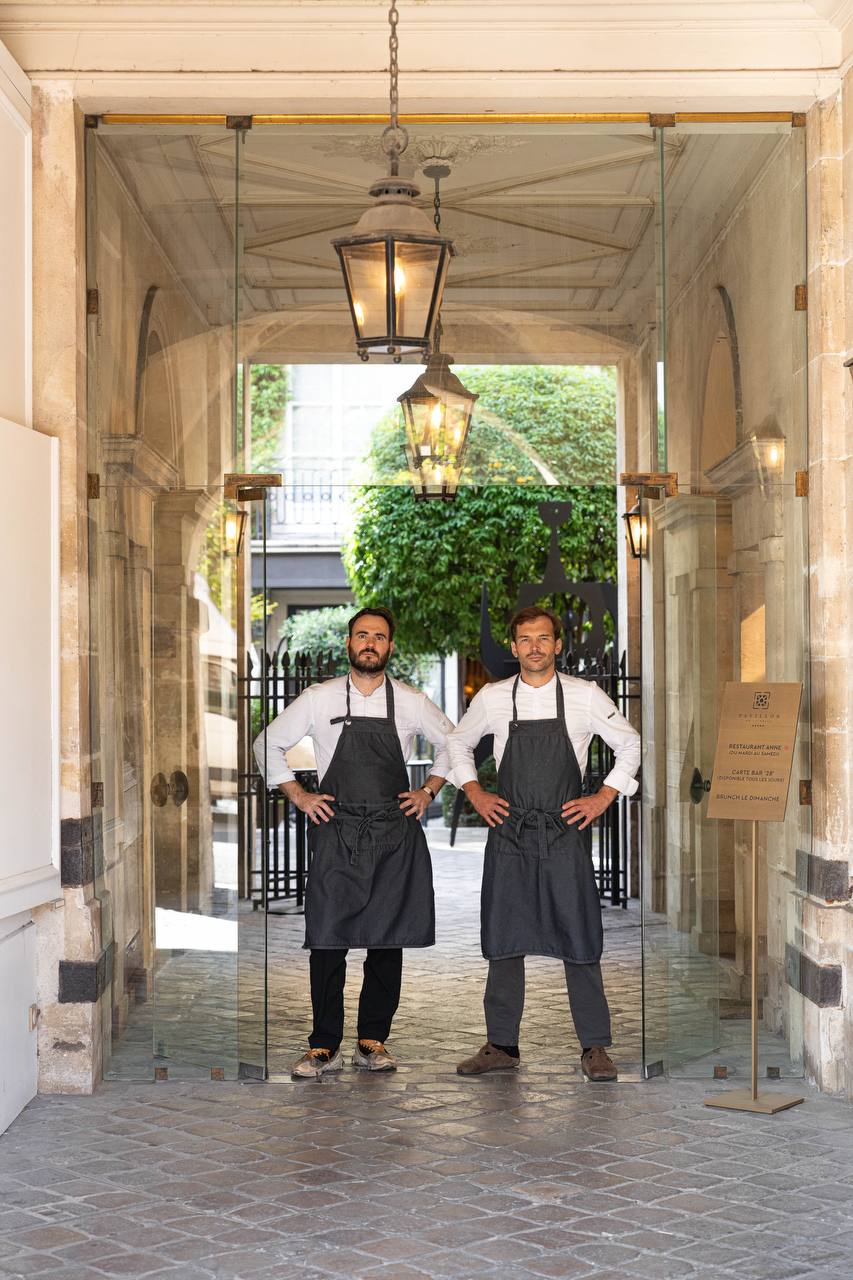
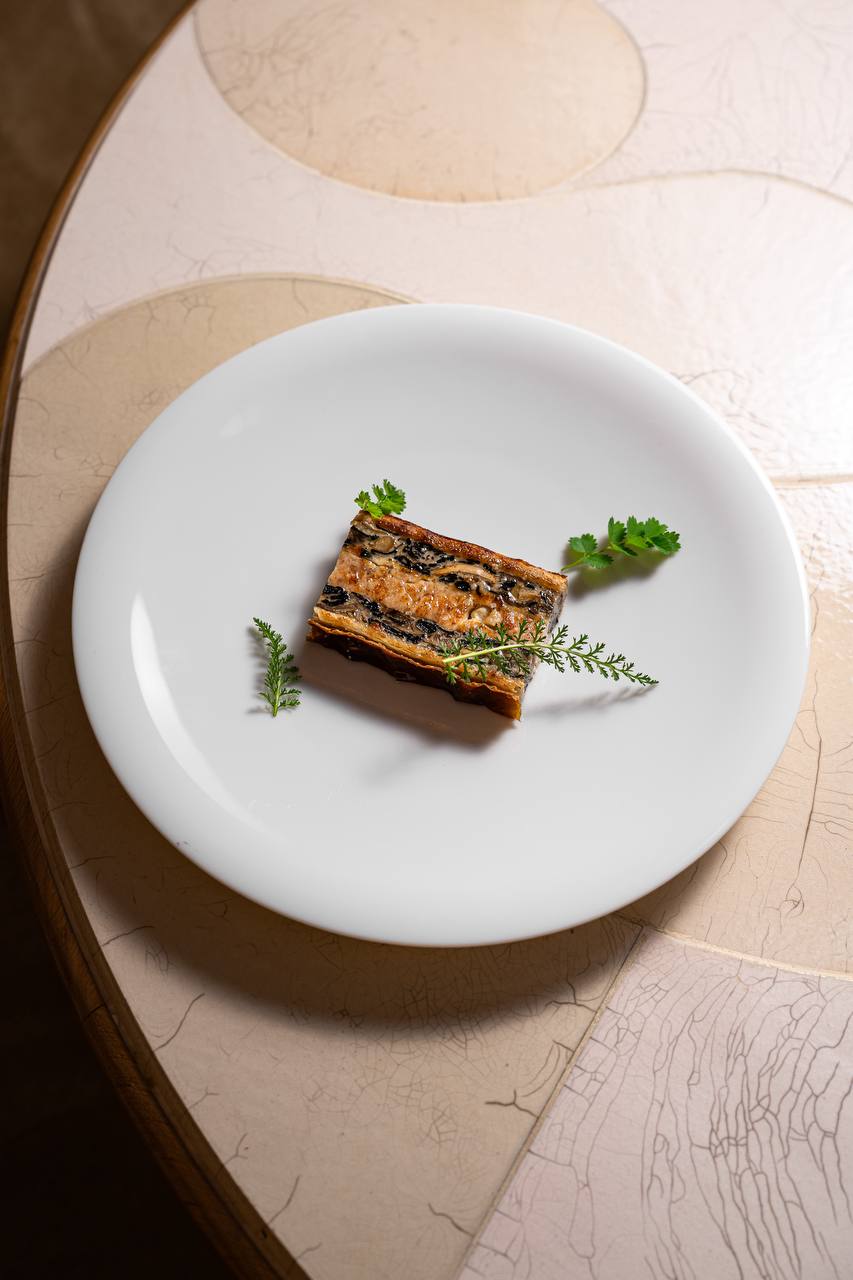
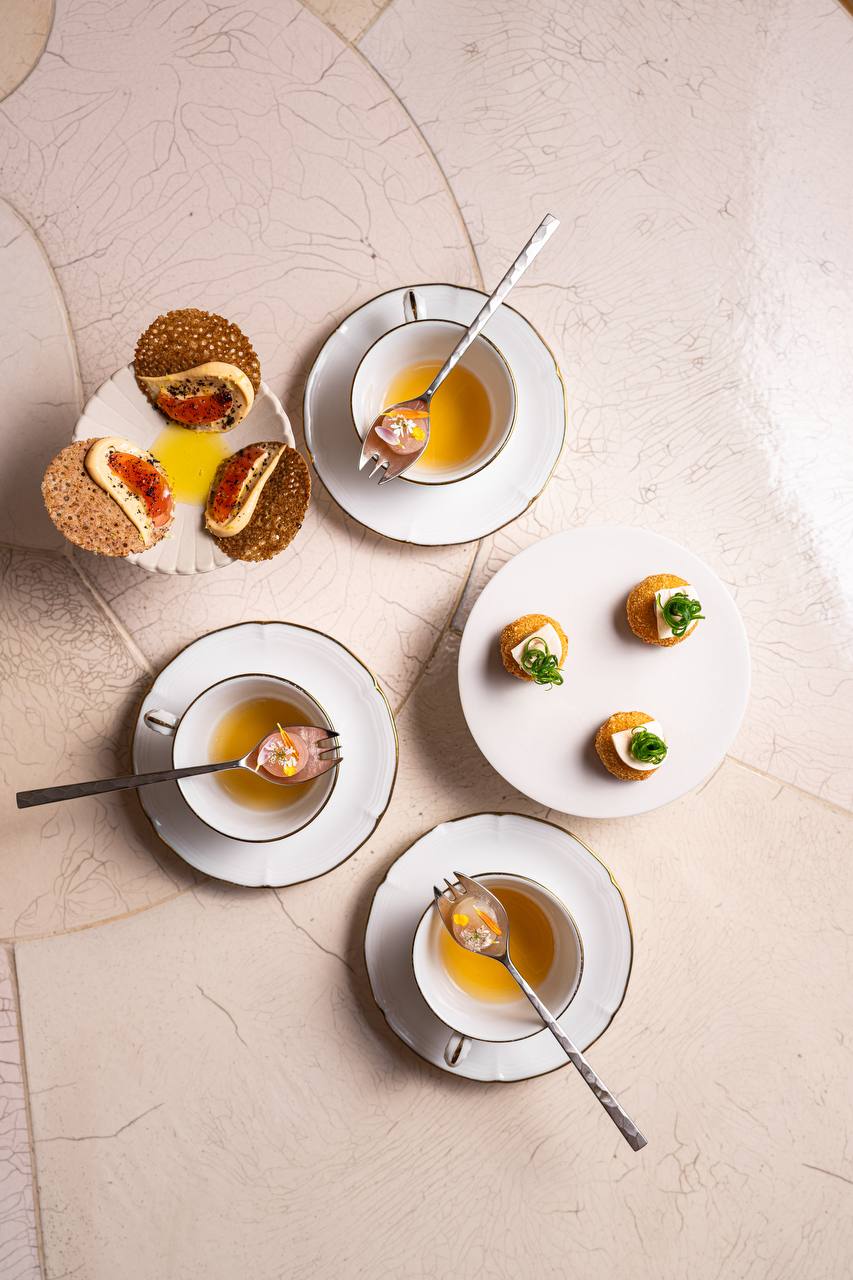
An intimate gastronomic destination led by Chef Thibault Sombardier, featuring seasonal ingredients and precise flavours. A personal dining experience overlooking the hotel's peaceful courtyard garden.
Pavillon de la Reine
The Sanctuary Within
The Marais is not short of things to do. Galleries, ateliers, boutiques, and a concentration of restaurants that would satisfy most cities twice its size. What makes Pavillon de la Reine work as a hotel is not that it competes with the neighbourhood but that it complements it. After a morning of exploring, the courtyard garden becomes a place where the city's noise dissolves into ivy and stone. The elegant lounges offer sofas deep enough to read in, and the spa provides a calm interior that feels appropriate to the building's residential character rather than imposed upon it. This is not a hotel with a wellness programme designed by a consultancy. It is a hotel that has simply always had rooms where guests can be quiet, and it has never seen a reason to change that.
Offers a calm refuge in Le Marais, allowing guests to balance vibrant Parisian culture outside with a quiet courtyard garden, elegant lounges, and dedicated spa facilities within.
What Comes Next
Independently owned hotels of this calibre face a particular kind of pressure. The world wants them to stay exactly as they are while simultaneously expecting them to evolve. Pavillon de la Reine seems to navigate this by treating enhancement as a quiet discipline rather than a renovation cycle. Thoughtful improvements to room spaces, continual refinement of the gastronomy, and bespoke guest experiences that feel personal rather than programmed. The focus remains fixed on preserving the intimate residential character that has always been the point. The building was here before the hotel. The neighbourhood was here before the building. The best version of Pavillon de la Reine is the one that honours that sequence.
Focused on thoughtful enhancements to preserve the intimate residential character, continually enriching room spaces, gastronomy, and bespoke guest experiences.