
Some collaborations feel inevitable. When Rimowa, the Cologne-born luggage house whose aluminium cases have crossed continents since 1950, meets Maison Margiela, the Paris-based label that turned deconstruction into a design philosophy, the common ground is already there. Both houses celebrate objects that change with use. Both see wear not as damage but as memory. Their limited-edition travel collection, dropping on 19 November, brings those two vocabularies together through one technique: Bianchetto, Maison Margiela's signature hand-painted white finish that cracks, flakes and evolves with every journey.
The Bianchetto Code
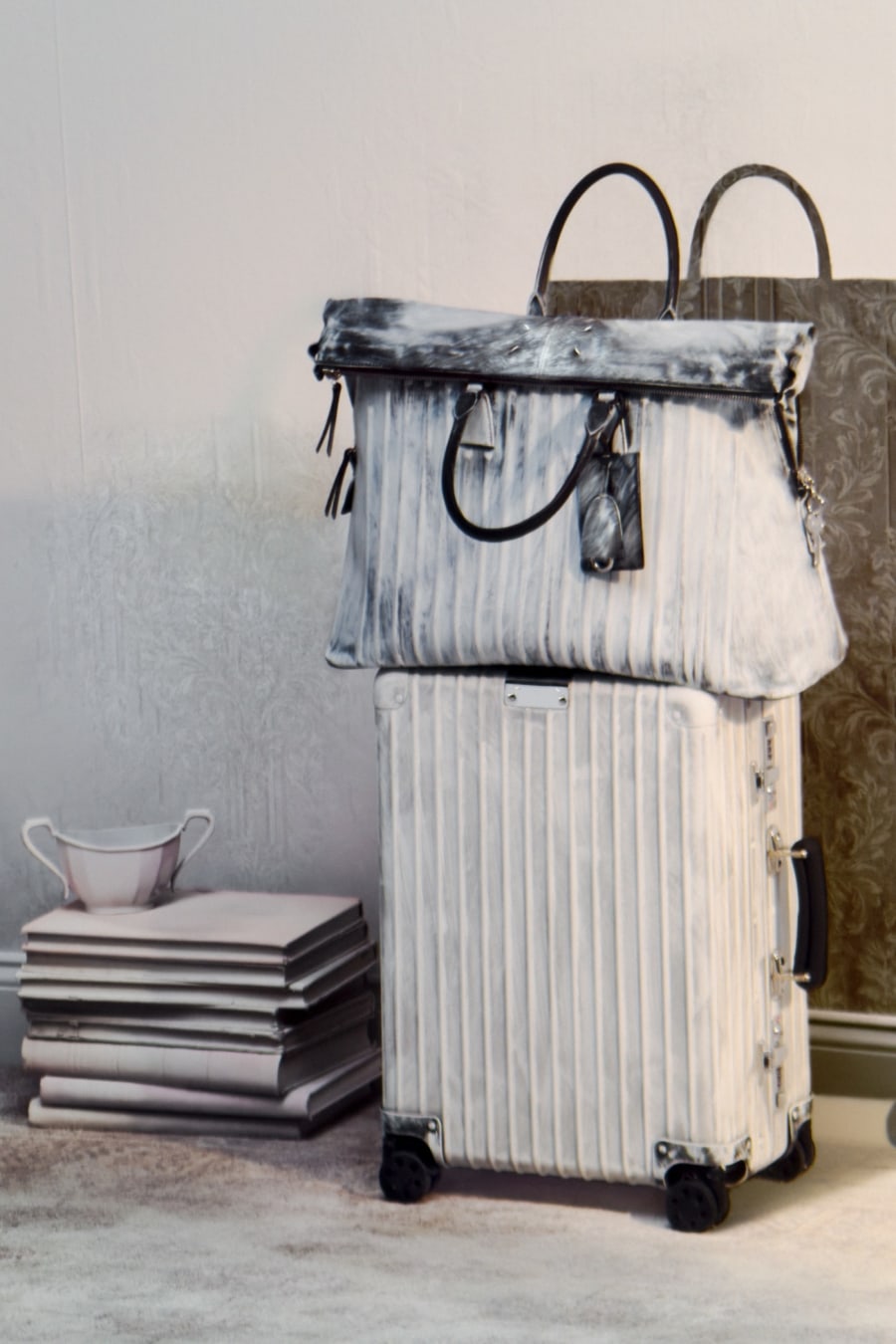
The story begins in 1988, when Martin Margiela and his co-founder Jenny Meirens painted every piece of furniture in their first Paris studio white. It was partly practical, a way to bring cohesion to a collection of second-hand finds, but it became something more. The white paint aged, scuffed and peeled, revealing glimpses of what lay beneath. Bianchetto was born, and it has since become one of the house's foundational codes, sitting alongside the Tabi shoe and four white stitches as a defining Margiela motif.
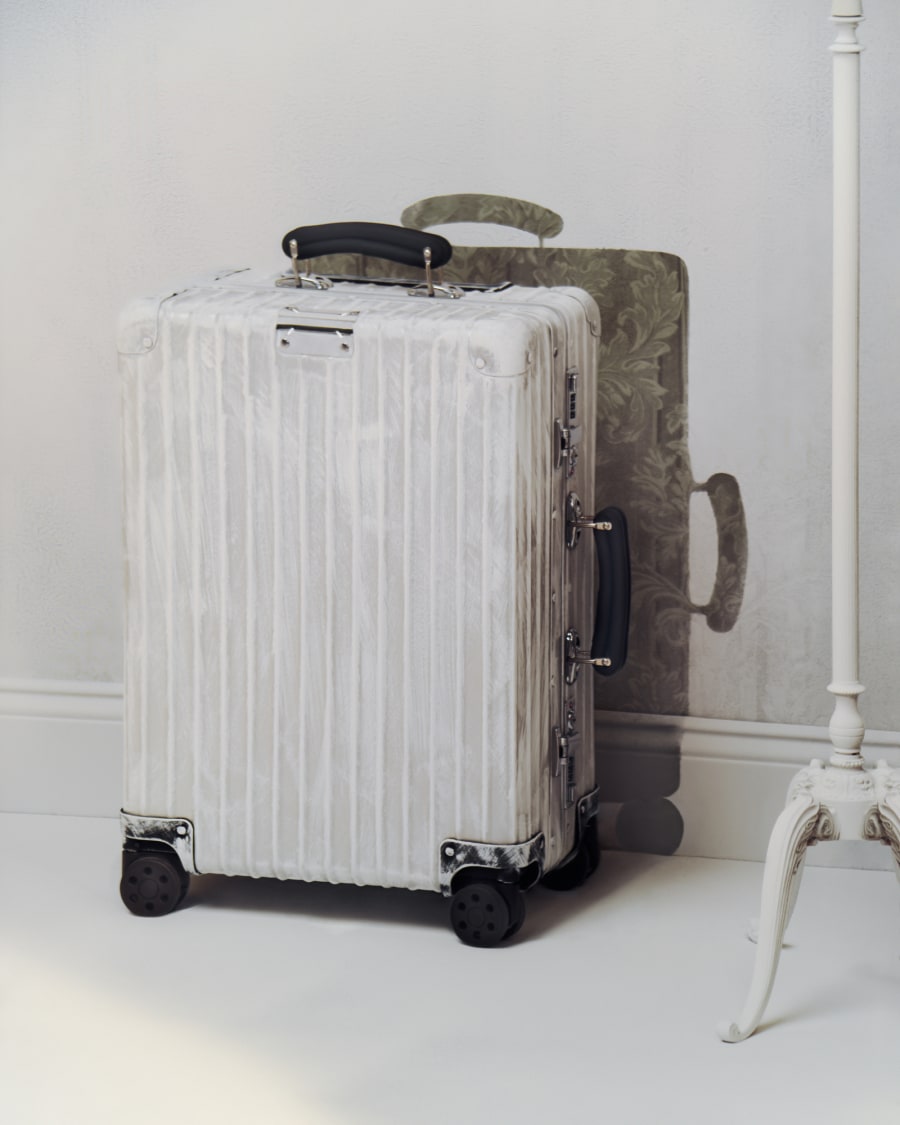
Rimowa's parallel philosophy needs less introduction. Anyone who has watched an aluminium suitcase accumulate dents and stickers over years of travel understands it. The German brand has always encouraged those marks, seeing them as personal records of meaningful journeys rather than cosmetic damage. The collaboration treats both approaches as one and the same: the Bianchetto paint on the Classic Cabin suitcase will gradually crack and fade, forming a patina as individual as the dents beneath it.
Inside Out
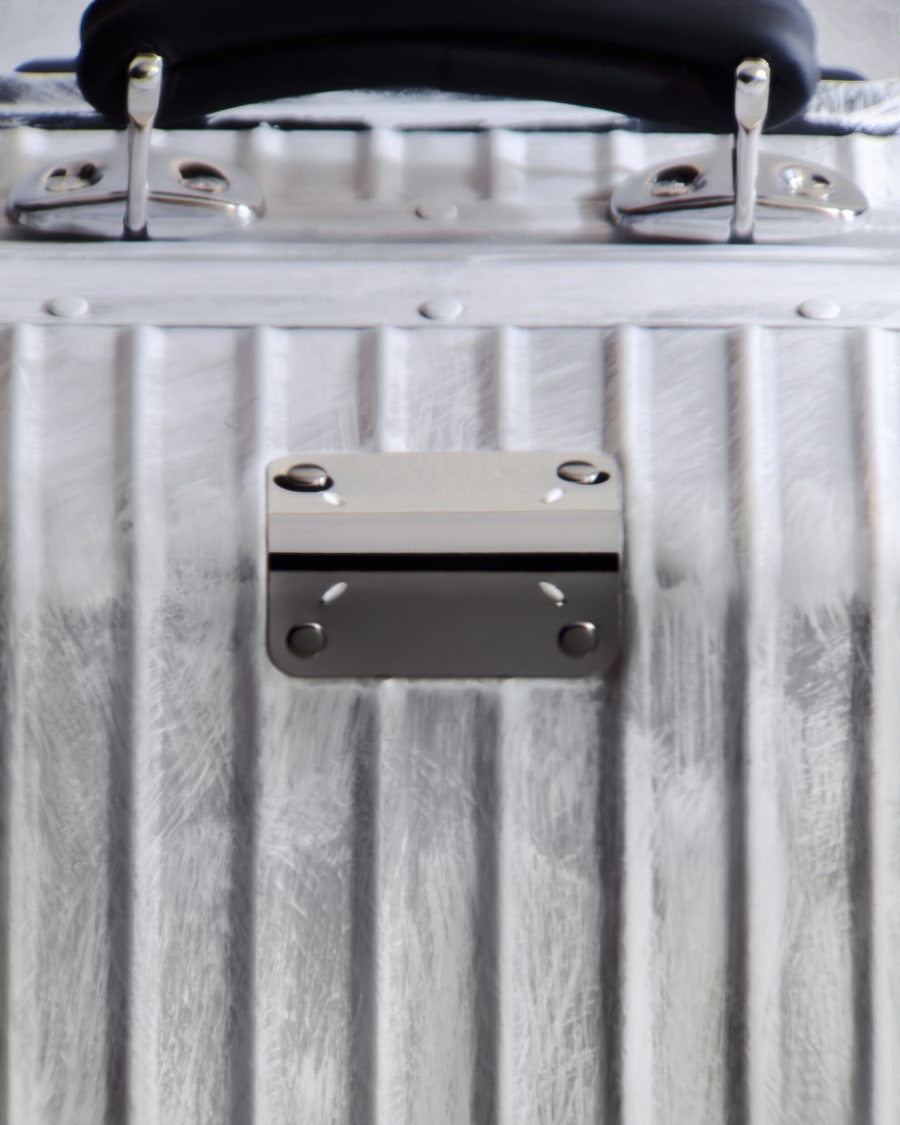
The Classic Cabin has been reimagined with an all-white interior that mirrors Maison Margiela's garment construction. Canvas and white leather line the case with visible stitching and overlocked edges, making the suitcase appear inside out, an approach that echoes the way Margiela garments often reveal their linings and construction. The aluminium logo badge is finished with four slanted white stitches of real thread, Margiela's haute couture-derived emblem that traditionally secures its numeric label in quiet rejection of conventional branding.

The 5AC XL Bag
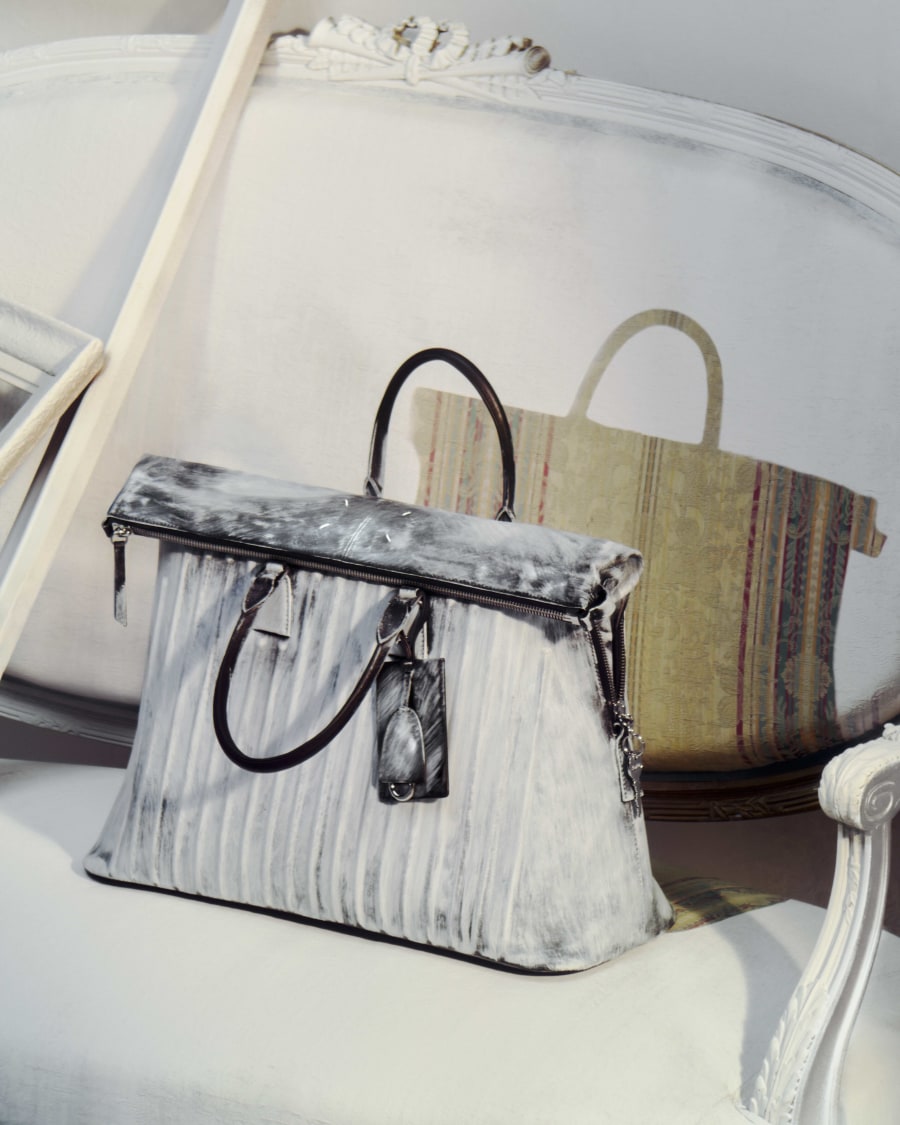
Named after early internet shorthand for sac, the 5AC XL bag translates Rimowa's aviation-inspired grooves directly into leather using a seamless high-frequency technique, no needle or thread involved. Its internal lining extends beyond the leather body, either tucked neatly inside or pulled out to transform the silhouette into a weekender. Removable leather loops anchor the bag to the Classic Cabin's telescopic handle, aligning the grooves of both pieces into a continuous structural surface. A bespoke leather tag combines Rimowa's address-label format with Margiela's key bell, bridging the worlds of travel and leather goods in a single detail.
The Campaign
Photographer and director Dexter Lander conceived the campaign as a paint-sprinkler spectacle set inside a Haussmannian Paris apartment. White paint gradually coats the luggage and the room itself, leaving the silhouettes of both the suitcase and the bag imprinted on the walls and upholstered furniture behind. It is playful, theatrical and unmistakably Margiela in its refusal to separate the object from the gesture that creates it.
The Rimowa x Maison Margiela Classic Cabin is priced at 3,200 euros, with the 5AC XL bag at 3,600 euros. Both pieces will be available from 19 November at selected Rimowa boutiques in Paris, Milan, Tokyo, Shanghai, Singapore, New York and Los Angeles, as well as Maison Margiela stores and both brands' online shops. Each piece is hand-painted, making no two identical.