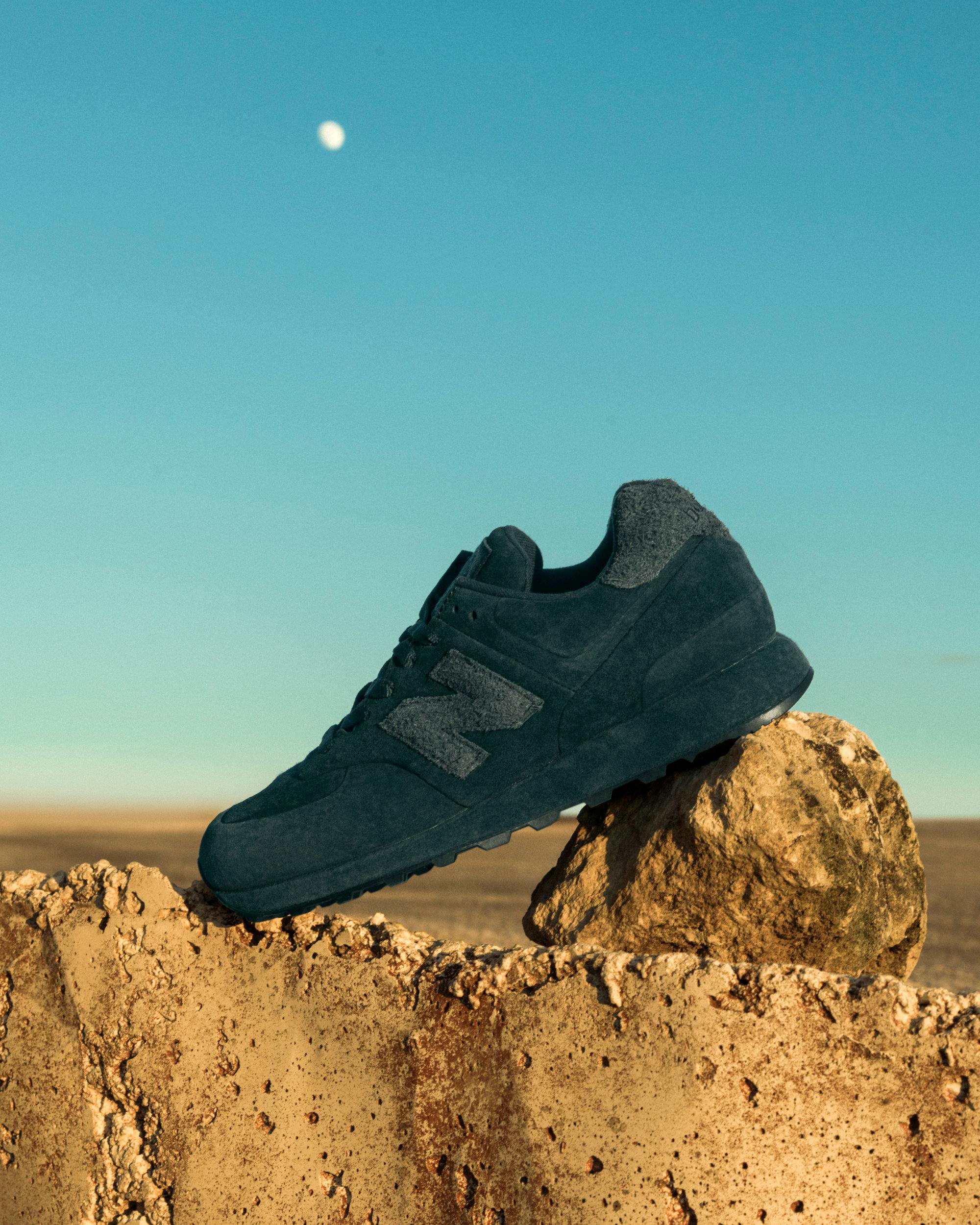
In collaborative footwear, few partnerships manage to genuinely reimagine a silhouette rather than simply apply surface-level aesthetic changes. Stone Island Ghost's latest iteration of the New Balance 574 represents a masterclass in material innovation, transforming the American brand's most accessible runner into something approaching luxury sculpture.
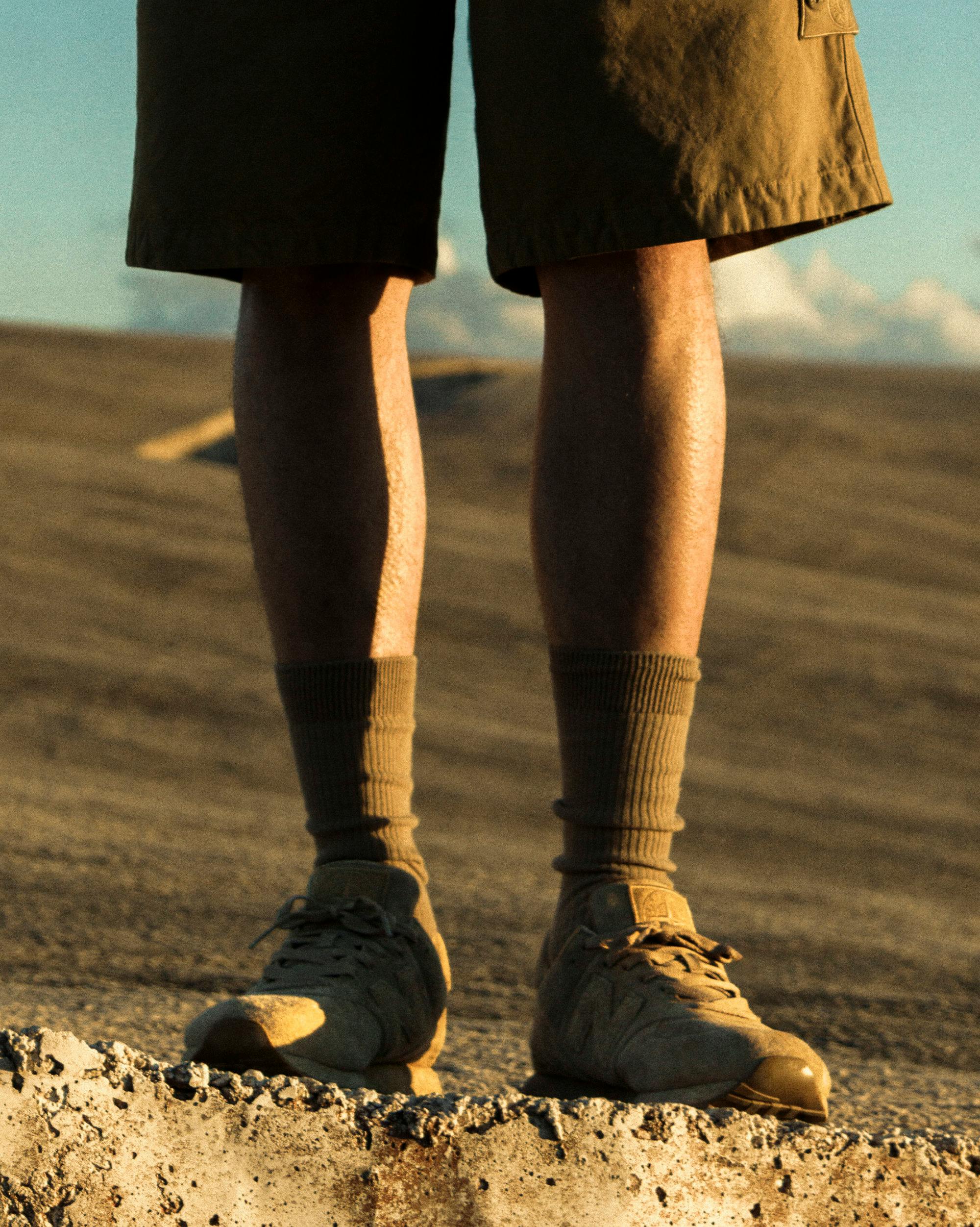
The Stone Island Ghost line emerged as the brand's exploration of tonal minimalism, a departure from the main line's often bold color treatments and technical experimentation. Launched as a separate collection, Ghost focuses on single-hue pieces that strip away visual noise to emphasize form, function, and material quality. This philosophy translates perfectly to footwear, where every element must contribute to a cohesive visual statement.
The defining characteristic of this collaboration lies not in bold graphics or vibrant colorways, but in Stone Island Ghost's commitment to monochromatic perfection. The Italian brand's sub-line has built its reputation on single-hue pieces that blur the boundaries between technical performance and understated luxury, and this 574 iteration exemplifies that philosophy completely.
The New Balance 574 itself deserves recognition as one of running's most enduring silhouettes. Originally introduced in 1988 as an affordable alternative to the premium 576, the 574 combined elements from both the 373 and 575 models to create something accessible yet performance-oriented. Its ENCAP midsole technology provided durability and support, while the suede and mesh upper offered both comfort and classic New Balance styling.
What sets this release apart from typical collaborative efforts is Stone Island's unprecedented decision to extend the fuzzy suede material beyond the upper onto the midsole itself. This creates a cohesive, almost pillow-like aesthetic that transforms the familiar 574 silhouette into something entirely more tactile and premium.
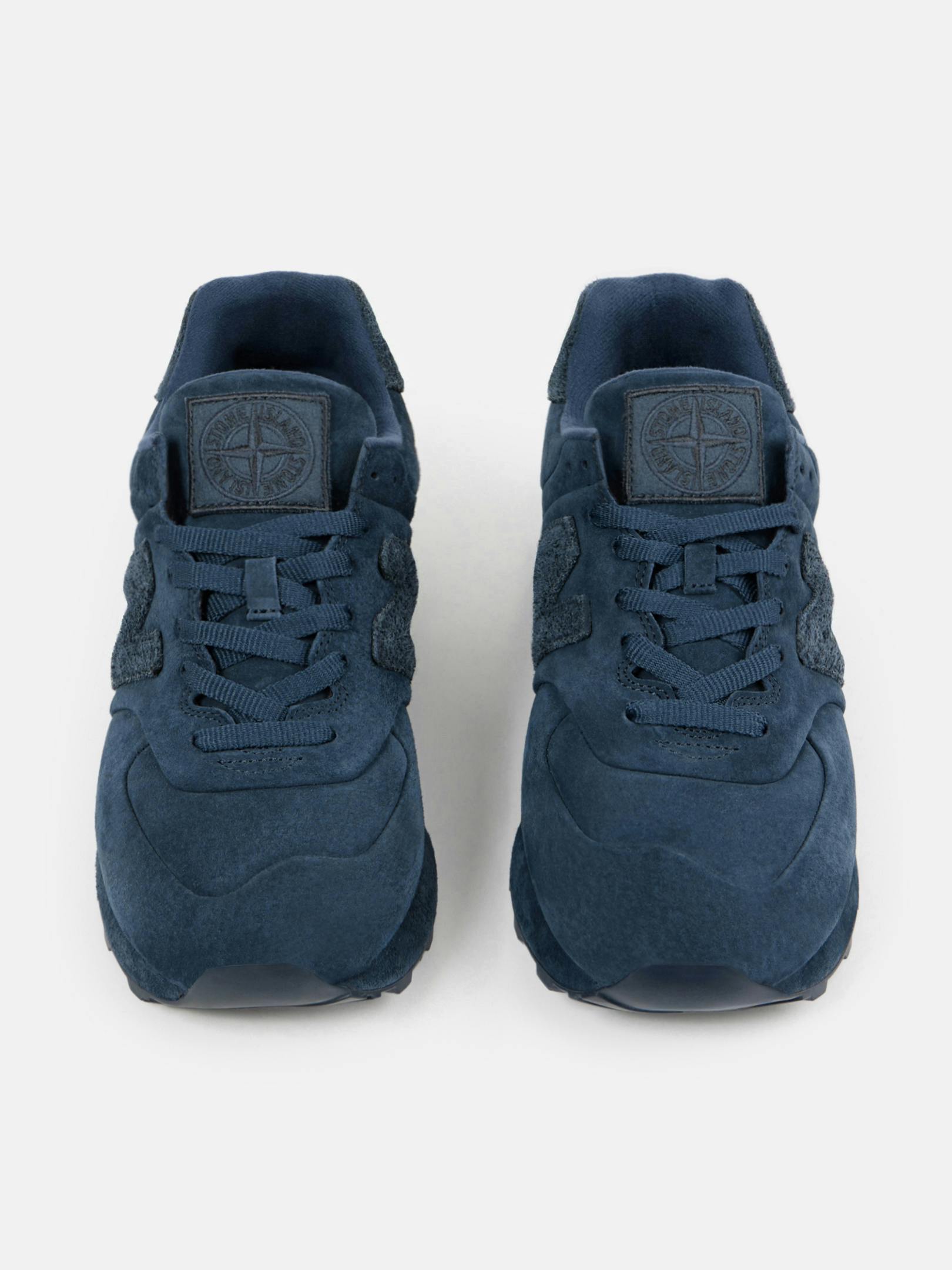
The material choice reflects Stone Island's expertise in fabric innovation and textile manipulation. The suede treatment isn't merely aesthetic but serves functional purposes, providing enhanced grip and weather resistance that aligns with the brand's technical heritage. This attention to material performance distinguishes the collaboration from fashion-forward partnerships that prioritize appearance over utility.
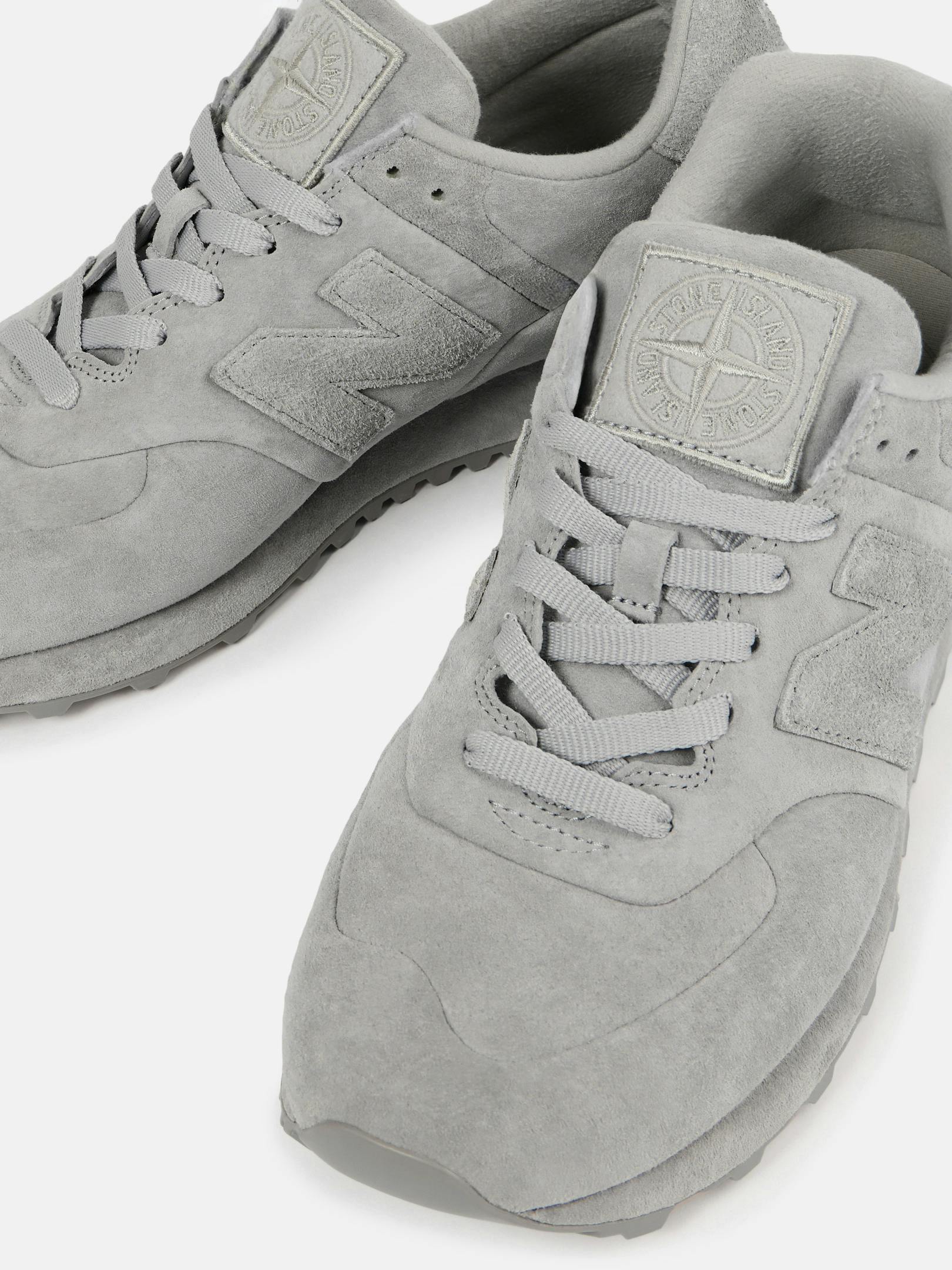
The execution extends Stone Island Ghost's signature military-inspired palette across three carefully considered colorways: sandy beige, deep slate blue, and stark dusty grey. Each iteration maintains the monochrome treatment down to the smallest details, with even Stone Island's iconic badge receiving the tonal treatment to ensure complete color cohesion.
The collaboration process between Stone Island and New Balance represents a meeting of complementary philosophies. New Balance's commitment to manufacturing quality and technical innovation aligns naturally with Stone Island's obsession with material development and functional design. This isn't a surface-level brand exercise but a genuine product development partnership.
Each colorway tells its own story through subtle variations in texture and tone. The sandy beige version evokes desert military gear, while the slate blue references naval traditions. The dusty grey feels deliberately industrial, reminiscent of urban workwear that has aged naturally through use. These aren't arbitrary aesthetic choices but considered references to Stone Island's military and workwear heritage.
This represents Stone Island Ghost's second collaboration with New Balance on the 574 silhouette, following their initial suede-heavy release in September 2025. However, this new iteration pushes the concept significantly further, creating what might be described as the footwear equivalent of a luxury textile rather than a conventional sneaker.
Set to release on March 11 via Stone Island's website, these represent the kind of collaborative thinking that elevates both brands involved, proving that innovation in footwear often comes through material consideration rather than flashy design gestures.