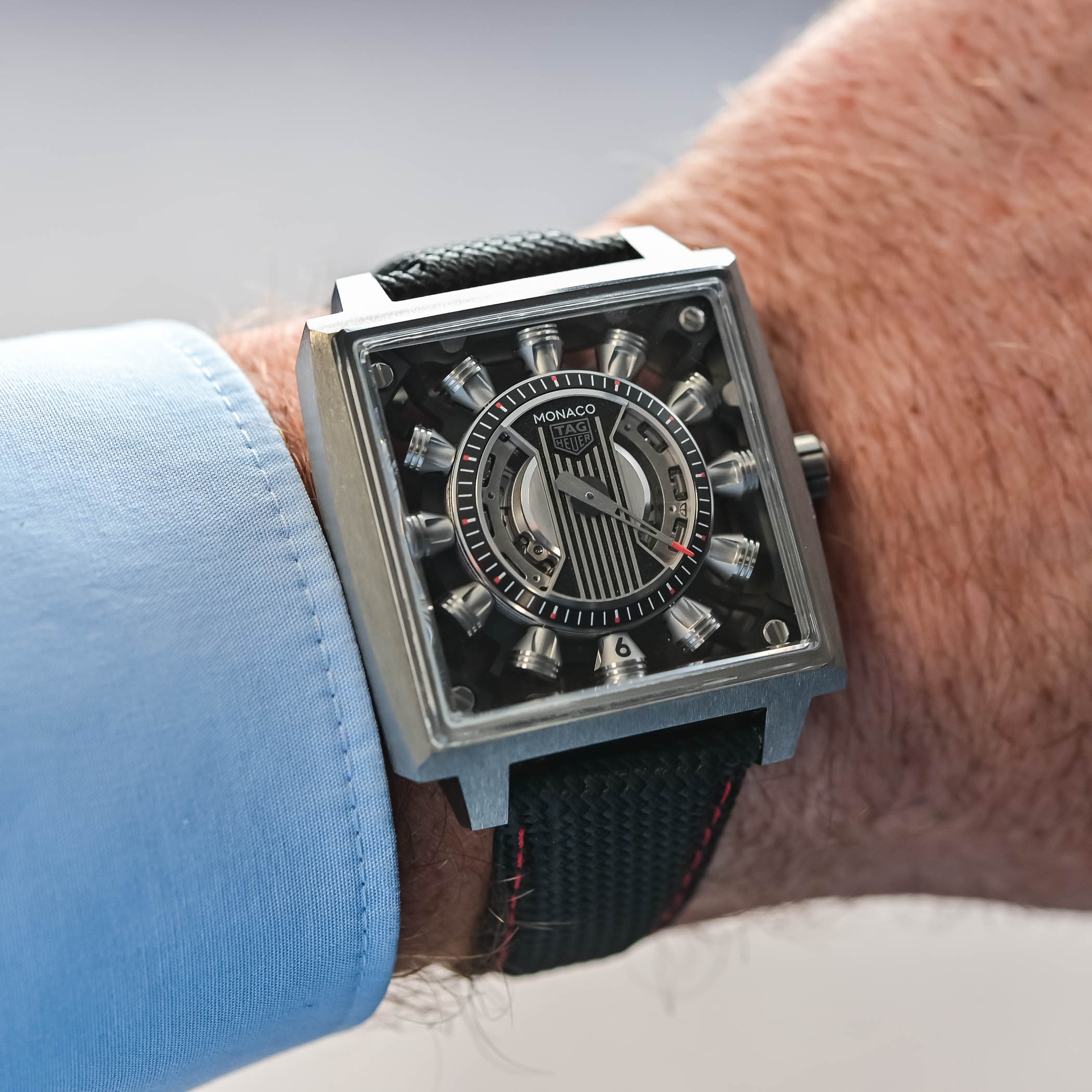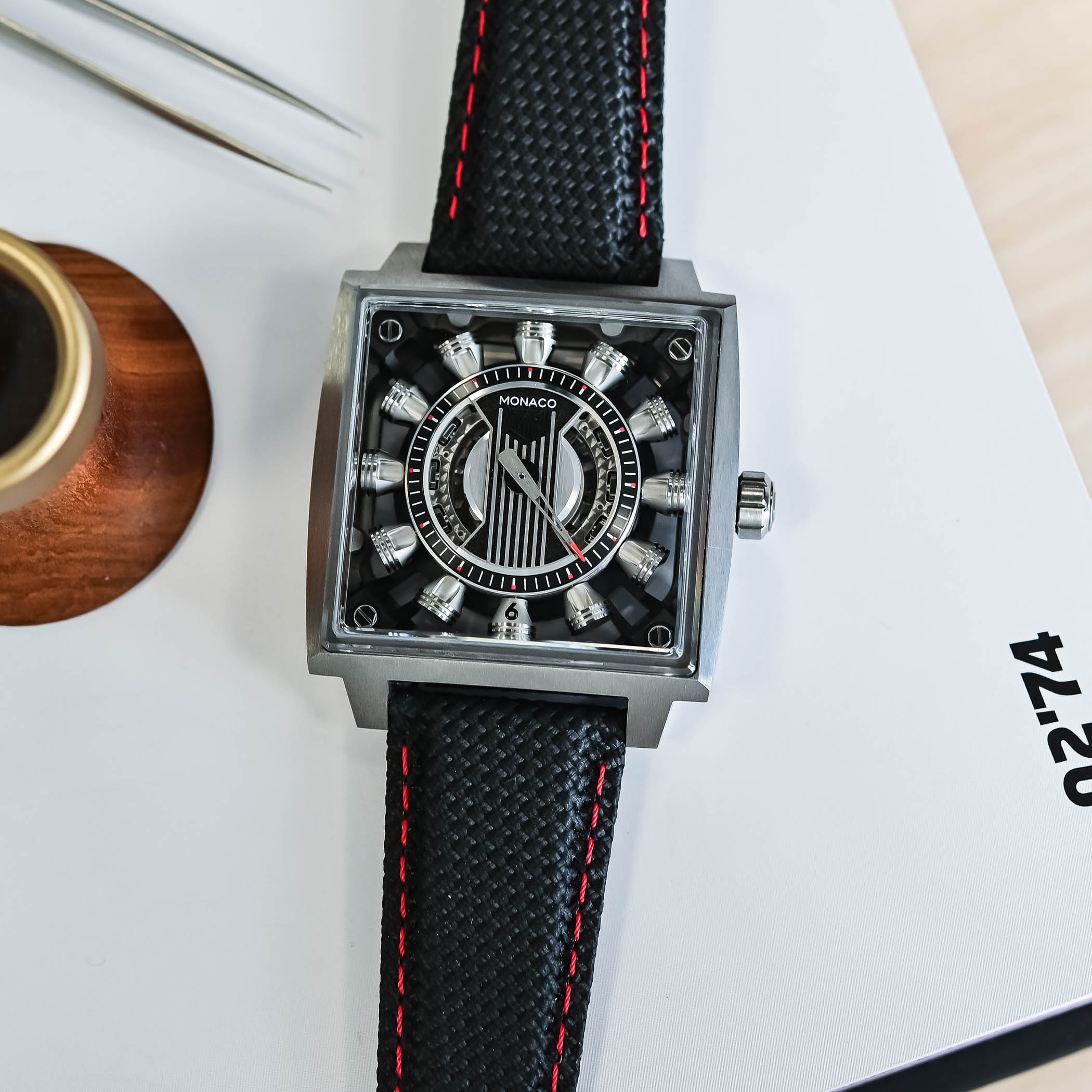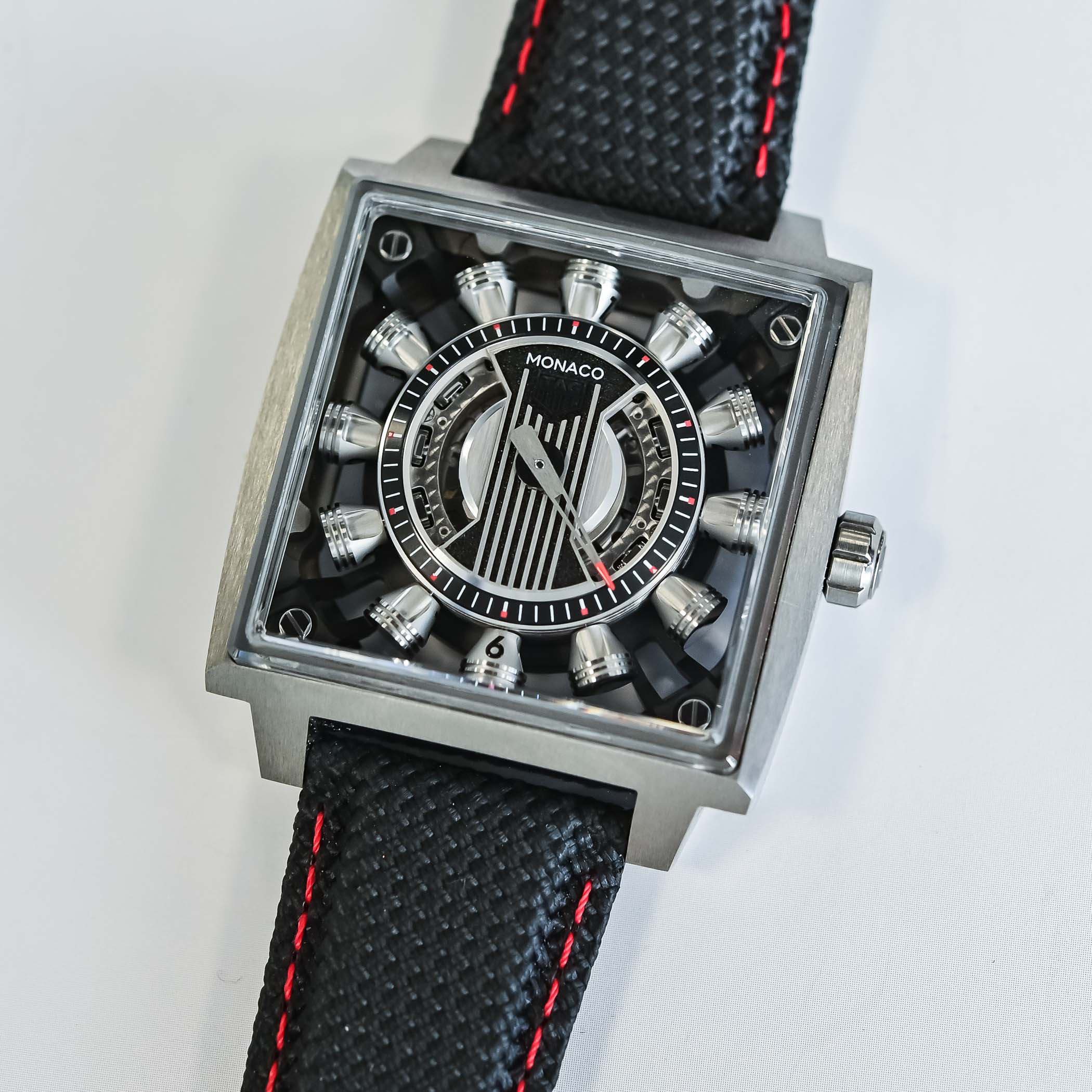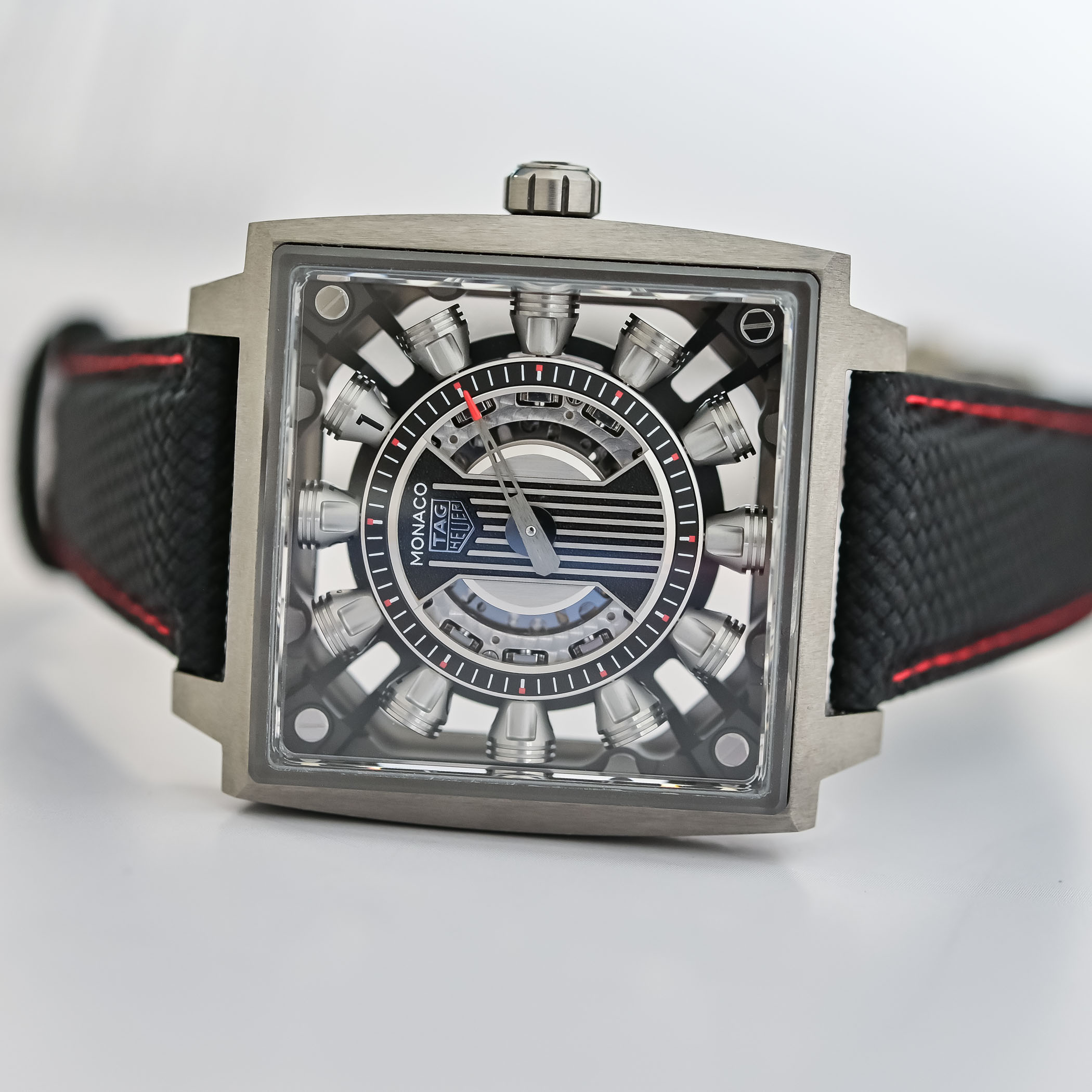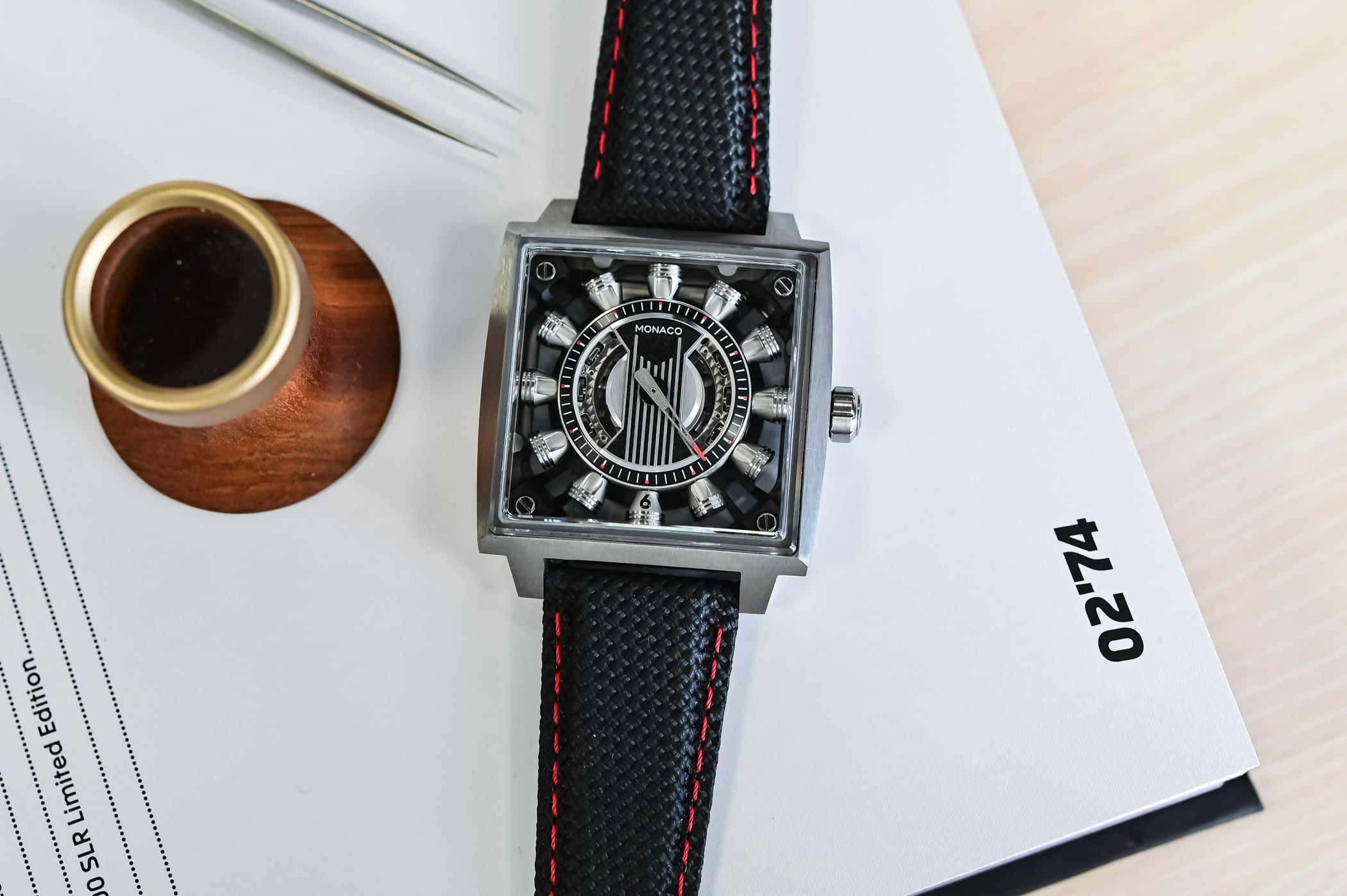
TAG Heuer has made 2026 the year of the Monaco. Updated chronographs, titanium cases, the innovative Evergraph with its compliant mechanisms, and now this: the Monaco Speed 12, a watch that abandons the chronograph altogether and replaces it with something far more theatrical. Twelve rotating piston-shaped hour indicators, each one firing in sequence as the minute hand completes its circuit, like cylinders in a V12 engine turning over on the wrist.
Unveiled at the Formula 1 Louis Vuitton Grand Prix de Monaco, the Speed 12 is a limited edition of just 50 pieces, priced at CHF 70,000 (approximately $87,000). It will be available from December 2026, and it represents a remarkable piece of lateral thinking from TAG Heuer's product team.
The concept draws on the Spin Time movement, a complication originally developed by Michel Navas and Enrico Barbasini for Louis Vuitton in 2007. Navas and Barbasini are the founders of La Fabrique du Temps, the haute horology workshop acquired by LVMH, and their rotating-cube display has been one of the most distinctive complications in the group's portfolio. For the Speed 12, TAG Heuer has reimagined those cubes as engine pistons, complete with a skeletonised minute hand that evokes the instrument dials of a race car. The result is a watch that feels simultaneously rooted in motorsport heritage and pushing toward something genuinely new.
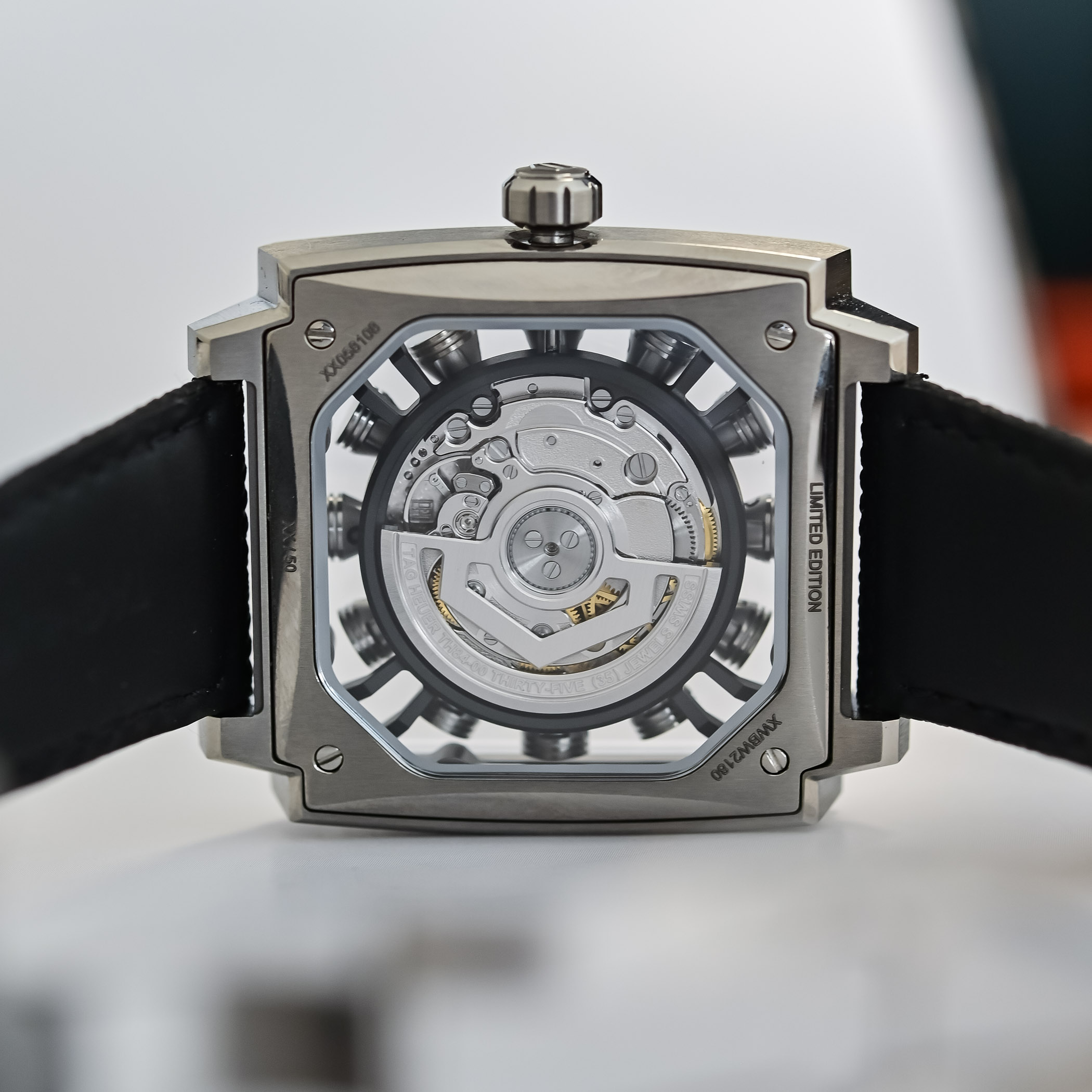
The 40mm square case is rendered in grade 5 titanium, brushed and relatively restrained for a Monaco, with the crown positioned on the right rather than the left. A square sapphire bezel maximises the view of the open-worked dial, while the TH84-00 movement, developed jointly with La Fabrique du Temps, is suspended within the case and held in place by four DLC-coated openworked arches that add depth and transparency. The movement runs at 4Hz with a 45-hour power reserve, which is respectable given the energy demands of the rotating hour modules.
The colour palette is monochrome with purposeful restraint. Black and silver components dominate, with red accents limited to the minute track and the hand-stitching on the black rubber strap with textile embossing. It is, at first glance, a surprisingly subtle Monaco. The drama is reserved for the dial, where the twelve rhodium-plated pistons rotate in sequence, each revealing an engraved Arabic numeral as it passes the hour position. The engineering analogy is obvious and deliberate. This is not a chronograph for timing laps. It is a celebration of the mechanical engine itself, translated into horological form.
At $87,000 in titanium, the Speed 12 sits in the same price bracket as precious-metal Spin Time models from Louis Vuitton, and it is considerably more expensive than any standard Monaco chronograph. Whether that premium is justified will depend on how much you value the novelty of the display and the craftsmanship of La Fabrique du Temps. What is beyond dispute is that this is the most inventive Monaco TAG Heuer has produced in years, and a compelling argument that the square-cased icon still has surprises left to deliver.