
Twenty miles south of Charleston, the road narrows and the oaks close in. Spanish moss hangs from branches that have been holding their ground since before the city had a name, and the salt air arrives before any building does. This is Johns Island, and this is where The Dunlin, Auberge Collection, sits within the Kiawah River community, surrounded by 2,000 acres of marshland, maritime forest, and riverfront that has been doing what it does for centuries without asking permission from anyone.
The resort is named after the dunlin, a small shorebird that winters along the South Carolina coast, and the naming is deliberate. This is a place that takes its cues from the landscape rather than imposing upon it. The architecture, the interiors, the food, and the pace of daily life are all shaped by what already exists here: tidal creeks, live oaks, salt marshes, and a sky that seems wider than it has any right to be.
Located just 20 miles from Charleston within the exclusive Kiawah River community, offering an experience-driven retreat across 2,000 picturesque acres of marshland, flora, and fauna.
The Dunlin, Auberge Collection

Design by Lindroth, Shaped by Place
The interiors were envisioned by Amanda Lindroth, the Bermudian-born designer whose work has become synonymous with a particular kind of coastal ease. White-washed walls, honey oak floors, mint green accents, and textural linen fabrics create rooms that feel like they have always been there, which is the hardest trick in resort design to pull off. The cottage-style layout means each room has its own porch with a rocking chair or two, and the distinction between inside and outside softens until the marshland feels less like a view and more like an extension of the room itself. There are 72 cottage-style guest rooms and suites, plus two exclusive riverfront bungalows, each designed to make the surrounding landscape the primary material of the interior.


Every suite carries the same restrained hand: canopy details that echo the coastal vernacular, colour palettes drawn from the marsh grasses and the sky at different hours, furnishings that invite you to sit down and stay. The two riverfront bungalows go further still, with wraparound porches that put the Kiawah River right at your feet and interiors so considered that the distinction between architecture and landscape dissolves entirely.


The bathrooms carry the same philosophy: natural light, coastal materials, and enough space to remind you that slowing down is not the same as standing still. Every material has been chosen to age well in the coastal air, from the brass hardware to the woven rattan. Nothing shouts. Nothing competes. The marsh does all the talking.

River, Marsh, Trail
The Kiawah River community is built around the idea that the best amenity a resort can offer is the landscape itself. Twenty miles of riverfront trails wind through maritime forest and salt marsh, past osprey nests and egret rookeries, along creek banks where the tide comes in twice a day and rewrites the geography. Kayaks and paddleboards are available for exploring the waterways. Bikes for the trails. A naturalist for the walks. Guided boat excursions along the Kiawah River that put you in the marsh grass and the tidal creeks with the kind of intimacy that no boardwalk can replicate. The resort does not organise nature here. It provides the tools to experience it at your own pace.

The riverfront bungalows sit at the water's edge, their porches hovering above the marsh grass like something that grew there rather than something that was built. From these vantage points, the tide becomes a clock. The herons become neighbours. The sunrise becomes the only appointment worth keeping.


Lowcountry on the Plate
The food at The Dunlin does not try to be something it is not. It is Lowcountry cooking, which means it is already something. Two signature dining destinations are rooted in South Carolina's own culinary traditions: the riverfront, the farm, and the marsh. Oysters harvested that morning, shrimp from boats you can see from the dining terrace, produce from purveyors who have been working this land for generations. The cooking respects the ingredients enough to let them speak, which is the oldest and most reliable tradition in Southern cuisine. Breakfast on the porch. Lunch overlooking the river. Dinner under the oaks. Each meal follows the same rhythm as the tides.
The oyster bar is its own ritual. A platter arrives on ice, lemon and herbs arranged with the kind of care that says this is not a performance, this is just how it is done here. The cocktail beside it carries the same conviction: local spirits, seasonal fruit, nothing that needs a paragraph of explanation. The Lowcountry does not explain itself. It just feeds you well.


The Spa as Heritage
The spa at The Dunlin is not a menu of imported treatments rearranged for a Southern audience. It is built on South Carolina's own healing traditions, where Thai healing herbs meet vibrational sound healing, Hatha yoga, Pilates, and Muay Thai foster complete physical and mental renewal. Treatments incorporate regional botanicals, sweetgrass baskets made by local artisans, and techniques that have been practised on this coast for longer than anyone has been writing them down. The spa building itself overlooks the marsh, and the treatment rooms are designed so that the sound of the wind through the grasses is part of the therapy. It is wellness that feels like it belongs here, because it does.
Evenings on the Porch
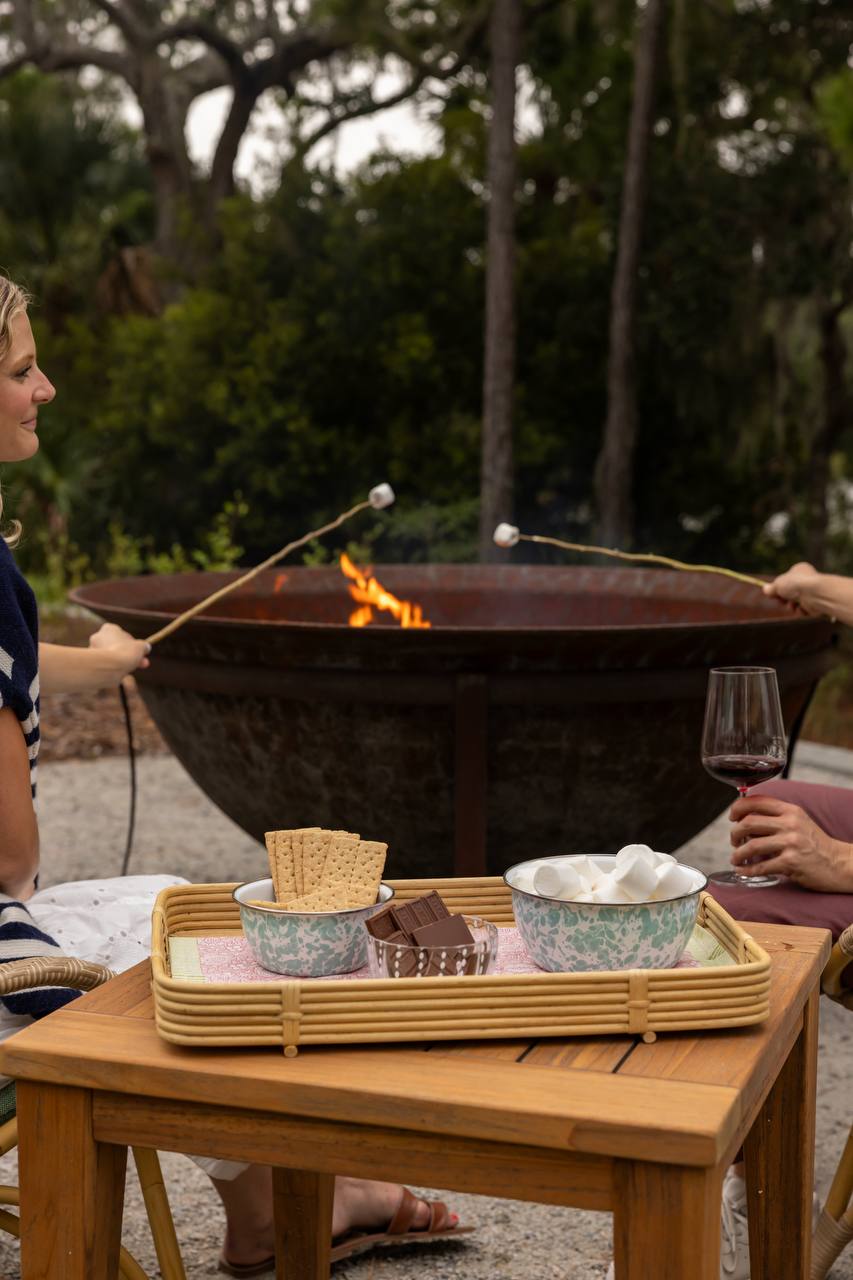
When the sun drops behind the marsh, The Dunlin shifts gear. The fire pits are lit. The rocking chairs fill. Someone produces a tray of s'mores ingredients as though it were the most natural thing in the world, and for a few hours it is. The marsh grass turns gold, then copper, then the particular shade of dark that only a Lowcountry sky can produce. Guests gather around the fire, not because the programme tells them to, but because the porch and the fire and the stars make gathering feel like the only reasonable thing to do.
What the Shorebird Knows
The dunlin flies thousands of miles each year but returns to the same stretch of coast. There is something about this particular marshland, this particular light, this particular meeting of river and sea, that pulls living things back. The Dunlin, Auberge Collection, has been designed with the same instinct. It does not compete with the Lowcountry. It belongs to it. The architecture settles into the landscape, the porches face the water, and the days begin and end with the kind of quiet that has always been this coast's most reliable export.
For those who want more than quiet, Charleston is twenty miles away, with its restaurants, its galleries, and its refusal to be anything other than itself. But the pull of the marshland, once you have spent a morning in it, tends to make the drive back feel longer than it should.