Bairro Alto does not do quiet. It has never done quiet. The neighbourhood that gave Lisbon its bohemian soul has been a place of fado singers and revolutionaries, of painters and poets and late-night arguments about which tasca serves the best bacalhau. The streets are narrow, the buildings are tiled in azulejo patterns that predate most European design movements, and the tram that rattles through the lower streets carries tourists who think they have discovered something that the locals have known for three centuries. This is the neighbourhood where The Lumiares Hotel & Spa sits, in the restored 18th-century Palace of the Counts of Lumiares, and the hotel's relationship with its surroundings is not one of contrast but of continuation.
The palace was built when Bairro Alto was still aristocratic, before the artists moved in and the aristocrats moved out, before the neighbourhood became what it is now: a district that transitions from sleepy morning to electric night within the space of a single sunset. The Lumiares, operated by Bomporto Hotels, honours both eras. The restoration preserved the grand staircase, the original facades, and the proportions of a building that was never meant to be ordinary. The interiors, though, speak the language of now: apartment-style suites with full kitchens, local artistry on every surface, and a rooftop that makes the case for Lisbon being the most beautiful city in Europe to watch the sun go down.
Housed in the restored 18th-century Palace of the Counts of Lumiares, the hotel's design mirrors Bairro Alto's day-to-night rhythm and Lisbon's hero colours: sky blue, dusty pink, and warm ochre.
The Lumiares Hotel & Spa
A Palace That Earns Its Title
The Palace of the Counts of Lumiares was never going to be a hotel that apologised for its setting. The building's history is embedded in its walls, and the restoration by Bomporto Hotels treated that history as an asset rather than a constraint. Housed in the restored 18th-century Palace of the Counts of Lumiares, the hotel's design mirrors Bairro Alto's day-to-night rhythm and Lisbon's hero colours: sky blue, dusty pink, and warm ochre. The colour palette is not decorative. It is derived from the city itself: the blue of the Tagus at midday, the pink of the tiled facades in the late afternoon, the ochre of the rooftops that stretch across every hilltop in every direction.
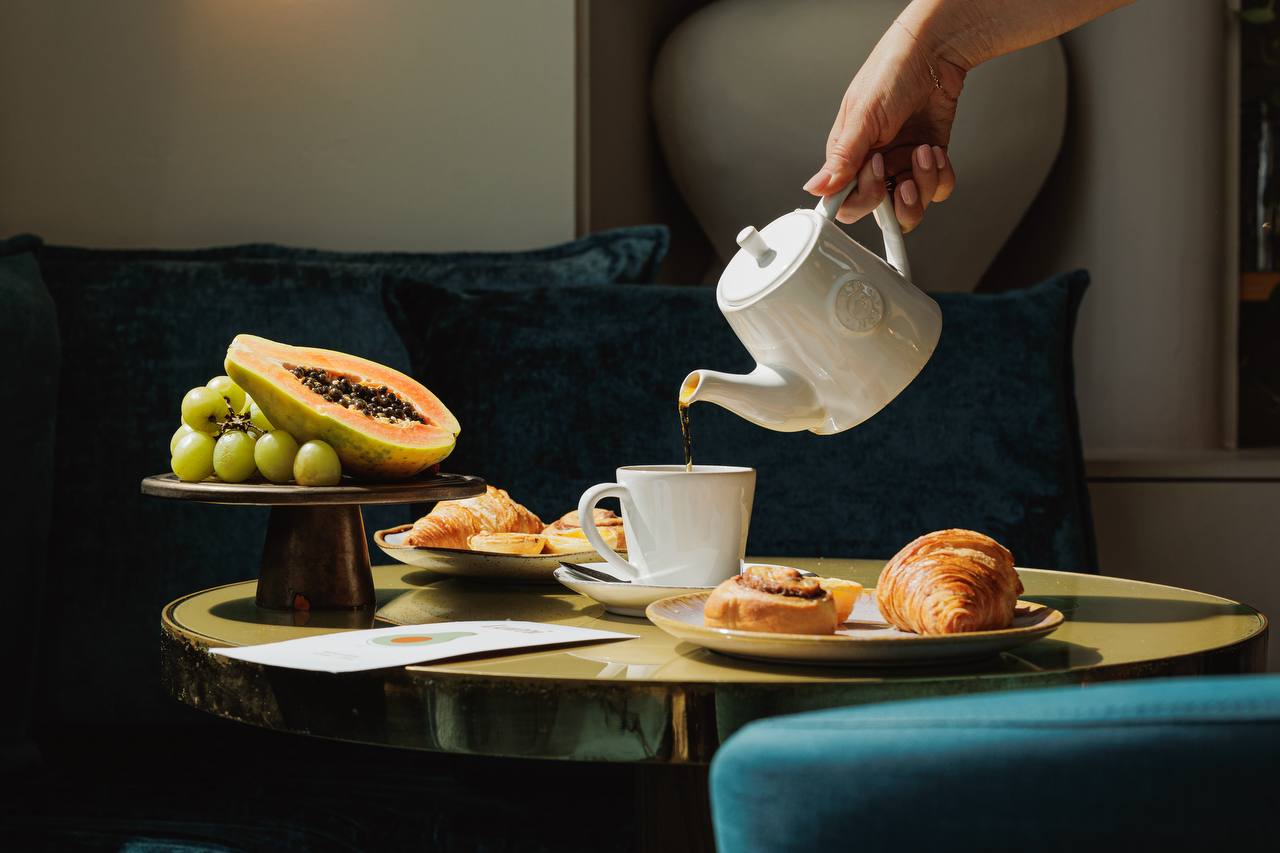
The interiors celebrate authentic local artistry with a specificity that most hotels cannot manage because most hotels are not in Lisbon. Ferreira de Sá rugs underfoot. Vasco Célio photography on the walls. Vista Alegre tableware at breakfast. Fernando Pessoa letterpress poetry in the suites. Margarida Fleming's grand staircase paintings of Fado singers, whose voices have been the soundtrack of this neighbourhood since before the palace was built. Every element is Portuguese, and every element is specific. This is not a hotel that picked up a few local crafts at a market and called it authentic. This is a hotel that commissioned work from the people who define Portuguese craft.

Lumi: Lisbon from Above
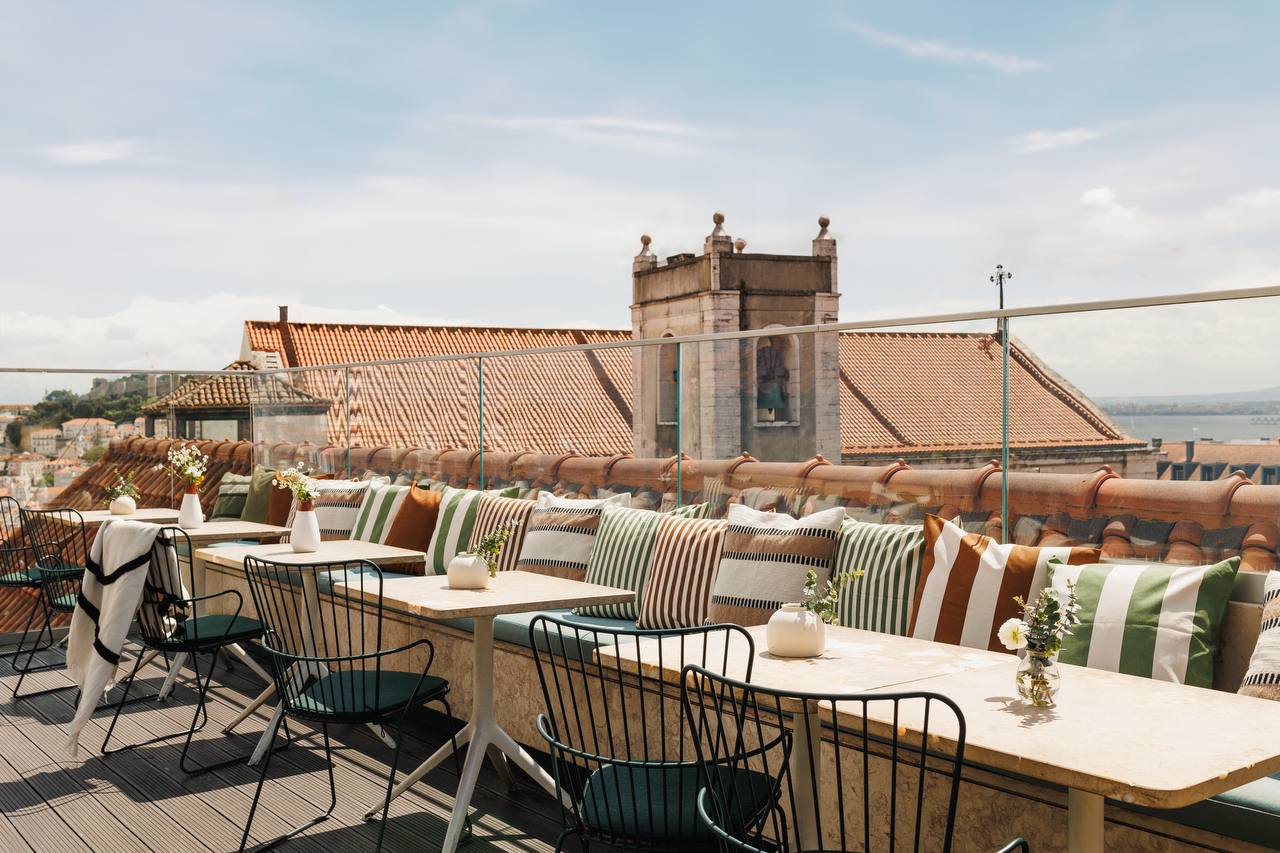
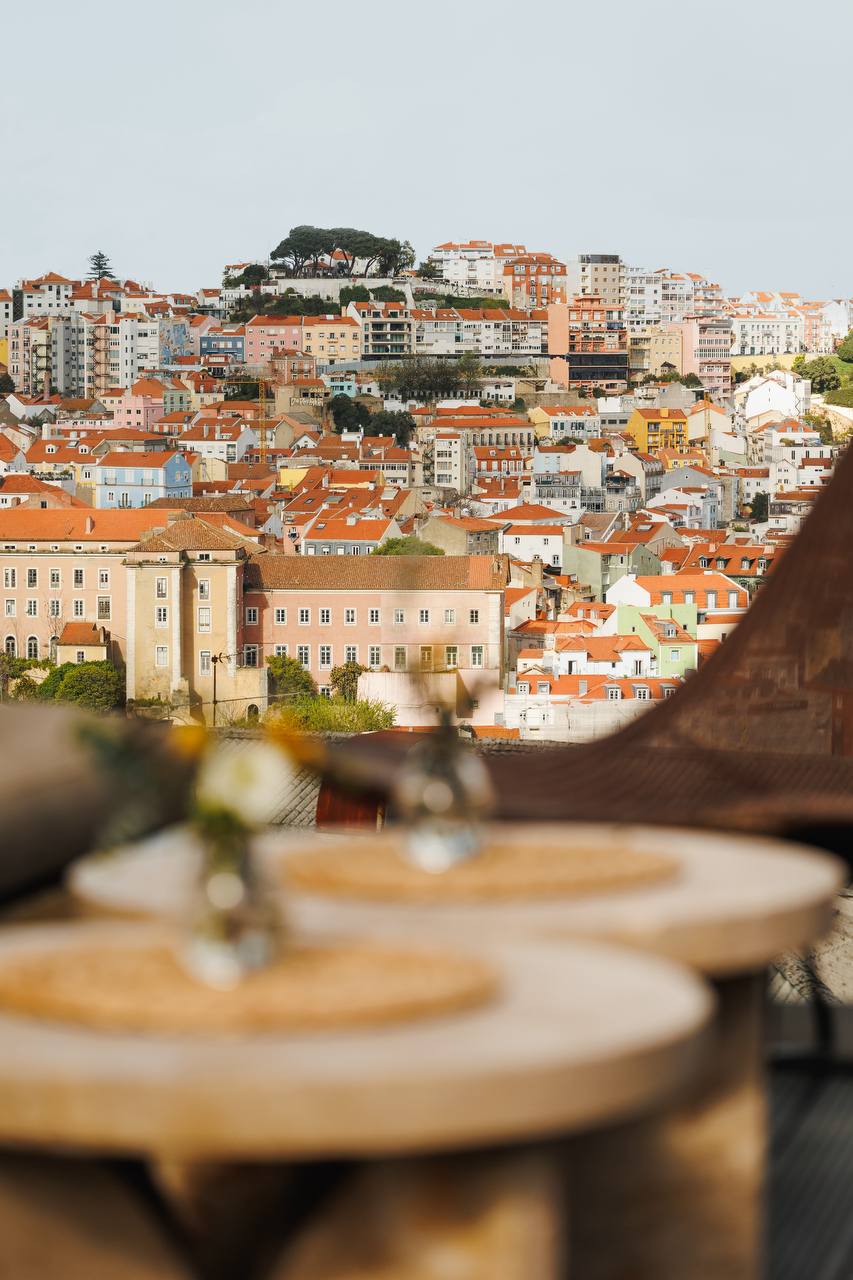
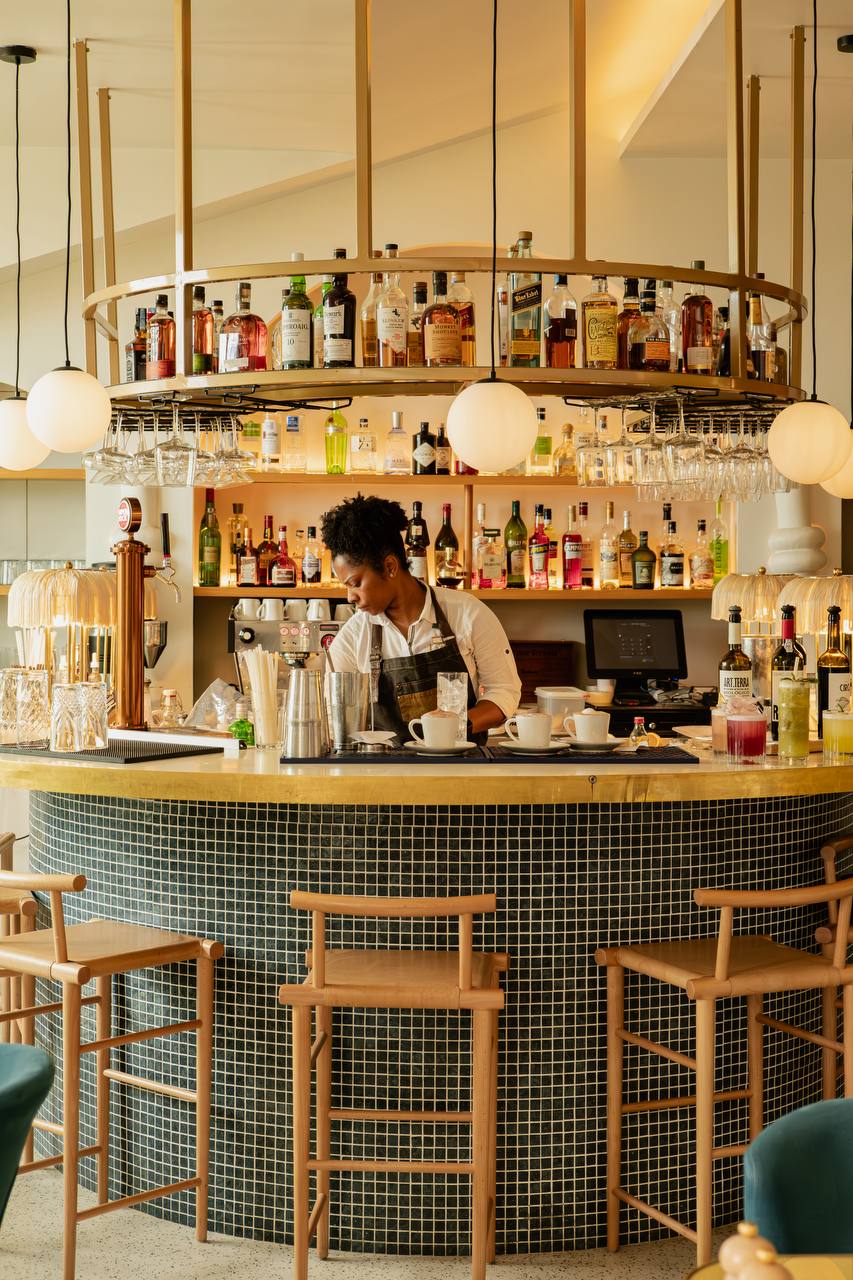
On the fifth floor, Lumi Rooftop sits above the Bairro Alto rooftops with a view that takes in the Tagus River, the castle on the hill, and the terracotta expanse of a city that was built on seven hills and never pretended to be flat. Perched on the 5th floor, Lumi Rooftop provides panoramic views over Lisbon's terracotta roofs and the Tagus River, with Head Chef João Silva pairing a farm-to-table philosophy with Portuguese petiscos, seasonal menus, and craft cocktails including the signature Lumi Negroni. The menu does not try to be international. It tries to be Portuguese, which in a city with this much culinary heritage is a more ambitious goal.
Head Chef João Silva's approach is rooted in the farm-to-table philosophy that Portugal has been practising since before it had a name for it. The petiscos are small plates with big intentions: cured fish from the Algarve, cheeses from the Azores, seasonal vegetables from the markets that surround the hotel on all sides. The dishes are conceived around the concept of sharing, designed to be passed, tasted, and enjoyed together, which is as much a part of the dining experience at Lumi as the view itself. The Lumi Negroni, the house signature, is a cocktail that could only exist here, at this height, watching this city do what it does between six and nine in the evening, which is to say, transform.

The 7 Hills Ritual
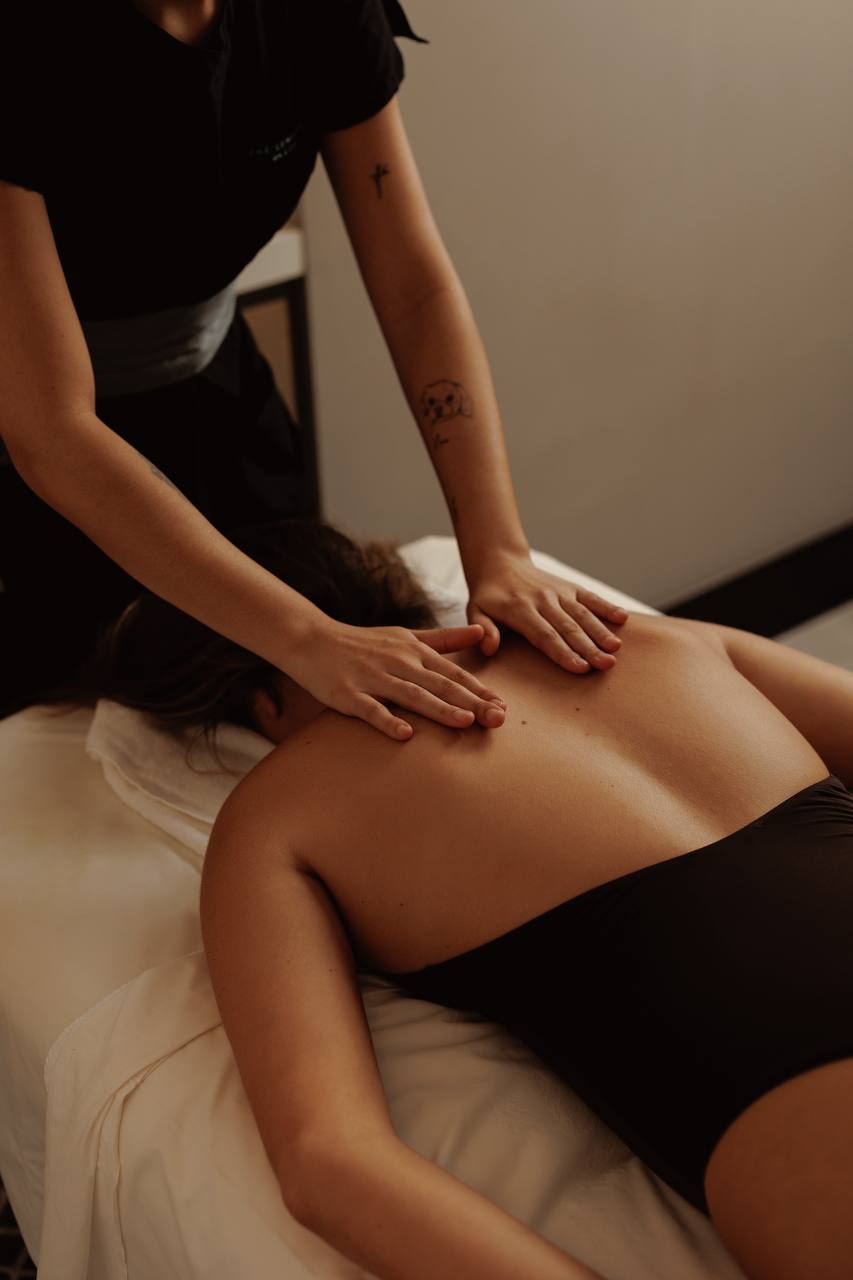
Lisbon is a city that rewards walking and punishes the unprepared. The seven hills are not a metaphor. They are a topographical fact that makes every journey a negotiation between your ambition and your calves. The Lumiares Spa understands this because it is a spa designed by people who have walked these hills, not by people who imagine what walking them might be like. The signature 45-minute 7 Hills Recovery Treatment uses Claus Porto's DECO collection to revive guests after exploring the city, complemented by an intimate wellness retreat with sauna, steam room, and 1-hour complimentary spa facility access.
The treatment is built around Claus Porto's DECO collection, a Portuguese heritage brand that has been making soaps and fragrances in Porto since 1887. The DECO collection, with its Art Deco packaging and its formulations drawn from the botany of the Iberian Peninsula, is the kind of local product that most hotels would put in the minibar as a gesture. The Lumiares puts it in the treatment room as a philosophy. The sauna and steam room are small, which is the point. This is not a spa that wants to be a destination. It is a spa that wants to be a recovery room for people who have spent the day climbing hills and navigating tram schedules and eating pastéis de nata at three in the afternoon because Lisbon makes you do that.

Apartment Living, Palace Address
The 47 suites at The Lumiares range from 35 to 120 square metres, and every one of them functions as an apartment rather than a hotel room. Full kitchens with cooktops and refrigerators. Wooden-style floors that feel like they belong in a home. Local welcome treats that are actually local, not a bowl of fruit that could have come from any distributor in any city. Forty-seven apartment-style suites from 35 to 120 square metres, equipped with full kitchens, wooden-style floors, and local welcome treats, with a pet-friendly policy and an exclusive partnership with MOKE International offering fully electric MOKEs for guests to drive to Belém, LX Factory, or coastal Cascais.
The pet-friendly policy is not an afterthought. It is a reflection of the same philosophy that produced the apartment-style suites: if you are going to stay somewhere for more than a night, you should be able to bring the things that make a place feel like home, including the ones that bark. And the MOKE partnership is the kind of detail that sounds like a gimmick until you drive one of these fully electric, vintage-styled vehicles through the streets of Lisbon with the roof down and the Tagus on your left and you realise that some gimmicks are worth having. Belém is twenty minutes away. LX Factory is ten. Cascais and the coast are forty. The MOKE makes all of them accessible without the negotiation of parking that defines car ownership in a city built before cars were invented.
What Comes Next
The Lumiares is not a hotel that opens and stands still. A new autumn menu is launching at Lumi, built around the seasonal ingredients that make Portuguese cooking worth following through the calendar. A seasonal orange-bergamot-ginger spa treatment arrives in October, using the same Claus Porto philosophy that defines the 7 Hills treatment but oriented towards the particular demands of autumn in a city where the light changes faster than the temperature. By year-end, Lumi Rooftop gets a fresh visual look, and the festive holiday decor will give the palace the kind of seasonal warmth that makes you understand why people have been celebrating winter in this building for nearly three hundred years.
The palace, the neighbourhood, the rooftop, the spa, the suites, the electric MOKEs parked outside the front door: all of it adds up to a hotel that understands its location well enough to enhance it rather than compete with it. Bairro Alto does not need another hotel that tries to be elsewhere. The Lumiares is exactly where it is, and that is the whole point.