A Star That Doesn't Change the Kitchen
For a restaurant that just earned one of the most coveted recognitions in the culinary world, Upstairs Tasting Room speaks about their Michelin Star with striking humility.
"Receiving a Michelin Star is something we are deeply grateful for, but we don't think it changes the way we cook."
That's not false modesty. It's conviction. Long before Michelin arrived in Vietnam, Chef Hiep Truong and his team had already set their own standards - choosing better ingredients, refining every detail, creating a dining experience that feels thoughtful from start to finish. The star is a recognition of that commitment, not a new destination.
"The star reminds us to stay honest to our identity and never lose sight of why Upstairs was created in the first place."
Their goal isn't to reinvent Vietnamese cuisine. It's to understand it more deeply - to keep asking questions, to keep discovering new perspectives within the traditions that already exist.
Every Dish Begins With Something Familiar
If you want to understand the creative process at Upstairs, start with street food. With childhood memories. With the everyday flavours that have quietly shaped the way people eat in Vietnam.
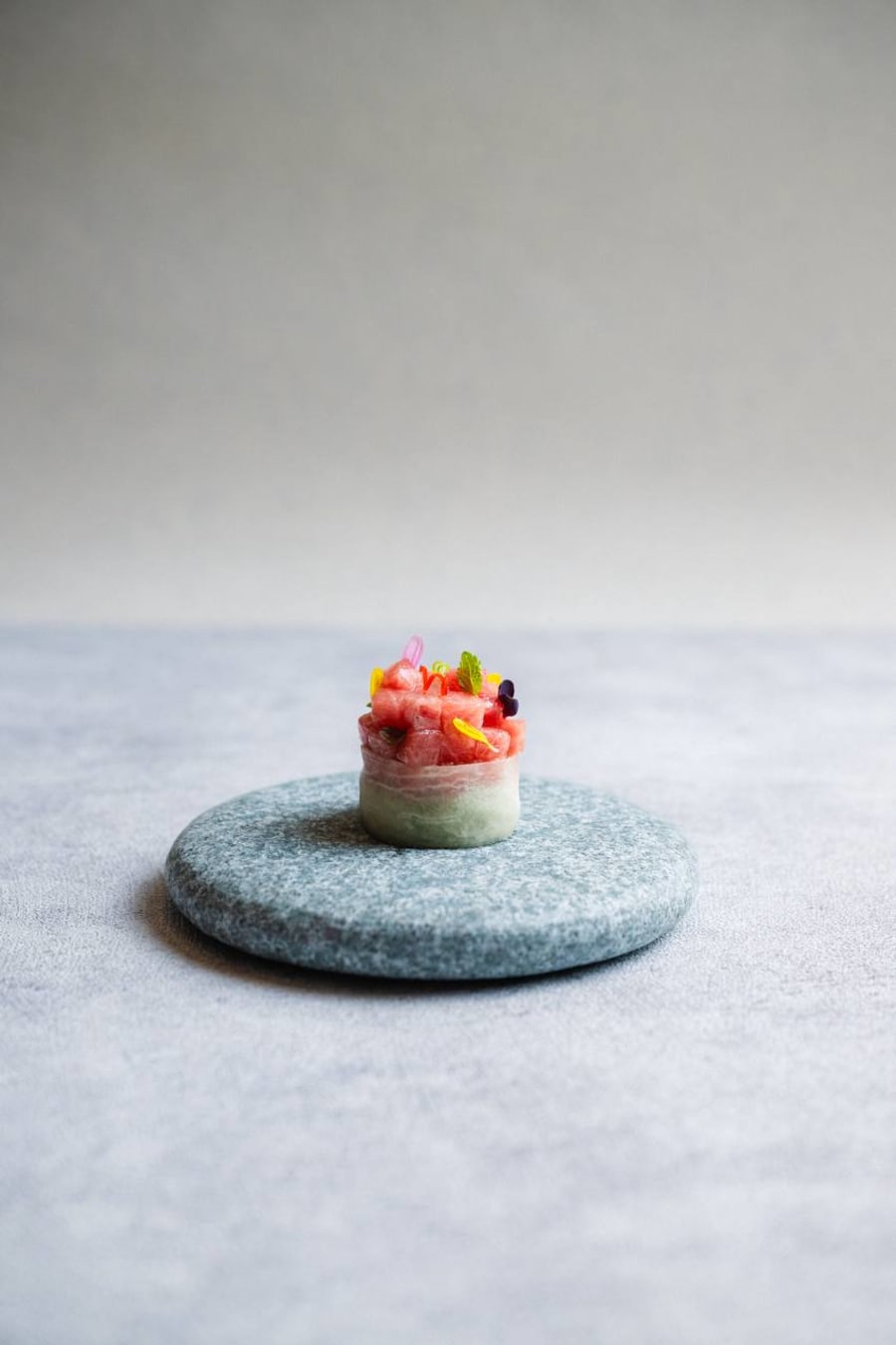
"Almost every dish at Upstairs begins with something familiar. Sometimes it begins with a childhood memory. Sometimes it's a humble street food dish, a familiar meal at a local beer restaurant, or an ingredient found while wandering through a traditional market."
From that starting point, the team asks a series of questions. Why has this dish stayed in people's memories? Which flavour carries its identity? Which part can be refined, and which part should never change?
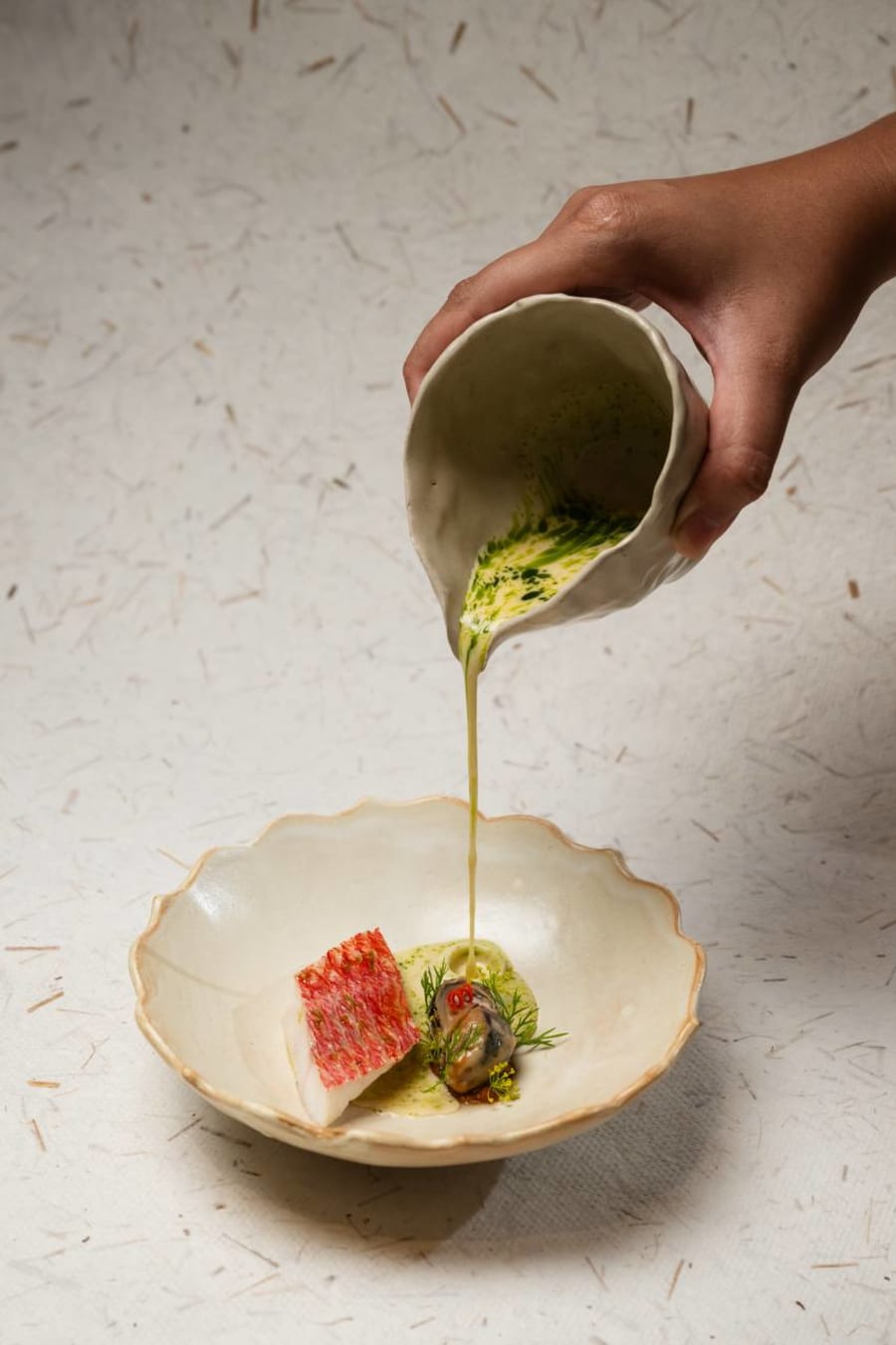
Only after understanding those answers do they begin exploring techniques, textures, and presentation. Modern techniques are never the destination - they are simply tools that help express familiar Vietnamese flavours in a different way.
"We don't want to replace memory. We want to reveal it from another perspective."
A Room Built for Connection
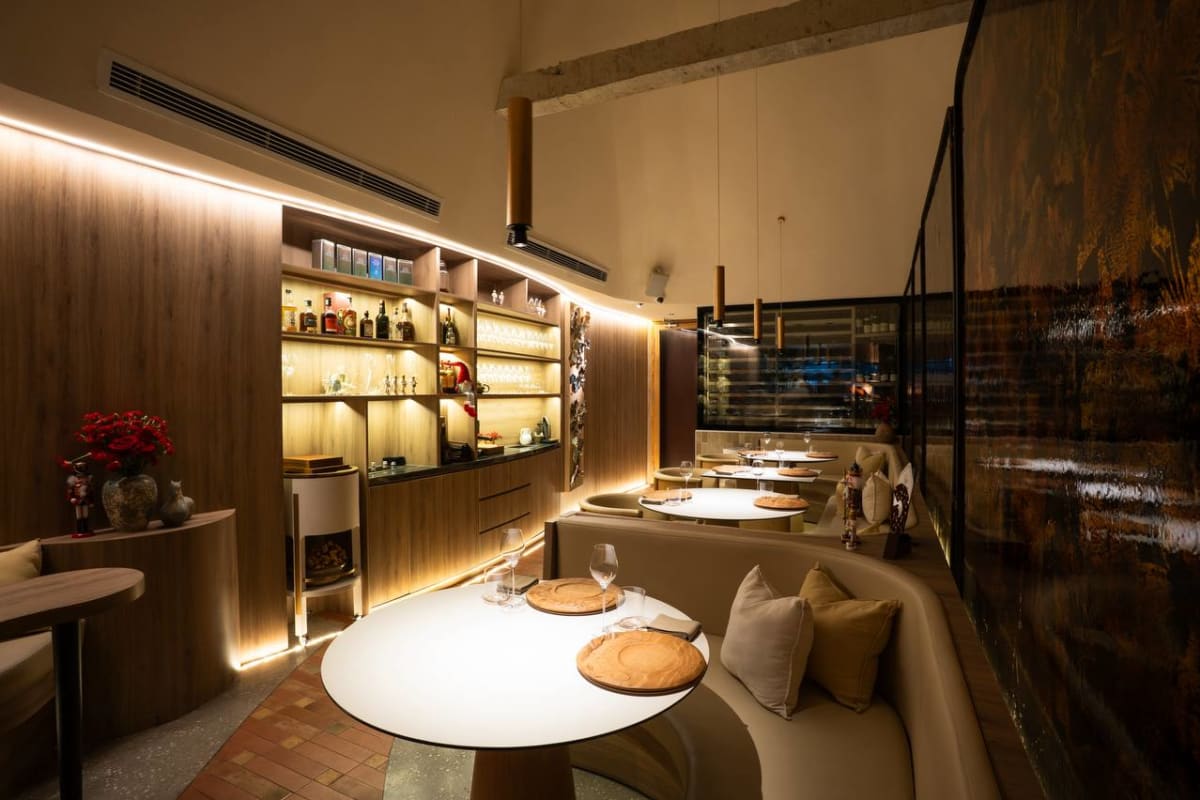
The dining room at Upstairs seats only a small number of guests at each service. That's by design.
"Our dining room is intentionally intimate because we believe hospitality is built through human connection. Service becomes more like a conversation than a performance."
The semi-open kitchen means guests can see the rhythm, the focus, the teamwork behind every course. And the chefs can feel the energy of the dining room - understanding how guests are experiencing each dish.
"For us, the meal isn't only about what's served on the plate. It's about the pace of the evening, the atmosphere in the room, the people sharing the table, and the feeling guests take home long after dinner has ended."
Conversations Between Cultures
Upstairs has built a reputation for chef collaborations - four-hands dinners with some of the most exciting names in Asian gastronomy. Chef Akifumi Watanabe from KUR. Chef Hans Christian from August Jakarta. Chef Barry Quek from Whey Hong Kong.
But what these collaborations produce isn't what you might expect.
"Interestingly, these experiences rarely make us want to cook someone else's food. Instead, they reinforce our appreciation for our own ingredients and culinary traditions. Seeing Vietnamese herbs, fish sauce, fermented ingredients, or regional recipes through another chef's perspective often reminds us just how much depth our own cuisine still has to explore."
Collaborations at Upstairs are less about combining cuisines and more about creating meaningful conversations between cultures through food. Every collaboration begins with curiosity - sharing ingredients, exchanging ideas, tasting each other's food, and learning different ways of approaching the same ingredient.
The Star of Saigon
If there's one sentence that captures the soul of Upstairs Tasting Room, it's this:
"Every dish at Upstairs begins with something familiar and ends with a new way of seeing Vietnamese cuisine."