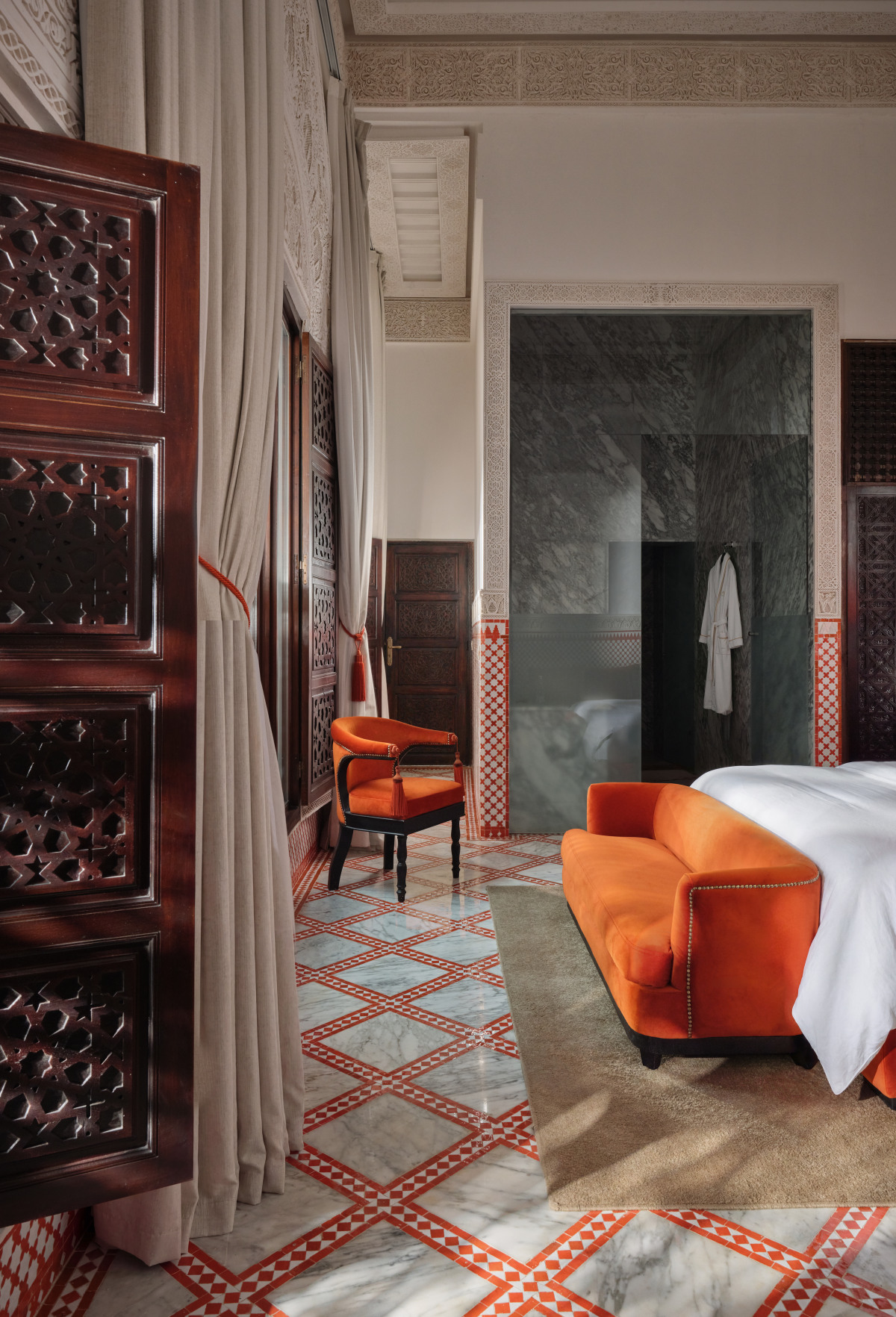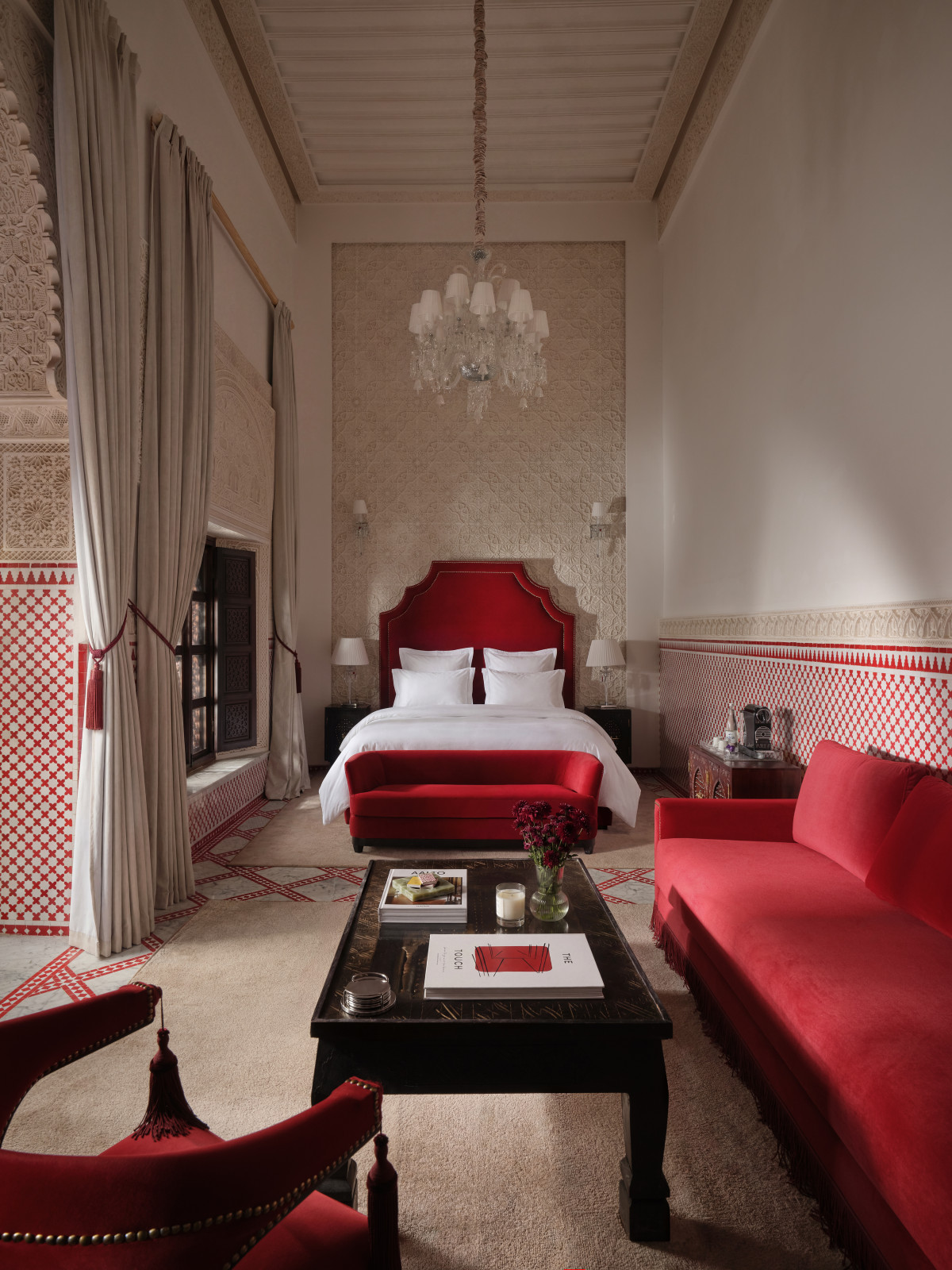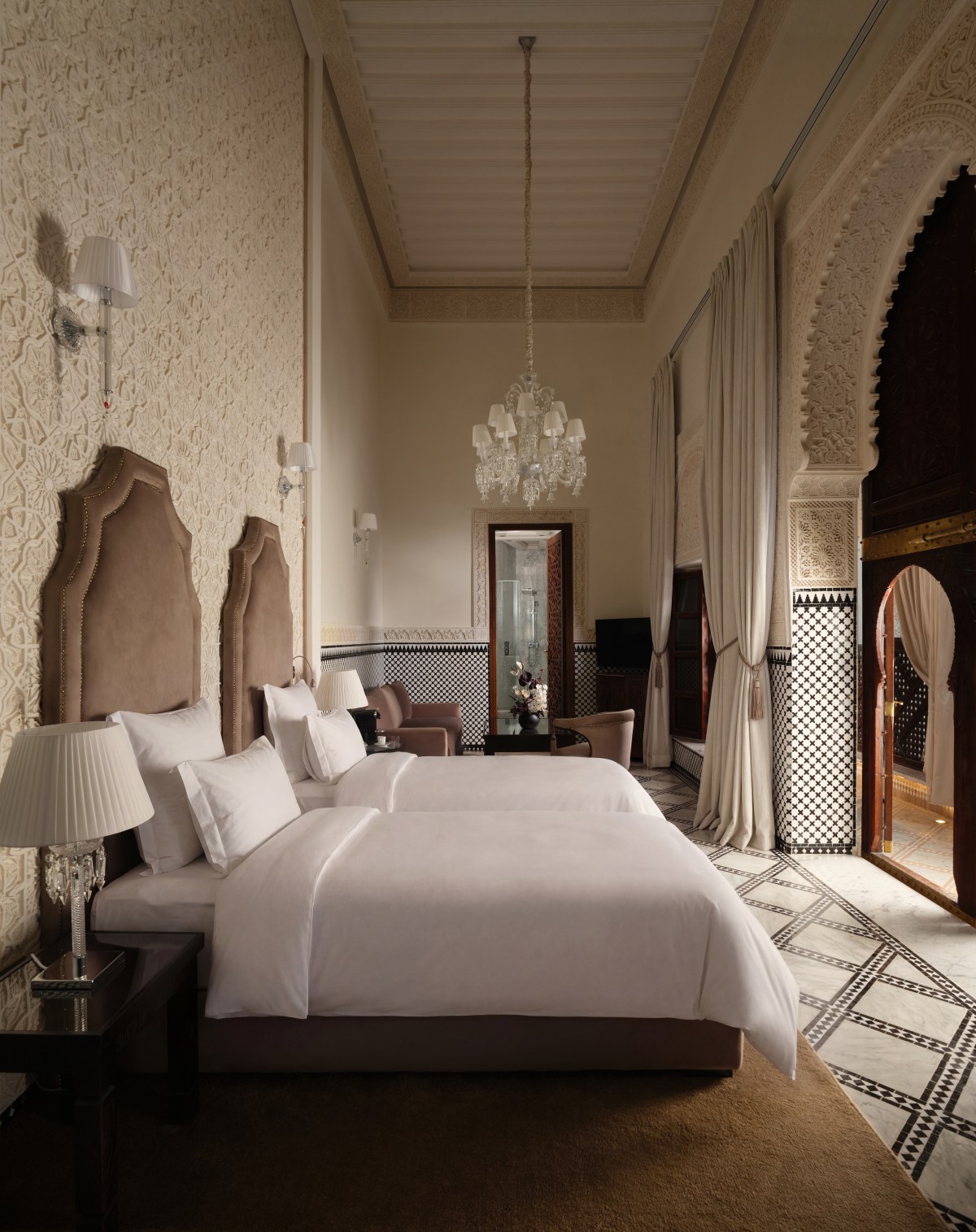
Fez is a city best understood in layers. At street level, the Medina unfolds one doorway, workshop and narrow passage at a time, each turn revealing another fragment of a city that has barely changed in a thousand years. Palais de Fès Suites & Spa, set within a 14th-century palace above the Medina, offers a perspective that few visitors ever experience: the city seen from above, its rooftops and minarets spreading outward while the call to prayer carries across the valley below.
For my brother Nacer and I, preserving Palais de Fès is a deeply personal responsibility. Our father brought together the properties that form the estate, and our work today continues his vision and his love for Moroccan hospitality.
Palais de Fès
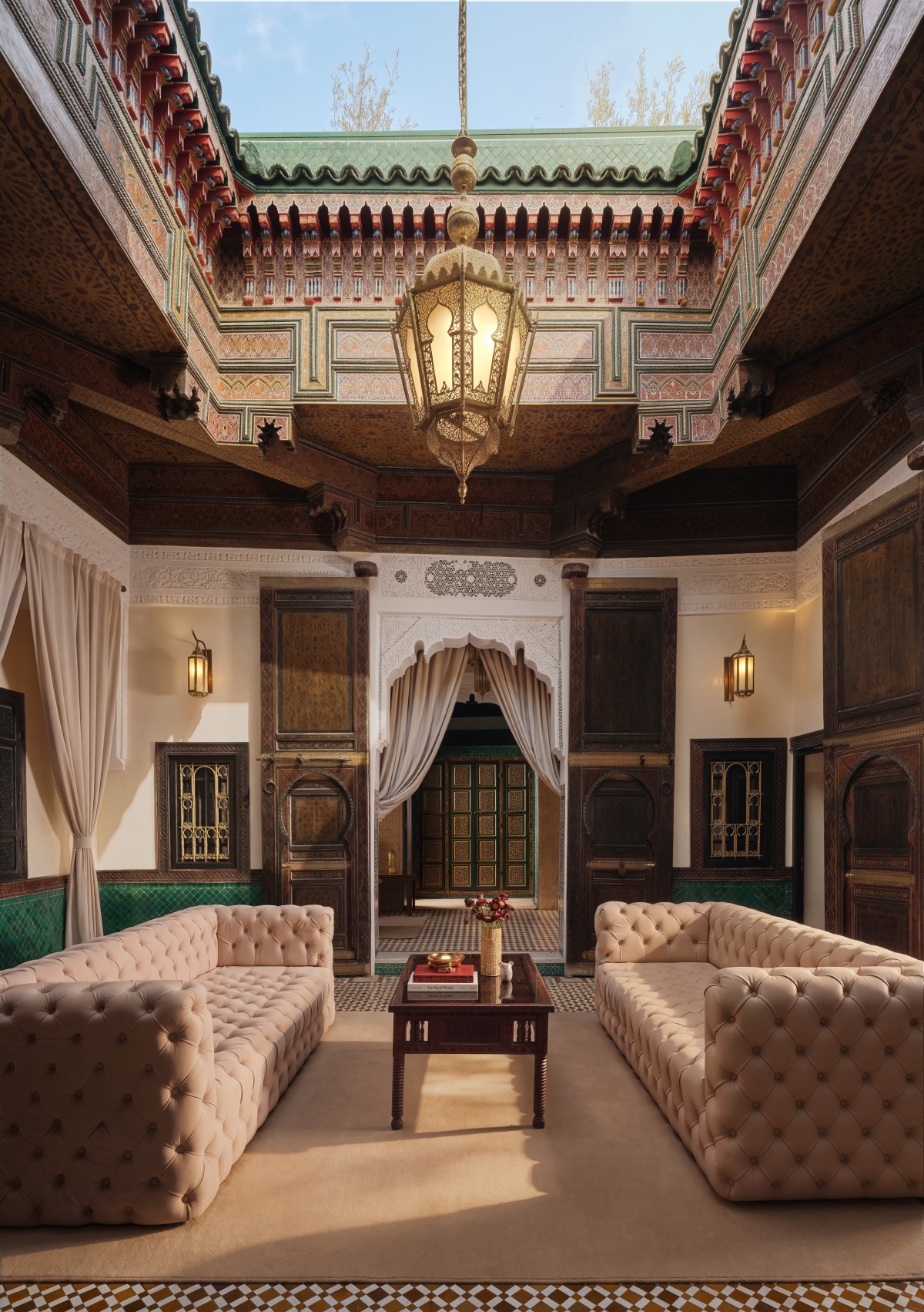
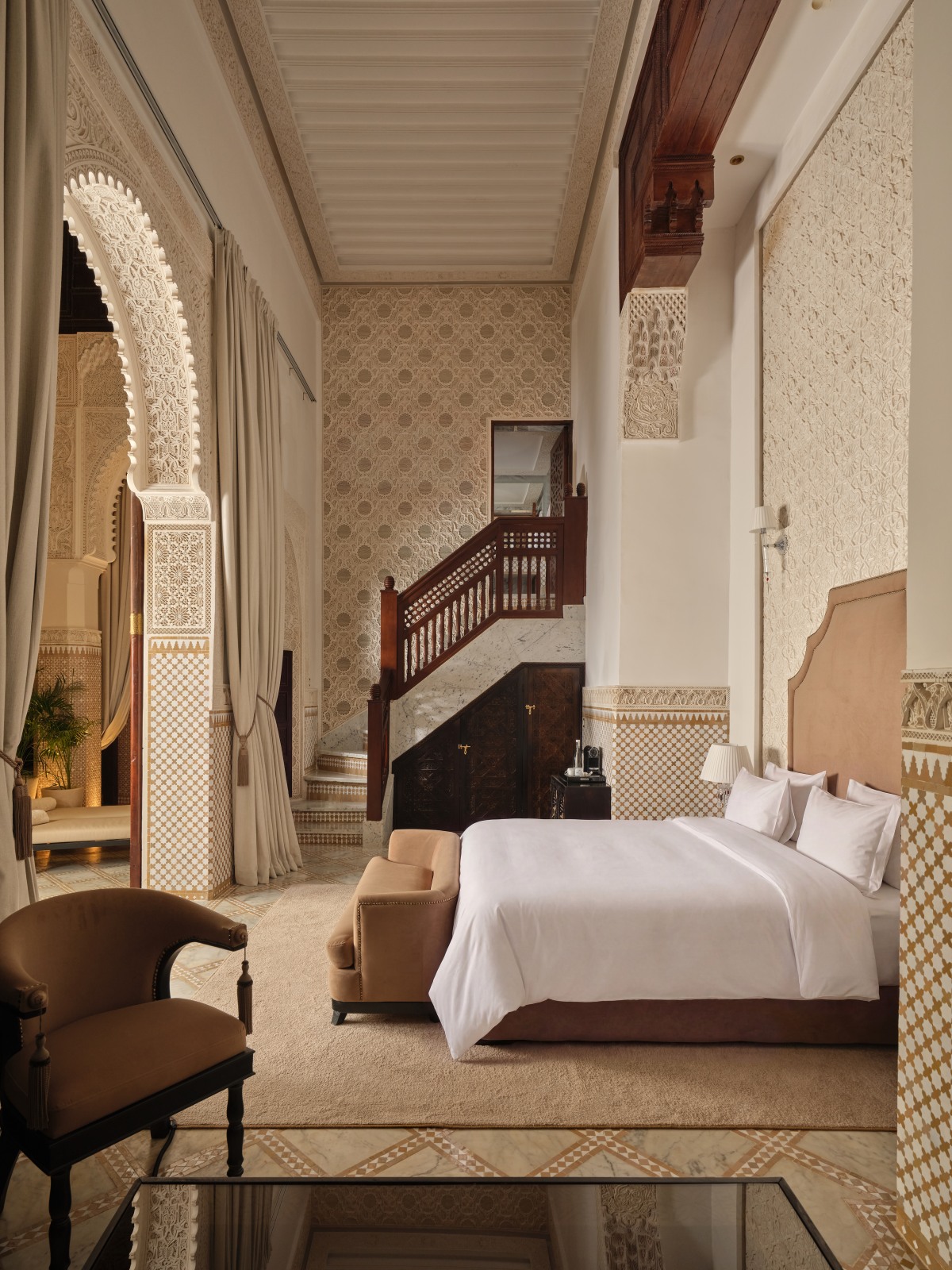
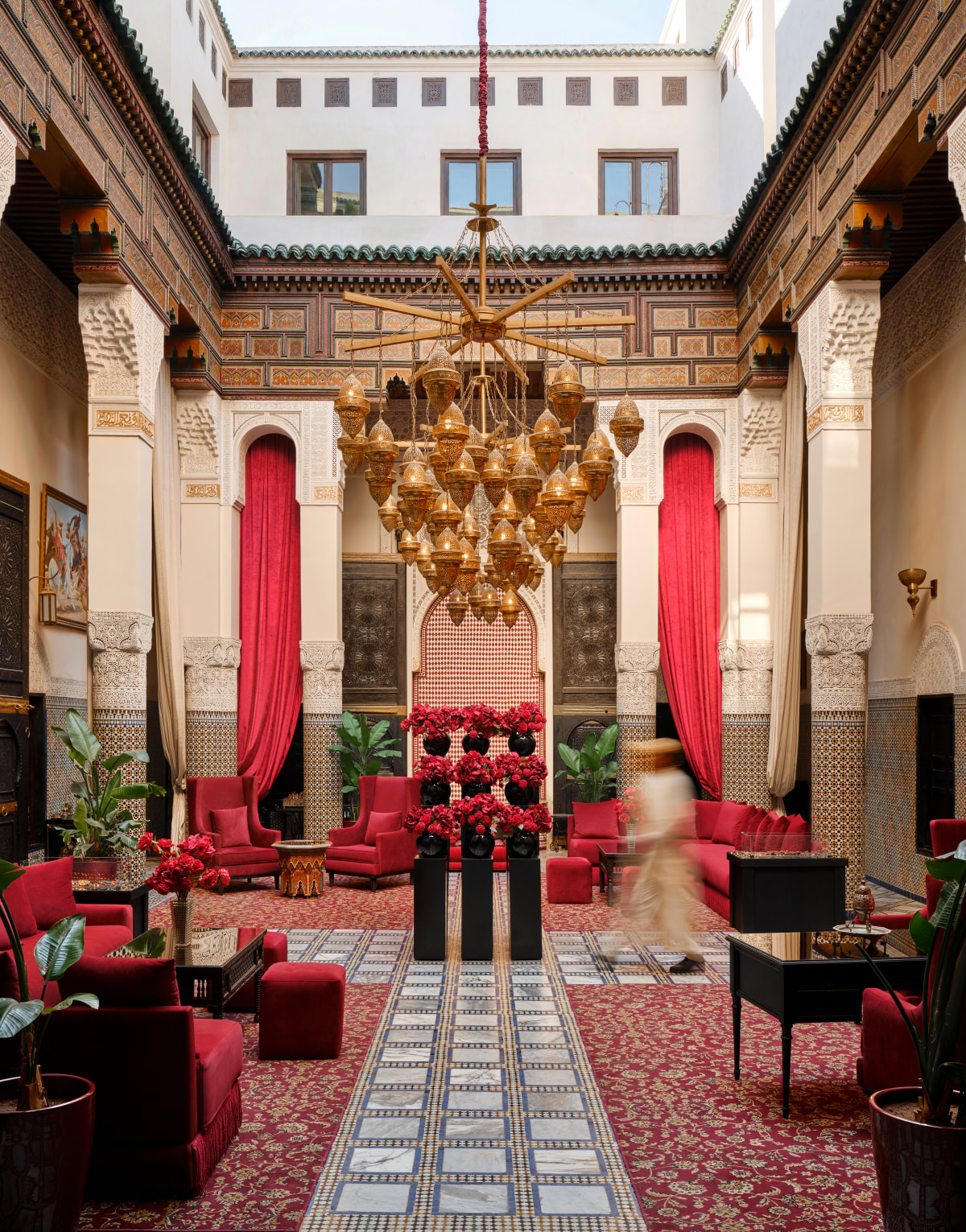
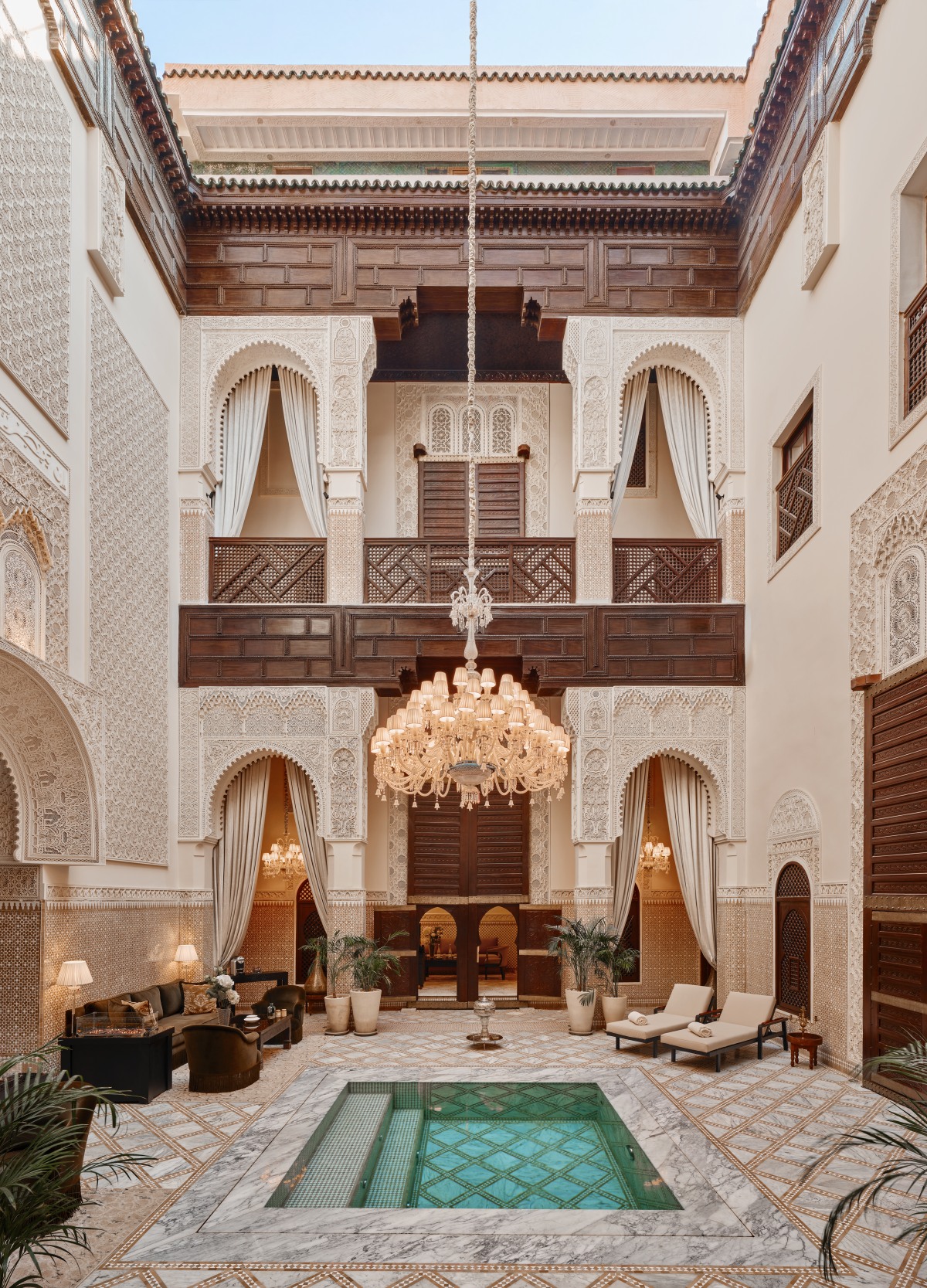
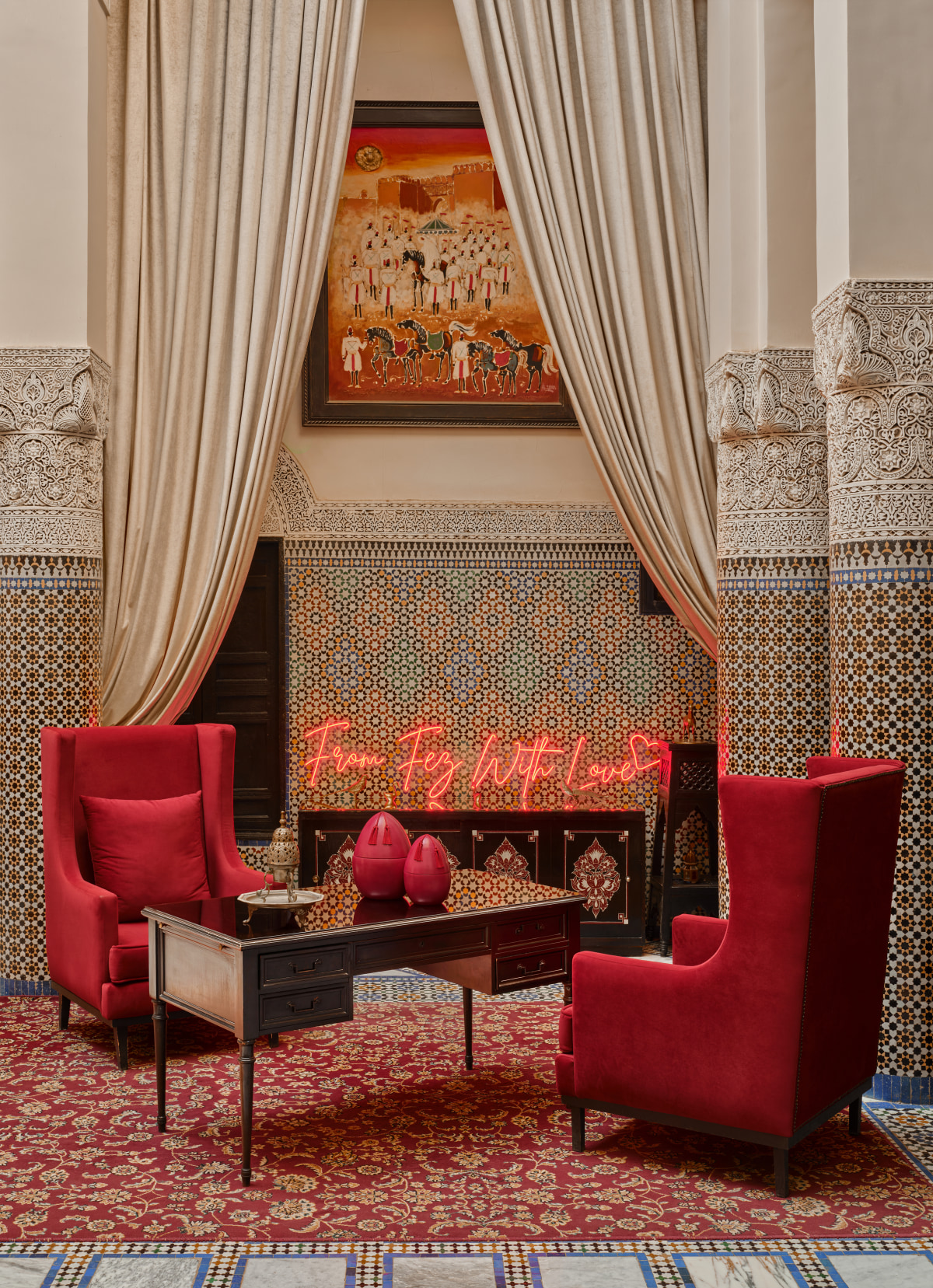
For the Tazi family, preserving this palace is a responsibility that spans generations. Azzedine Tazi brought together the properties that form the estate, and today his children, Nacer and his sibling, continue his vision. Their approach is rooted in respect for the character of each space: the carved wood, intricate plasterwork, handmade tiles and historic proportions that define Moroccan palace architecture. The restored 14th-century doorway in the Amira Suite stands as one tangible example of that continuity, a direct link between the era when the palace was built and the present day.
Architecture That Tells Its Own Story
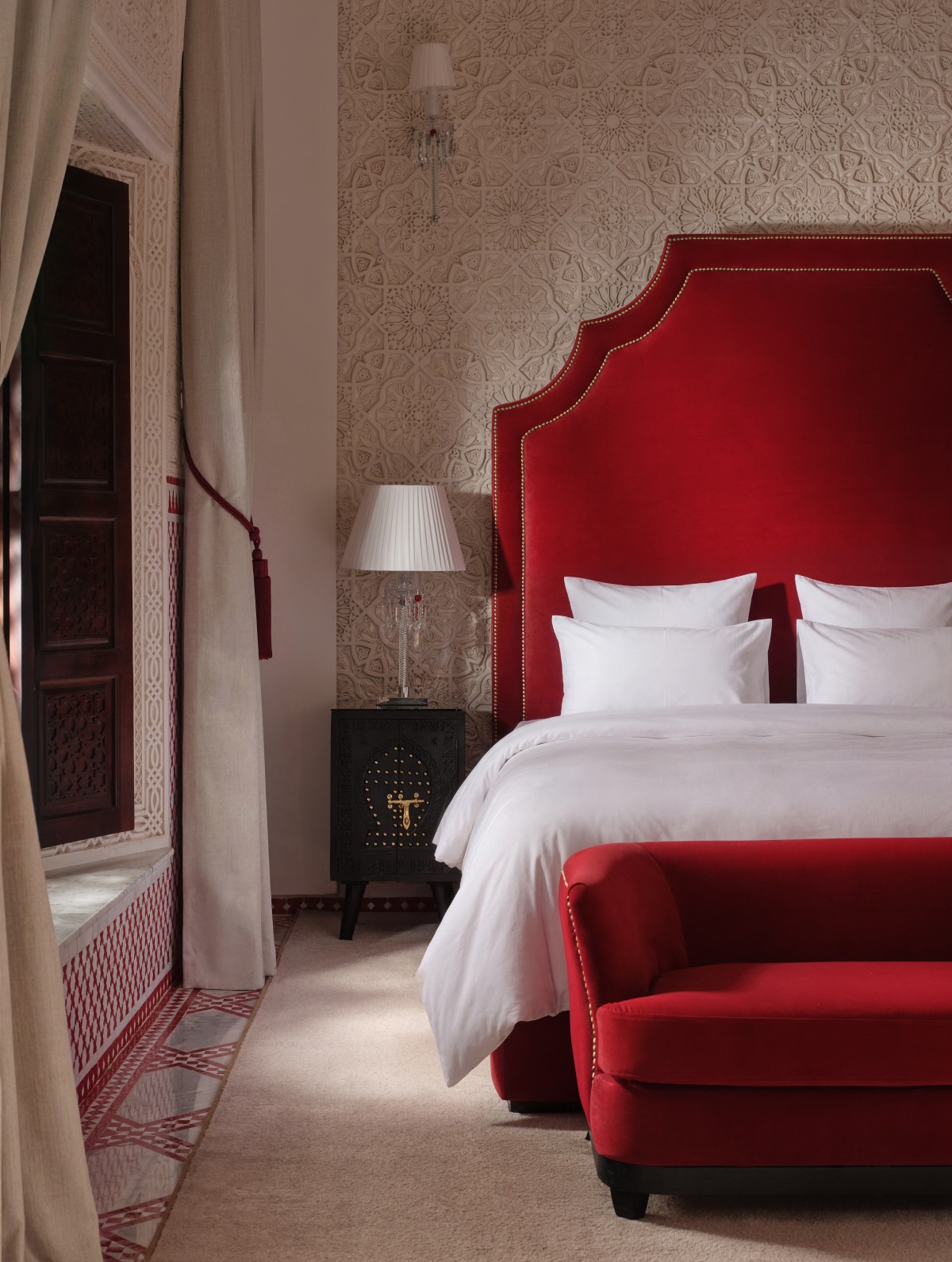
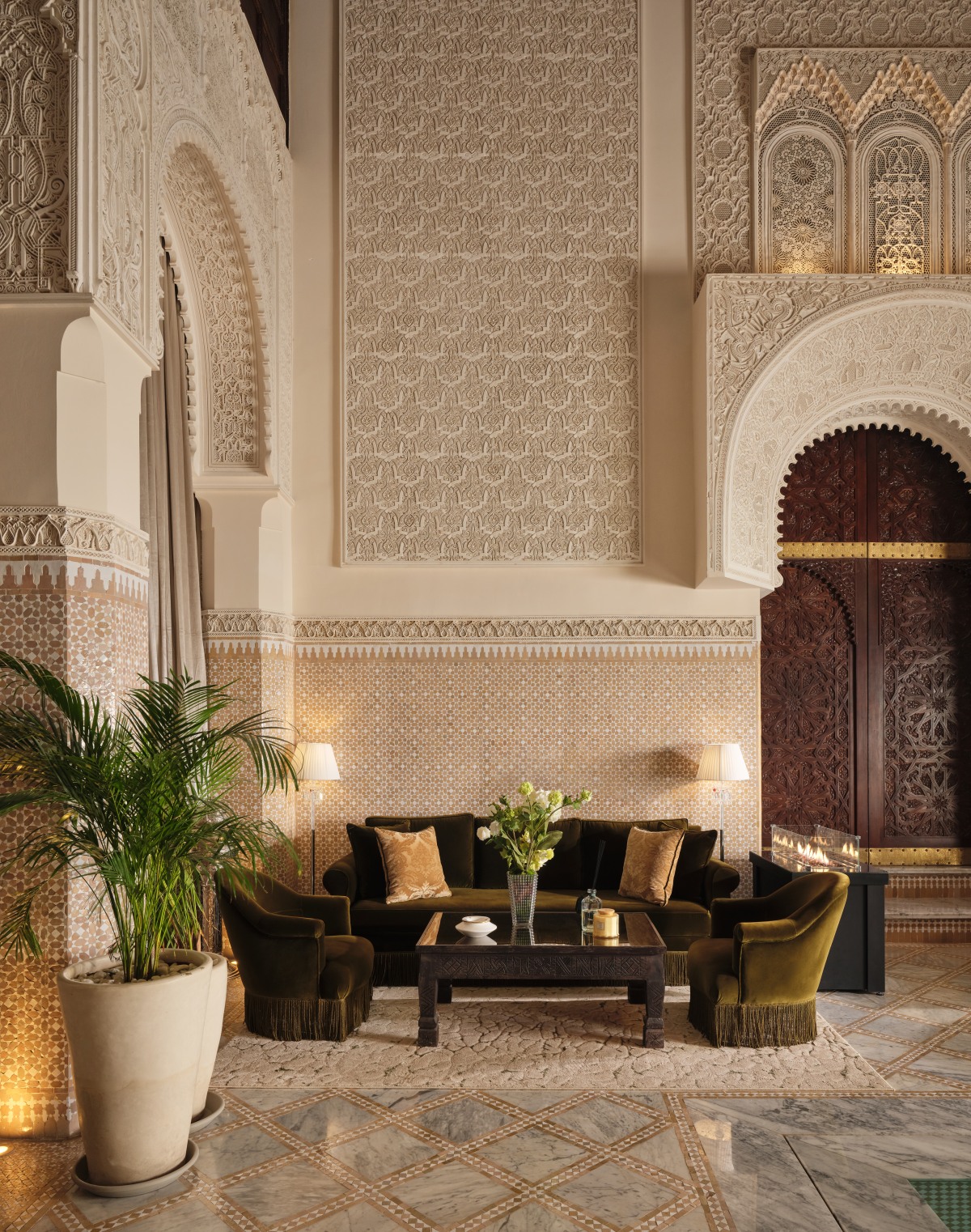
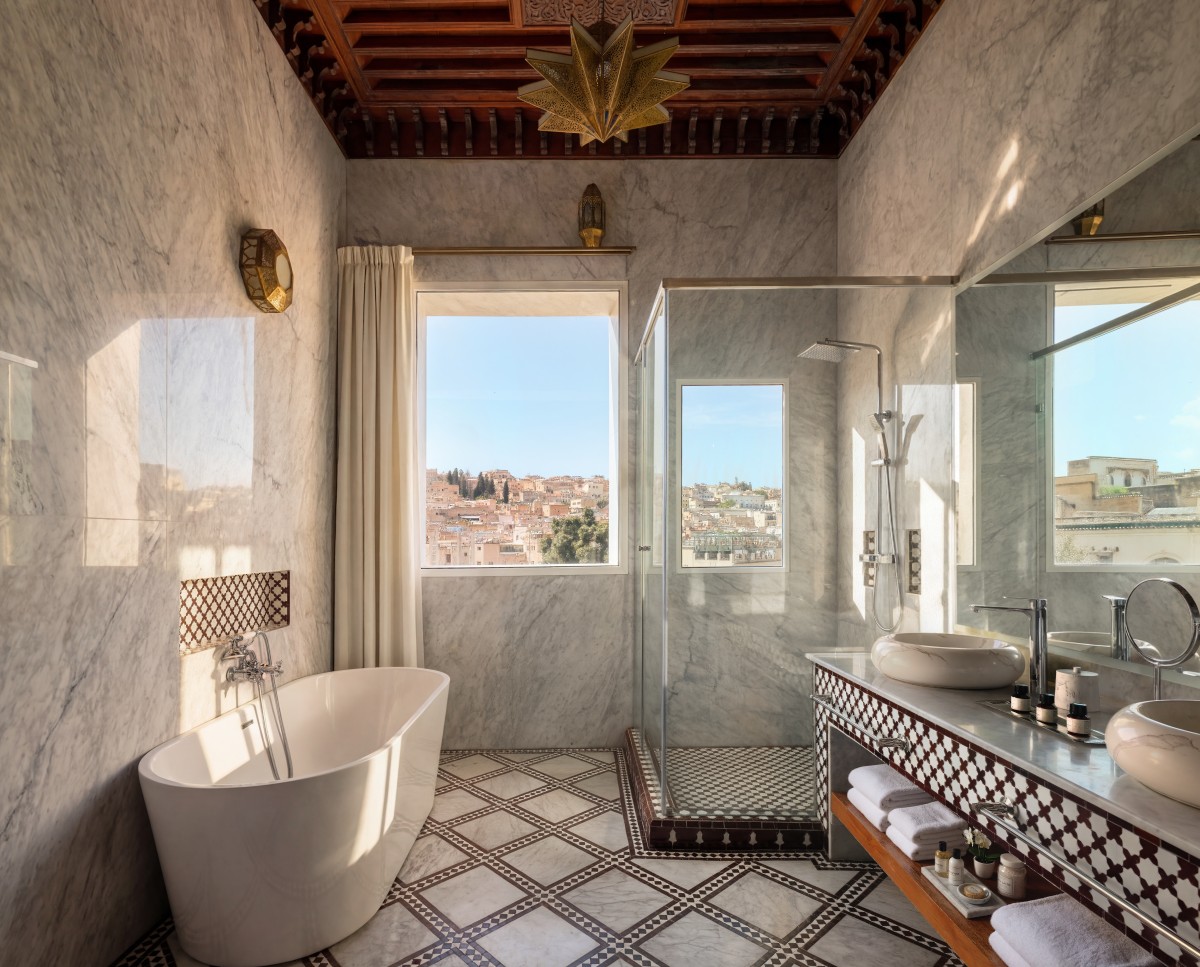
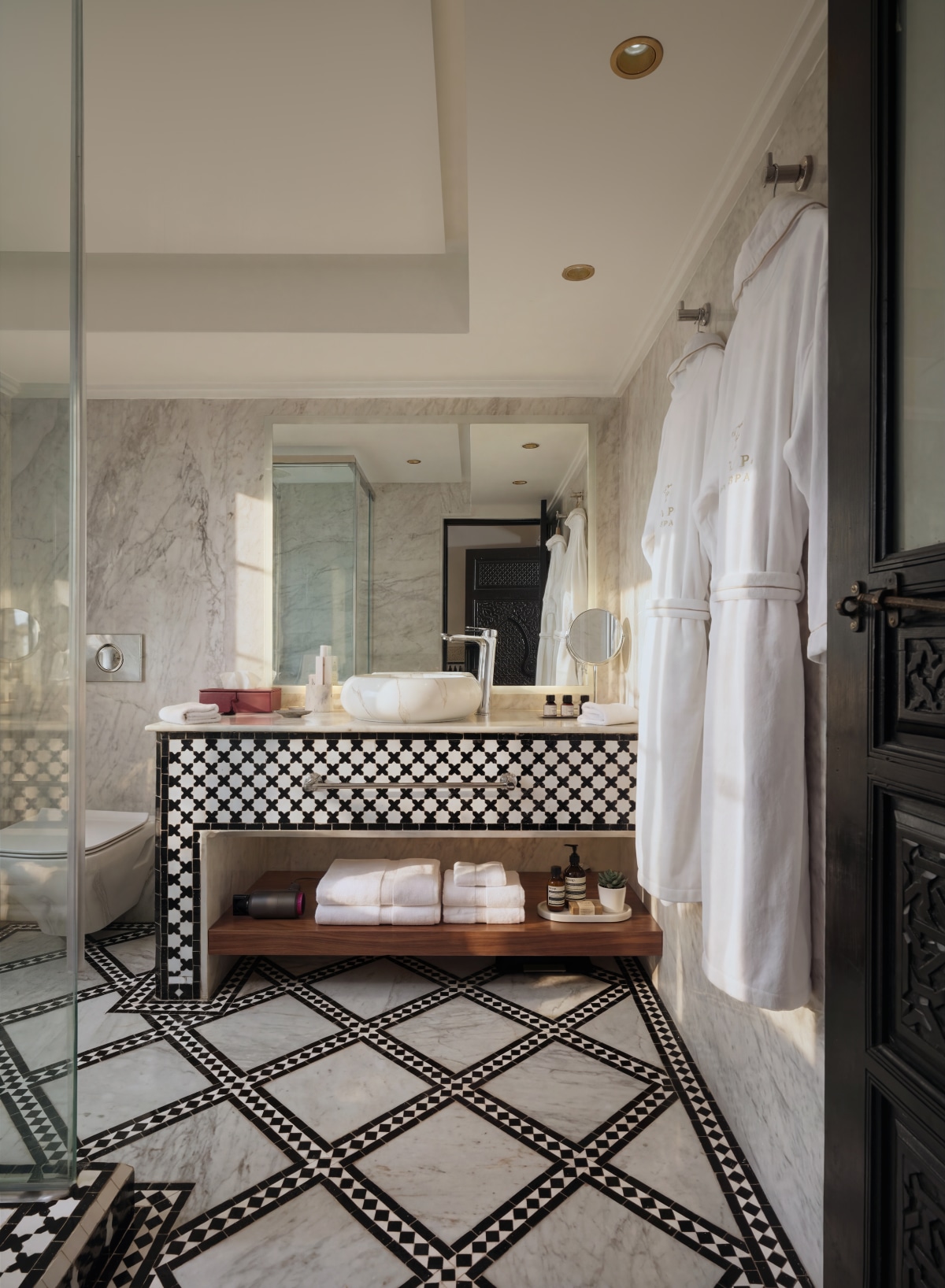
Contemporary comforts are introduced thoughtfully at Palais de Fès. Bathrooms, furnishings and personalised service allow the architecture to remain central to the guest experience, never competing with it. The intention is for visitors to feel completely at ease while remaining aware that they are staying somewhere with centuries of history embedded in its walls. Every restoration decision is guided by the principle that the building should continue to tell its own story, rather than becoming a backdrop for modern design.
The materials themselves carry meaning. Cedar wood carved by hand, tadelakt plaster polished to a soft sheen, zellige tiles cut and fitted one by one, each represents a craft tradition that has sustained Fez for centuries. These are not decorative choices made by a design team. They are the same techniques that built the Medina itself, practised by artisans whose families have worked the same materials for generations. When a guest runs a hand along a wall in the Amira Suite, they are touching the same craft that shaped the city outside.
The Medina From Above
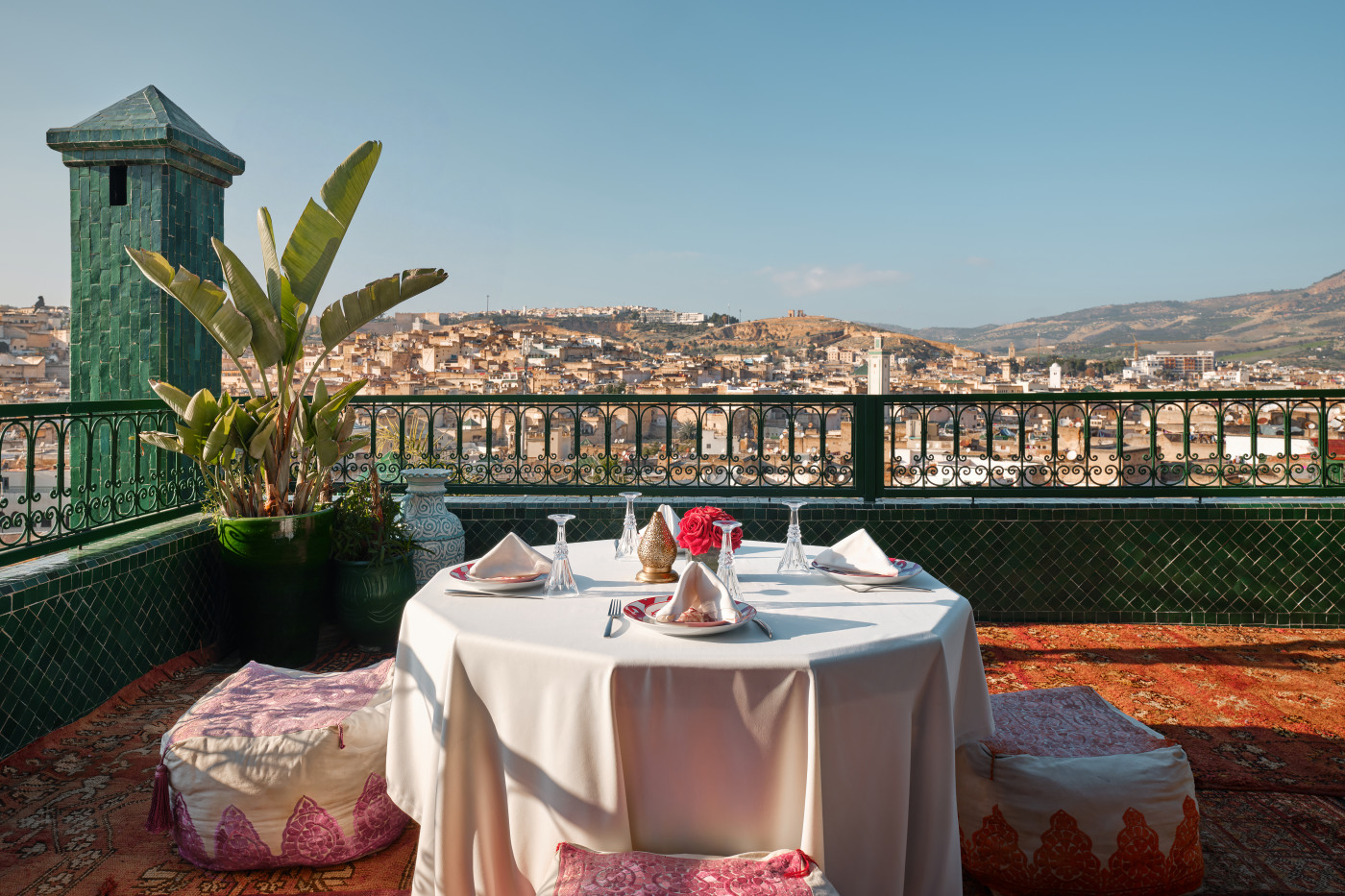
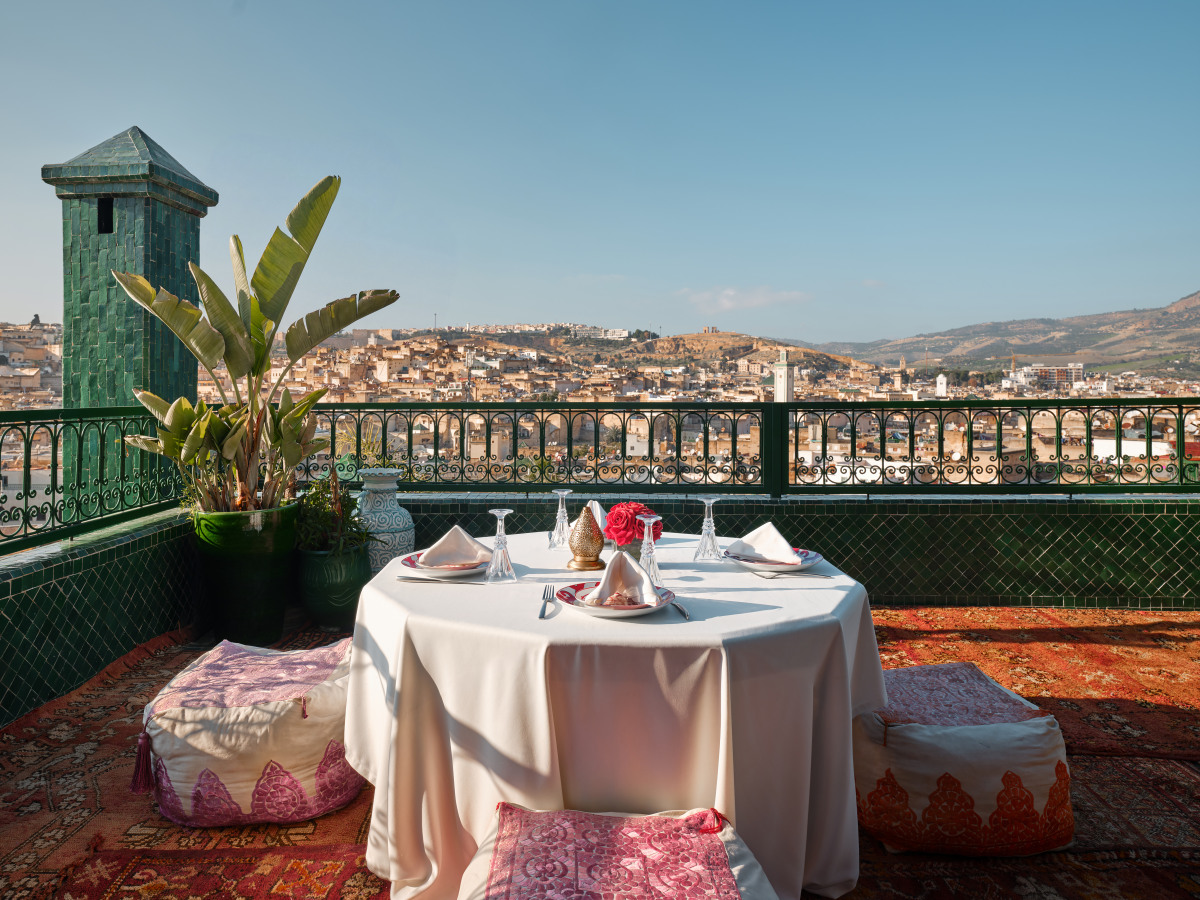
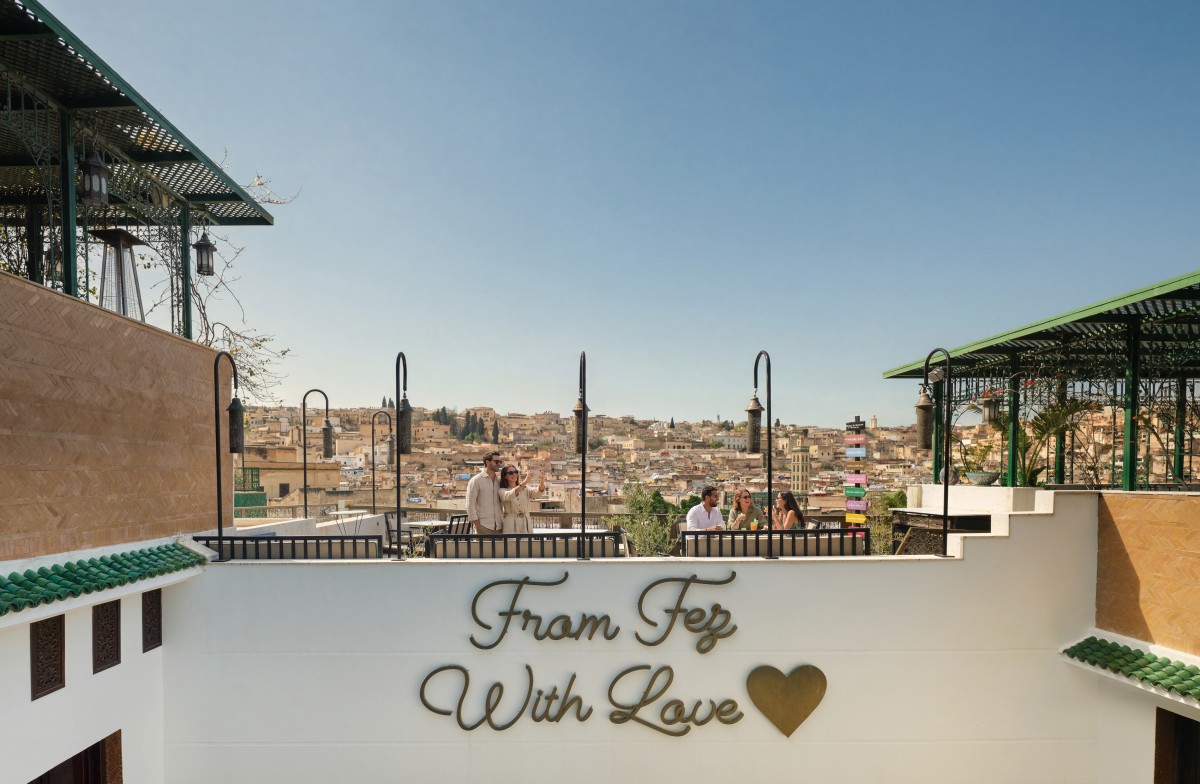
The terraces of Palais de Fès give guests a sense of the extraordinary city they have come to discover. Walking through the Medina, you encounter Fez intimately. From above, those experiences become part of a larger picture: rooftops, minarets and a city whose daily life continues around you. As the light changes and the call to prayer carries across the Medina, the experience becomes deeply atmospheric. A glass of mint tea or a meal on the terrace creates space to pause and absorb it. For the Tazi family, that view is an essential connection between the palace and Fez, allowing guests to feel the city's presence throughout their stay.
Our kitchen is a kitchen of grandmothers, whose knowledge lives in their hands, their instinct for seasoning and their patience with each preparation. Every meal should carry the warmth and care of someone cooking for people they love.
Dar Tazi
Dar Tazi: Three Generations at the Table
Dar Tazi, the palace restaurant, has held a global reputation for authentic Moroccan gastronomy since 1980. Its philosophy begins with the way Moroccans welcome people into their homes: with generosity, care and a table made for sharing. The menu has remained unchanged for over four decades, anchored by recipes passed down through grandmothers whose knowledge lives in their hands, their instinct for seasoning and their patience with each preparation. Across three generations, the Tazi family table has carried their history. Dishes are placed at the centre, passed around and enjoyed together. That gesture of sharing matters as much as the recipes themselves, and it is this continuity that gives Dar Tazi its warmth and reputation.
Wellness Rooted in Place
For the most discerning travellers, the expectations have shifted. Time, privacy and a meaningful connection to place now matter as much as thread count or square footage. North Africa offers all of this through its hospitality, craftsmanship, food and bathing traditions, and Palais de Fès shares these with sensitivity, allowing guests to experience them at their own pace. At Le Spa du Palais, wellness takes shape through traditional Moroccan hammam rituals, personalised treatments and the possibility of exclusive use of the spa. Wellness here is closely connected to a sense of place: the rituals, the atmosphere and the care with which each guest is received.
The hammam is central to Moroccan life, a practice of cleansing and restoration that predates modern spa culture by centuries. At Le Spa du Palais, that tradition is preserved with integrity. The steam, the black soap, the kessa glove, the rinsing with warm water from copper bowls, these are not treatments adapted for international guests. They are the authentic rituals, offered in a setting that honours their origins. For travellers seeking a genuine connection to Moroccan culture, the spa provides an experience that feels rooted rather than imported.
A Feeling of Belonging
Above all, the Tazi family hopes guests leave with a feeling of belonging. The beauty of the palace alongside the human moments: a warm welcome, a dish shared across the table, a quiet evening looking out over the Medina. Their father taught them hospitality through the way he welcomed people, and that spirit continues to guide everything that happens within these walls. If guests leave with affection for Fez and the sense that they have a home to return to, then something meaningful has been achieved.